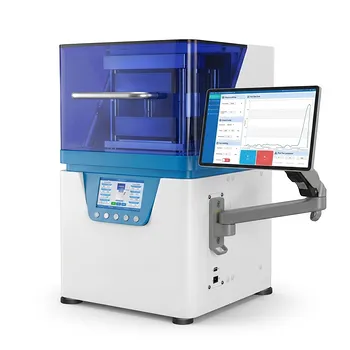
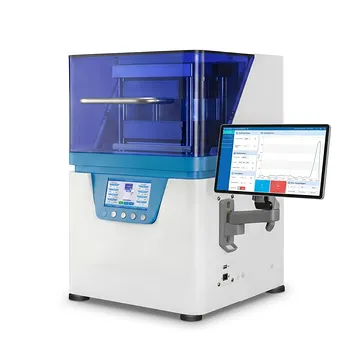
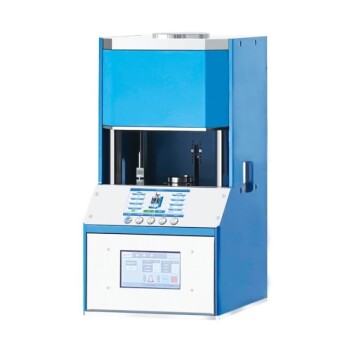
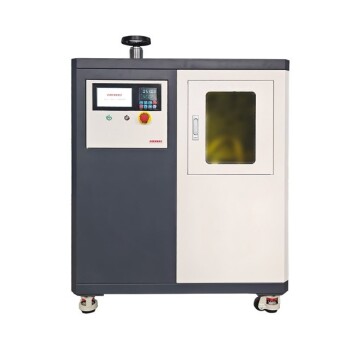
Integrating lithium metal with current collectors requires more than simple contact; it requires a thermal-mechanical transformation. A hot press utilizes precisely controlled temperature and pressure to composite lithium metal into porous hosts or onto current collectors, ensuring a tight, low-resistance physical bond. This integration is essential for suppressing volume changes and lithium dendrite growth, which directly improves the specific capacity and long-term cycling stability of the resulting battery.
The Core Takeaway: A hot press facilitates "plastic flow" in lithium metal, allowing it to penetrate host frameworks and bond at an atomic level. This process eliminates interfacial gaps and ensures a uniform surface, which is the primary defense against dendrite-induced failure in lithium metal anodes.
Achieving Interfacial Integration
Inducing Plastic Flow and Micro-Infiltration
Lithium is a soft metal, but at elevated temperatures, its yield strength decreases further, allowing it to flow like a viscous fluid under pressure. The hot press exploits this property to force the lithium into the micropores of three-dimensional frameworks, such as carbon paper, copper mesh, or protective solid electrolyte interphase (SEI) layers.
Establishing Low-Impedance Atomic Contact
By applying simultaneous heat and pressure, the hot press removes air gaps and surface irregularities that typically plague mechanical lamination. This creates a dense, atomic-level contact between the lithium and the current collector, which significantly reduces interfacial impedance and ensures efficient electron and ion transport.
Strengthening Chemical and Mechanical Bonds
The synergistic effect of heat and pressure can stimulate chemical bonding at the interface, particularly when using artificial SEI layers or alloy-forming materials. This strengthened bond prevents the lithium from delaminating during the aggressive expansion and contraction associated with battery charging and discharging.
Enhancing Structural Stability and Performance
Suppressing Dendrite Growth
A primary function of the hot press is to produce a highly flat and clean anode surface. A uniform surface facilitates the even deposition and stripping of lithium ions; without this uniformity, "hot spots" of high current density would form, leading to the rapid growth of hazardous lithium dendrites.
Managing Anode Volume Fluctuations
Lithium metal is "hostless," meaning it undergoes massive volume changes during cycling. By using a hot press to impregnate lithium into 3D porous frameworks, the framework acts as a structural anchor that accommodates the lithium, effectively "locking" it in place and maintaining the anode's global dimensions.
Facilitating Solid-State Interconnectivity
In solid-state battery applications, a hot press is critical for bridging the gap between metallic lithium and ceramic electrolytes (like LLZO). The pressure induces plastic flow that conforms the lithium to the rigid, often microscopic irregularities of the ceramic surface, establishing a seamless channel for ion transmission.
Understanding the Trade-offs
Temperature Sensitivity of Lithium
While heat is necessary to soften the lithium, excessive temperatures can lead to unwanted side reactions or the melting of the lithium foil (melting point ~180 °C). Precise control is mandatory to maintain the lithium in a workable plastic state without compromising its chemical purity.
Pressure-Induced Short Circuits
Applying too much mechanical pressure during the hot-pressing of integrated separators or thin-film electrolytes can cause "soft shorts" or structural damage to the host material. The pressure must be carefully balanced to ensure infiltration without compromising the mechanical integrity of the porous support or current collector.
Scalability vs. Precision
While laboratory hydraulic hot presses offer extreme precision, translating these results to roll-to-roll manufacturing requires heated roll presses. These systems must maintain uniform temperature and pressure across wide webs, which increases the engineering complexity and cost of the production line.
How to Apply Hot Pressing to Your Project
Recommendations Based on Your Goal
- If your primary focus is dendrite suppression: Use a hot press to ensure the lithium surface is perfectly flat and tightly bonded to a 3D host, as this minimizes the local current hot spots that trigger dendrite formation.
- If your primary focus is solid-state battery development: Focus on the "plastic flow" regime (e.g., 150 °C at 12.7 MPa) to ensure the lithium conforms perfectly to the rigid ceramic electrolyte surface, eliminating interfacial resistance.
- If your primary focus is high-capacity alloy anodes: Utilize a heated roll press to facilitate a spontaneous chemical reaction between the lithium and the alloy electrode (e.g., Silicon or Tin) for uniform pre-lithiation.
- If your primary focus is 3D framework impregnation: Ensure the temperature is high enough to lower the lithium's viscosity, allowing it to thoroughly "wet" and fill the voids of your carbon or metal mesh host.
By mastering the balance of thermal softening and mechanical force, researchers can transform lithium metal from a volatile surface into a stable, high-performance integrated anode.
Summary Table:
| Key Function | Mechanism | Battery Performance Impact |
|---|---|---|
| Micro-Infiltration | Induces plastic flow into 3D host pores | Manages volume changes & structural integrity |
| Interfacial Bonding | Establishes low-impedance atomic contact | Reduces internal resistance & improves ion transport |
| Surface Leveling | Produces a highly flat, uniform anode surface | Suppresses lithium dendrite growth & failure |
| Solid-State Bridging | Conforms lithium to ceramic electrolyte surface | Ensures seamless interconnectivity in SSBs |
Advance Your Battery Research with KINTEK Precision
Achieving the perfect thermal-mechanical transformation in lithium metal anodes requires precision and reliability. KINTEK specializes in comprehensive laboratory pressing solutions tailored for high-performance battery development.
Our range includes:
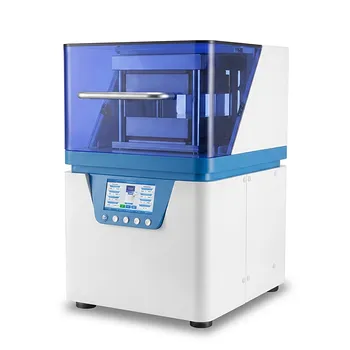
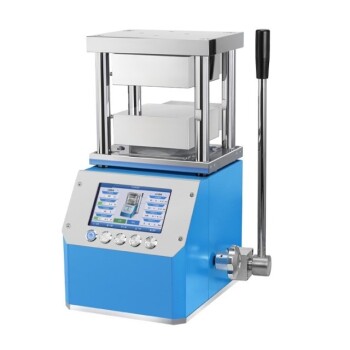
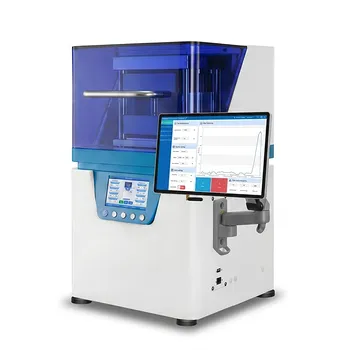
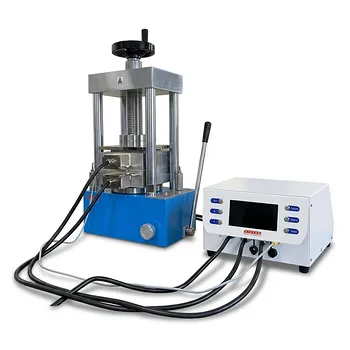
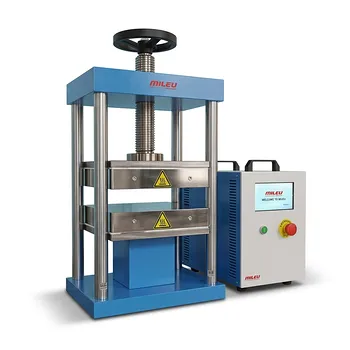
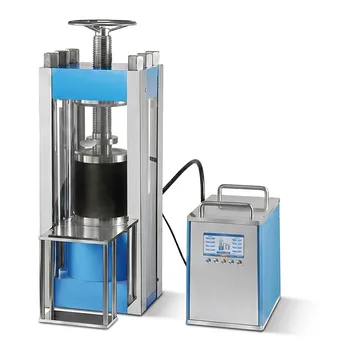
- Heated & Multifunctional Presses: Perfect for inducing plastic flow and atomic-level bonding.
- Manual & Automatic Models: Scalable solutions for varied research needs.
- Glovebox-Compatible Systems: Essential for maintaining the chemical purity of sensitive lithium materials.
- Cold & Warm Isostatic Presses (CIP/WIP): Widely applied in advanced battery research to ensure uniform density.
Don't let interfacial gaps or dendrite growth hinder your innovation. Contact KINTEK today to find the ideal pressing solution for your lab and ensure your lithium anodes meet the highest standards of stability and capacity.
Related Products
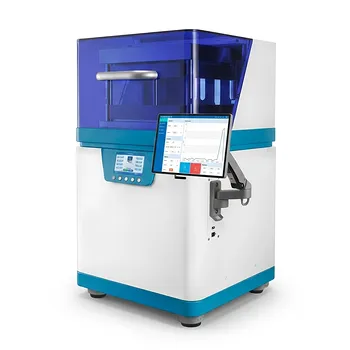
- Automatic Hydraulic Hot Press with Large Plate and Precision Temperature Control for Advanced Material Sample Preparation and Industrial Research
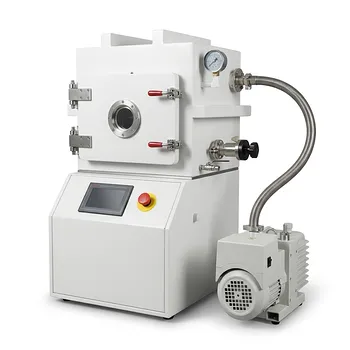
- Heated Hydraulic Press Machine with Heated Plates for Vacuum Box Laboratory Hot Press
- Automatic High Temperature Heated Hydraulic Press Machine with Heated Plates for Lab
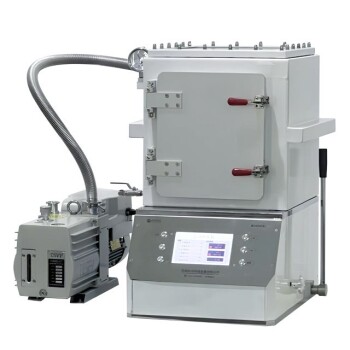
- Heated Hydraulic Press Machine With Heated Plates For Vacuum Box Laboratory Hot Press
- Laboratory Manual Heated Hydraulic Press Machine with Hot Plates
People Also Ask
- What are the specific features and applications of hydraulic hot press machines? Precision Solutions for Modern Labs
- How does an automatic hydraulic press operate? Achieve Precision and Consistency in Lab Pelleting
- What are the advantages and common applications of an automatic hydraulic press? Elevate Your Lab's Precision
- What is the technical significance of setting a precise dwell time? Achieve Peak Material Density and Stability
- When is an automatic hydraulic press more suitable than a manual press? Scale Your Lab with Precision & Speed