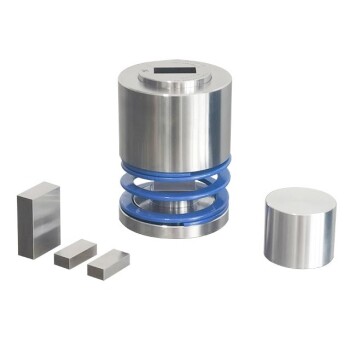
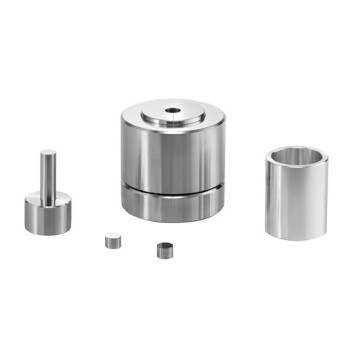
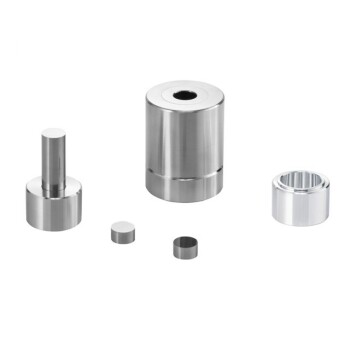
Precision molding plates serve as the primary spatial regulator in the Luffa composite membrane fabrication process. They provide a standardized environment for solvent evaporation, ensuring the final biological membranes possess uniform thickness and precise geometric dimensions.
The use of precision molding plates transitions Luffa composites from raw materials to engineered membranes by providing rigid geometric constraints and surface flatness. This control is essential for achieving the optical clarity and structural consistency required for high-performance applications and accurate mechanical testing.
Establishing Structural and Dimensional Integrity
Spatial Constraints for Solvent Evaporation
Precision molding plates provide the physical boundaries necessary during the critical solvent evaporation phase. By restricting the solution within a fixed area, the plates ensure that the Luffa fibers and matrix consolidate into a predetermined regular geometric shape.
Ensuring Uniform Thickness
A major challenge in membrane forming is maintaining a consistent profile across the entire surface. Precision plates act as a standardized constraint, forcing the composite solution to settle evenly, which results in a membrane with minimal thickness variation.
Precision for Mechanical Alignment
By utilizing molds designed to specific standards (such as ASTM D-638), researchers can define the composite into dimensions ready for immediate evaluation. This eliminates the need for extensive post-processing and ensures that tensile and flexural strength data are derived from geometrically perfect samples.
Enhancing Optical and Surface Performance
Achieving High-Quality Optical Properties
The surface quality of the molding plate is directly mirrored on the Luffa composite membrane. A flat, polished mold surface is essential for obtaining membranes with the transparency and clarity required for optical applications.
Eliminating Surface Defects
Microscopic irregularities on a mold can translate into stress concentrators or optical artifacts on the membrane. Precision plates provide a defect-free interface, which is critical for producing membranes with clean edges and smooth surfaces that resist premature failure during mechanical loading.
Facilitating Uniform Heat and Pressure
In processes involving heat presses, precision stainless steel molds act as high-strength pressure vessels. Their high thermal conductivity ensures that heat is transferred rapidly and uniformly to the Luffa composite, preventing localized warping or uneven curing.
Understanding the Trade-offs
Thermal Expansion and Contraction
While high-strength metal molds provide rigidity, they also expand and contract with temperature changes. If the thermal expansion coefficient of the mold differs significantly from the Luffa composite, internal stresses may develop during the cooling phase, potentially leading to micro-cracking.
Material Release Challenges
The very flatness and precision that make these plates effective can lead to adhesion issues. Without the proper application of release agents or specialized coatings, the high surface energy of precision-machined metals can make it difficult to remove the delicate Luffa membrane without tearing it.
Pressure Sensitivity
Applying excessive tonnage via a hydraulic press to a precision mold can lead to fiber crushing within the Luffa matrix. While the mold ensures the "macro" shape is correct, the "micro" structure of the natural fibers can be compromised if the pressure distribution is not carefully calibrated to the material's density.
How to Apply This to Your Project
Recommendations for Implementation
- If your primary focus is optical clarity: Prioritize molds with a mirror-finish surface to minimize light scattering caused by surface roughness.
- If your primary focus is mechanical validation: Utilize molds that strictly adhere to ASTM standards to ensure your Luffa samples produce repeatable and comparable data.
- If your primary focus is thermal management: Select stainless steel or high-conductivity alloy plates to ensure even heat distribution and minimize processing time.
By treating the precision molding plate as a critical component of the chemical and structural synthesis rather than just a container, you ensure the production of high-fidelity Luffa composite membranes.
Summary Table:
| Function | Key Benefit | Impact on Membrane |
|---|---|---|
| Spatial Regulation | Controlled solvent evaporation | Uniform thickness and geometric precision |
| Surface Quality | Polished mold interface | High optical clarity and minimal surface defects |
| Thermal Management | Rapid heat/pressure transfer | Prevents warping and ensures uniform curing |
| Mechanical Alignment | Standardized dimensions (e.g., ASTM) | Reliable tensile and flexural strength data |
Elevate Your Composite Research with KINTEK Precision
Achieve unmatched structural and optical consistency in your material synthesis. KINTEK specializes in comprehensive laboratory pressing solutions designed for high-performance applications, including battery research and bio-composite development. Our range includes:
- Manual & Automatic Presses for flexible load control.
- Heated & Multifunctional Models for precise thermal management.
- Glovebox-compatible, Cold, and Warm Isostatic Presses for specialized environments.
Ensure your membranes meet the highest engineering standards. Contact KINTEK today to find your perfect pressing solution!
References
- Safiyyah Ishak, Aliyu Nuhu. Mechanical and thermal properties of <i>Luffa</i>-based biocomposite films using Gum Arabic and chitosan for packaging. DOI: 10.4314/swj.v20i2.47
This article is also based on technical information from Kintek Solution Knowledge Base .
Related Products
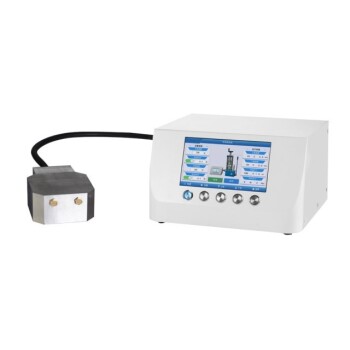
- Infrared Heating Quantitative Flat Plate Mold for Precise Temperature Control
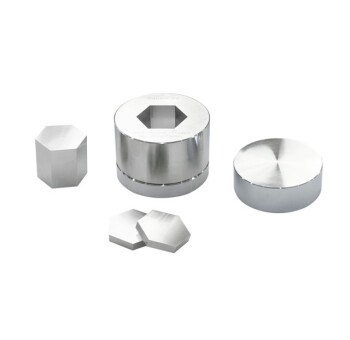
- Lab Polygon Press Mold
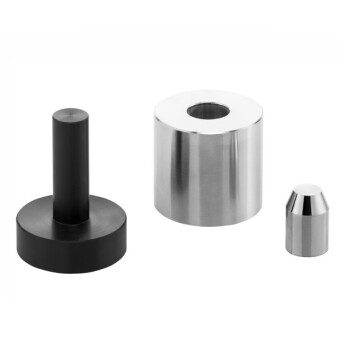
- Lab Button Battery Tablet Press Sealing Mold
- Lab Double Plate Heating Mold for Laboratory Use
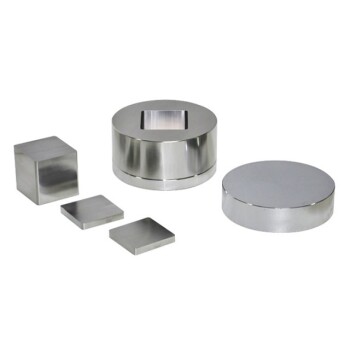
- Square Lab Press Mold for Laboratory Use
People Also Ask
- How do precision temperature-controlled heating plates function in electrolyte thermal stability storage experiments?
- What is the importance of a precision temperature-controlled heating module? Ensure Aluminum-Cadmium Thermal Stability
- How does heating platen precision affect rubber specimens? Achieve uniform density and reliable testing results.
- How are thin polymer films produced for spectroscopic analysis? Expert Guide to Heat and Low-Pressure Methods
- What accessories and field services can be used to optimize the capabilities of presses? Maximize Your Lab Performance