Mixture homogeneity is the foundational factor that determines whether a micropore-confined organic solid pellet maintains its structural integrity or fails under mechanical stress. By ensuring a uniform distribution of components, homogeneity allows for the even application of force during the pressing process, which prevents structural defects like internal voids, cracks, and density gradients.
High mixture homogeneity ensures that laboratory pressing produces structurally stable pellets by enabling uniform force distribution. Without this uniformity, pellets suffer from mechanical instabilities and localized density variances that compromise the accuracy of subsequent analytical measurements.
The Physics of Uniformity in Laboratory Pressing
Achieving Force Equilibrium
When a mixture is thoroughly homogenized—often through methods like magnetic stirring—the laboratory press can distribute pressure equally across the entire sample volume. This equilibrium is essential because it ensures that every part of the pellet reaches the same level of compaction simultaneously.
Mitigating Structural Deficiencies
A well-mixed sample prevents the formation of internal voids and micro-cracks that typically occur when force is applied to a non-uniform mass. By eliminating these gaps, the resulting pellet achieves a higher level of mechanical stability, making it durable enough for handling and various testing environments.
Managing Density Gradients
Homogeneity prevents the development of density gradients, where some areas of the pellet are more compacted than others. Consistent density is vital because it ensures that the physical properties of the micropore-confined solid remain uniform throughout the entire specimen.
Impact on Material Characterization
Representing Bulk Material Properties
Laboratory presses are used to transition loose powders into dense, stable forms that represent the bulk material. If the initial mixture is not homogeneous, the resulting pellet may represent a skewed or segregated portion of the sample rather than its true composite nature.
Ensuring Data Reproducibility
For research involving electrical, thermal, or structural measurements, reproducibility is the primary goal. Homogeneous pellets provide a stable baseline, ensuring that the data collected is a result of the material's properties rather than inconsistencies in sample preparation.
Minimizing Component Segregation
The pressing process itself can help minimize the risk of elemental segregation, but only if the starting mixture is already well-dispersed. Compressing a uniform mixture locks the components into a solid form, preventing the settling or separation that can occur in loose powders.
Understanding the Trade-offs and Risks
The Limits of Mechanical Compaction
While a laboratory press can improve sample density, it cannot fix a fundamentally poor mixture. If components are poorly distributed prior to pressing, the pellet will contain localized "hot spots" of specific elements, leading to "noisy" or inaccurate sensor readings.
Pressure-Induced Material Stress
Applying high pressure to a non-homogeneous mixture can lead to uneven stress distribution. This often results in "capping" or delamination, where the pellet splits into layers immediately after being released from the die.
The Cost of Inadequate Preparation
Skipping a thorough homogenization step—such as magnetic stirring—frequently leads to sample failure. This results in wasted material and the need to recalibrate equipment, significantly slowing down the research timeline.
How to Apply This to Your Project
When preparing micropore-confined organic solid pellets, your preparation strategy should align with your specific research objectives.
- If your primary focus is mechanical stability: Prioritize high-energy homogenization (like magnetic stirring) before pressing to ensure the pellet can withstand physical handling without cracking.
- If your primary focus is analytical accuracy: Ensure the mixture is perfectly uniform to prevent density gradients from skewing electrical or thermal conductivity measurements.
- If your primary focus is high-throughput testing: Invest in automatic or heated presses to maintain consistent density across multiple samples, but never skip the initial manual homogenization step.
Properly homogenized mixtures are the only way to ensure that laboratory pressing yields a pellet capable of providing definitive, high-fidelity data.
Summary Table:
| Key Factor | Impact on Pellet Structure | Benefit to Research Data |
|---|---|---|
| Force Equilibrium | Prevents internal voids and micro-cracks | Enhanced mechanical stability for handling |
| Density Uniformity | Eliminates localized density gradients | Consistent physical property measurements |
| Component Dispersion | Minimizes elemental segregation | High data reproducibility and fidelity |
| Material Stress | Reduces the risk of capping and delamination | Reliable samples for high-throughput testing |
Optimize Your Material Research with KINTEK’s Precision Pressing Solutions
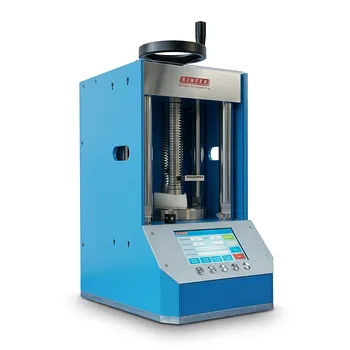
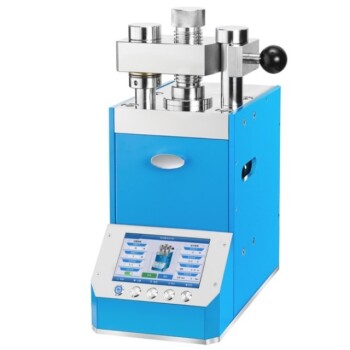
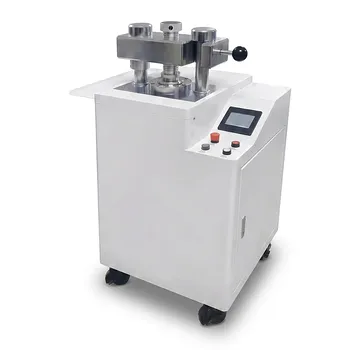
Achieving high-fidelity data from your micropore-confined organic solid pellets starts with the right preparation and the right equipment. KINTEK specializes in comprehensive laboratory pressing solutions, offering a versatile range of equipment designed to meet the rigorous demands of battery research and material science.
Our extensive lineup includes:
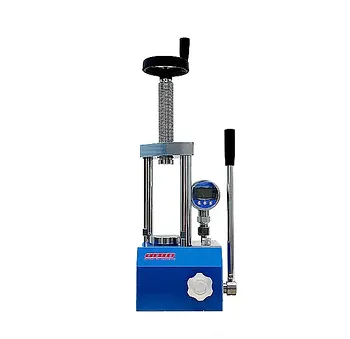
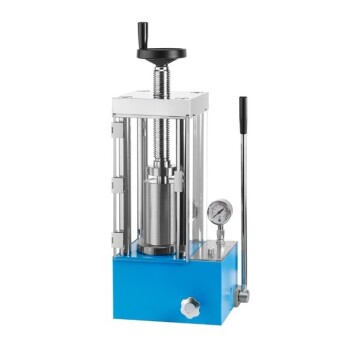
- Manual & Automatic Presses for routine lab compaction.
- Heated & Multifunctional Models for complex material synthesis.
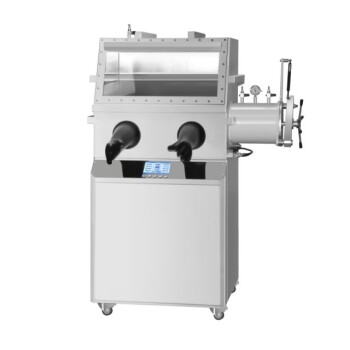
- Glovebox-Compatible Solutions for moisture-sensitive battery research.
- Cold and Warm Isostatic Presses (CIP/WIP) for superior density uniformity.
Why partner with KINTEK? We help you eliminate structural defects like cracking and density gradients, ensuring your pellets are stable and your results are reproducible.
Contact KINTEK today to find your ideal pressing solution!
References
- Kaiya Nakasone, Daisuke Takimoto. Micropore-Confined Organic Solid for a High-Rate and Durable Electrode. DOI: 10.1021/acsami.5c11604
This article is also based on technical information from Kintek Solution Knowledge Base .
Related Products
- Automatic XRF Pellet Press for Laboratory Spectrometry Sample Preparation
- Laboratory Hydraulic Split Electric Lab Pellet Press
- Manual Laboratory Hydraulic Pellet Press Lab Hydraulic Press
- Laboratory Hydraulic Pellet Press for XRF KBR FTIR Lab Press
- Automatic Laboratory Hydraulic Press Lab Pellet Press Machine
People Also Ask
- How can contamination occur during the preparation of pressed pellets for XRF analysis? Expert Prevention Guide
- How does the sample material influence the required pressing load for making an XRF pellet? Find the Optimal Pressure
- What are the different methods for preparing a sample pellet for XRF analysis? Expert Guide to Superior XRF Results
- What are the advantages of preparing a sample as a dense pellet for XRF? Unlock High-Precision Trace Element Analysis
- What is the primary purpose of using an automatic pellet press? Achieve Precise Geopolymer Analysis Results