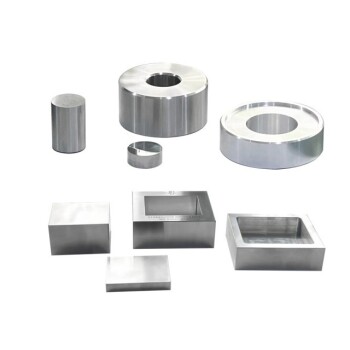
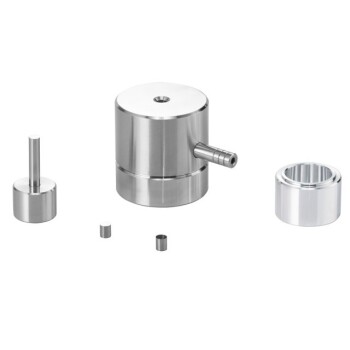
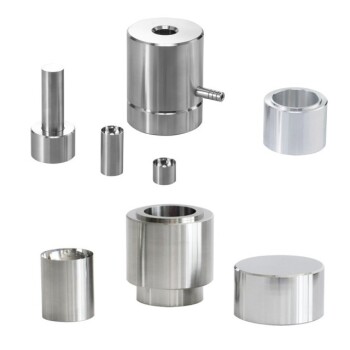
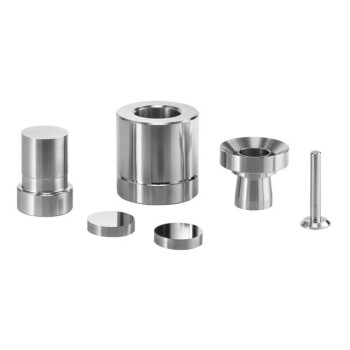
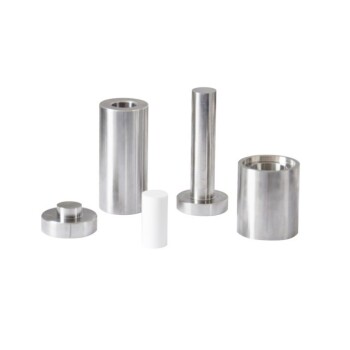
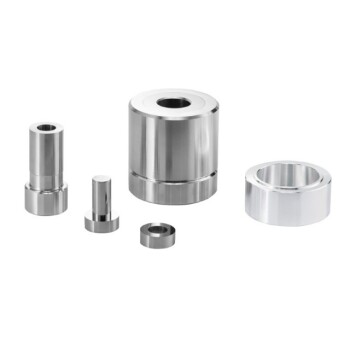
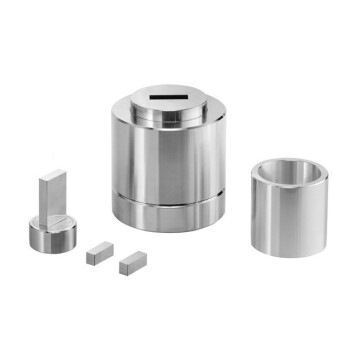
High-rigidity steel molds are the critical foundation for producing accurate composite test specimens because they enforce absolute geometric constraints and prevent deformation during the pouring, pressing, and curing phases. By maintaining precise dimensional stability and superior sealing, these molds eliminate variables like stress eccentricity and material loss, ensuring that the resulting data for bond strength and mechanical performance is both authentic and reproducible.
High-rigidity molds act as a definitive boundary that preserves the intended geometry of a composite against internal and external stresses. Without this structural stiffness, dimensional variances introduce mechanical errors that invalidate experimental comparisons and standard compliance.
Preserving Dimensional Accuracy and Uniformity
Eliminating Stress Eccentricity
High-rigidity steel molds ensure that the test area—frequently standardized at 100mm x 100mm x 400mm—remains perfectly regular. Any slight deviation in the specimen's shape can cause stress eccentricity during testing, where loads are not distributed as intended.
By preventing these dimensional errors, the mold ensures that the bond strength test data reflects the true properties of the material rather than the flaws of the specimen shape.
Preventing Slurry and Material Loss
The superior sealing capabilities of high-strength steel molds prevent the leakage of slurry or fine particles during the pouring process.
Maintaining the full volume of the composite mixture is essential for ensuring the homogeneity of the specimen. This consistency is a prerequisite for results to be compliant with international standards such as ISO or ASTM.
Managing Mechanical and Thermal Stresses
Resisting High Lateral Pressure
In composites with high proportions of hard phases like Silicon Carbide or Alumina, the powder system exerts significant lateral pressure against the mold walls.
High-rigidity materials, such as tungsten carbide or high-strength steel, resist elastic deformation under these loads. This ensures that the molding pressure is transmitted accurately to the center of the material, resulting in uniform density across the part.
Facilitating Uniform Curing
Metallic molds possess excellent thermal conductivity, which is vital when using laboratory hot presses.
They transfer heat rapidly and uniformly from the press platens to the composite material. This ensures consistent internal curing throughout the specimen, preventing weak spots caused by temperature gradients.
Optimizing Surface Integrity and Specimen Quality
Reducing Demolding Resistance
Precision molds often feature high-quality, polished surfaces that significantly reduce friction during the demolding process.
Low friction prevents the specimen from chipping or delaminating when it is removed from the mold. This preserves the structural integrity of the specimen, which is especially critical for surface-sensitive physical property testing.
Ensuring Clean Edges and Flatness
A rigid mold defines the final shape with enough precision to produce clean, defect-free edges and perfectly flat surfaces.
These geometric qualities are essential for accurately evaluating mechanical indicators like tensile, flexural, and impact strength. Without clean edges, specimens may suffer from premature failure triggered by localized stress concentrations.
Understanding the Trade-offs and Limitations
Weight and Handling Complexity
The primary trade-off for high rigidity is the significant weight and bulk of the mold assemblies.
High-strength steel molds require more effort to assemble, disassemble, and clean compared to flexible or lightweight alternatives. This can increase the time required for specimen preparation in high-throughput laboratory environments.
Cost and Material Maintenance
Precision-machined steel and carbide molds represent a higher initial capital investment.
Furthermore, they require strict maintenance protocols to prevent corrosion or surface scratching. If the polished surface is compromised, the benefits of reduced demolding resistance and geometric precision are quickly lost.
How to Apply This to Your Project
Making the Right Choice for Your Goal
- If your primary focus is bond strength or interface testing: Use high-rigidity steel molds with precise 100mm x 100mm x 400mm dimensions to eliminate stress eccentricity and ensure data authenticity.
- If your primary focus is high-pressure powder molding: Prioritize molds made of tungsten carbide or hardened steel to resist lateral deformation and ensure pressure reaches the specimen core.
- If your primary focus is thermal curing or hot pressing: Select molds with high thermal conductivity to ensure a uniform temperature profile and consistent internal curing.
- If your primary focus is surface-sensitive mechanical properties: Invest in molds with precision-polished interior surfaces to minimize demolding damage and produce defect-free edges.
Ultimately, the mold is not merely a container, but a precision instrument that defines the scientific validity of every test result you generate.
Summary Table:
| Feature | Benefit | Impact on Research |
|---|---|---|
| Dimensional Stability | Prevents stress eccentricity | Ensures authentic bond strength & mechanical data |
| Superior Sealing | Eliminates slurry and particle loss | Maintains material homogeneity and ISO/ASTM compliance |
| High Rigidity | Resists high lateral pressure | Produces uniform density in hard-phase composites |
| Thermal Conductivity | Facilitates rapid, uniform heating | Ensures consistent internal curing and eliminates weak spots |
| Polished Surfaces | Reduces demolding friction | Prevents delamination and ensures clean, defect-free edges |
Elevate Your Specimen Precision with KINTEK
In high-stakes material science, the mold is a precision instrument that defines the validity of your results. KINTEK specializes in comprehensive laboratory pressing solutions designed to meet the rigorous demands of battery research and advanced composite development.
Whether you need manual, automatic, heated, multifunctional, or glovebox-compatible models, or require advanced cold and warm isostatic presses, our equipment ensures absolute geometric integrity and uniform material density.
Ready to eliminate variables and secure reproducible data? Contact our technical experts today to find the ideal pressing solution for your laboratory.
References
- Bach Phuong Ho Thi, Hoang Minh Dang. An Experimental Study on the Bond Strength of Old and New Cementitious Materials. DOI: 10.48084/etasr.11056
This article is also based on technical information from Kintek Solution Knowledge Base .
Related Products
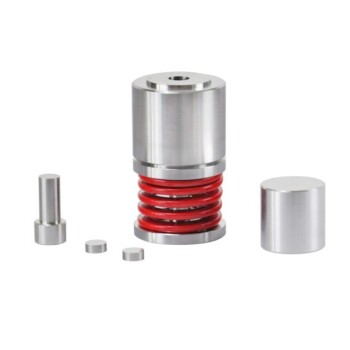
- Lab Round Bidirectional Press Mold
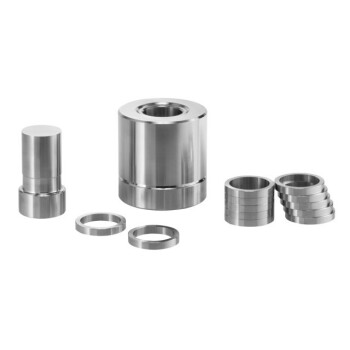
- XRF KBR Steel Ring Lab Powder Pellet Pressing Mold for FTIR
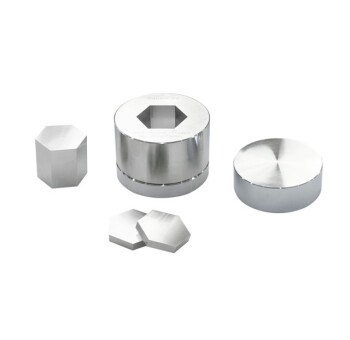
- Lab Polygon Press Mold
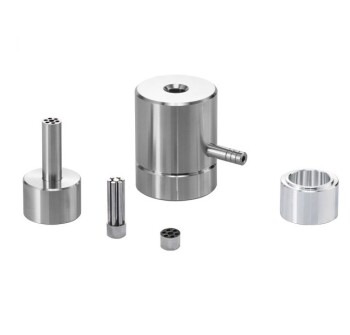
- Special Shape Lab Press Mold for Laboratory Applications
- Lab Isostatic Pressing Molds for Isostatic Molding
People Also Ask
- What is the purpose of incorporating cartridge heaters into a lab press mold for MLCC block compression? Optimize Results
- Why is precise cooling management of the lab press mold necessary? Protect Core Integrity in Thermoforming
- What is the function of a pressing tool in thermoplastic panels? Master Precision Shaping & Fusion Bonding
- Why is a high-performance laboratory molding press critical for in-situ electrolyte formation? Unlock Battery Success
- How do the design and geometric precision of pressing molds and mandrels affect the quality of PTFE composite samples?