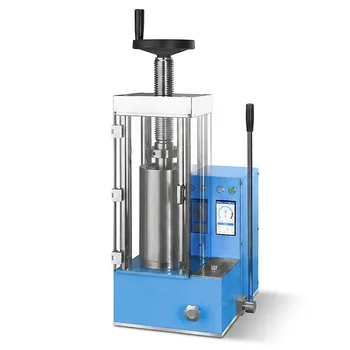
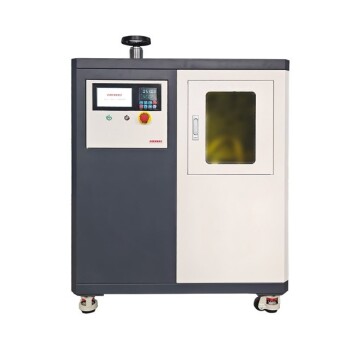
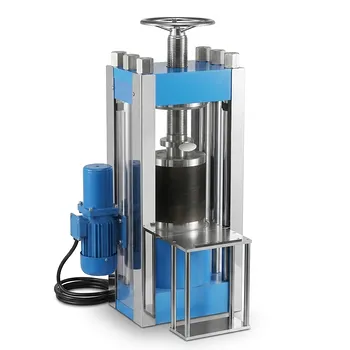
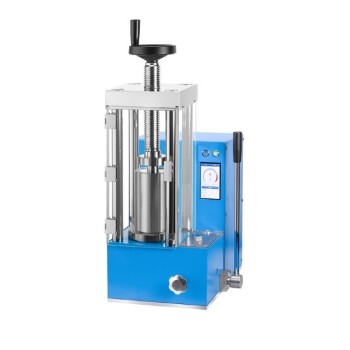
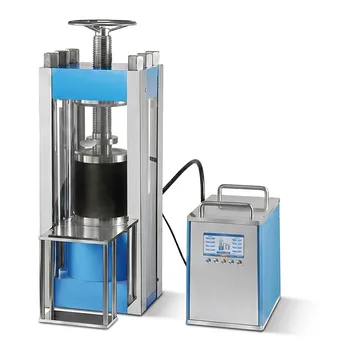
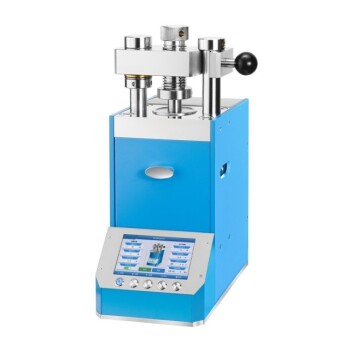
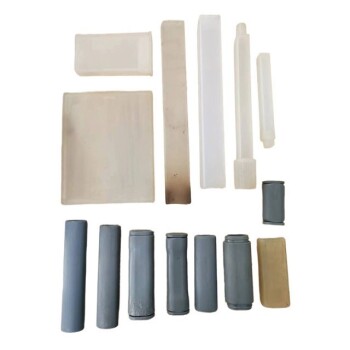
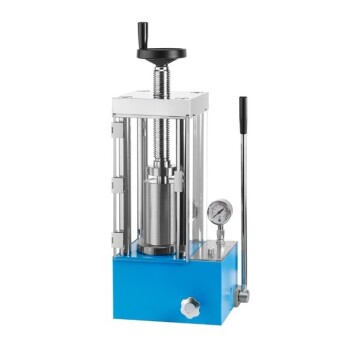
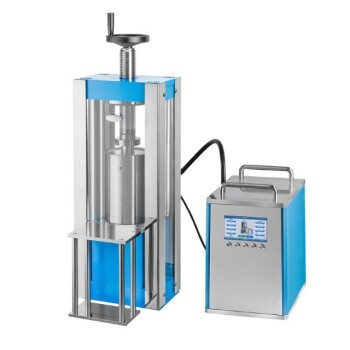
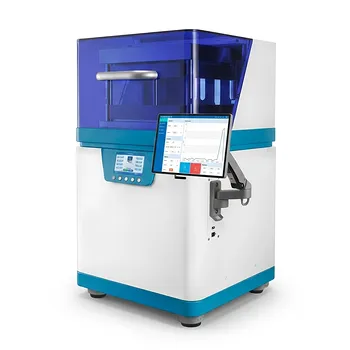
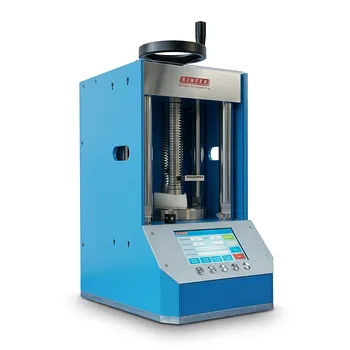
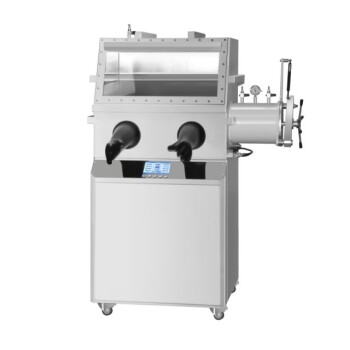
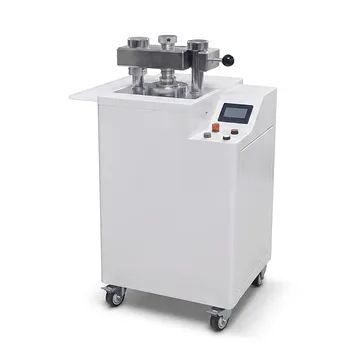
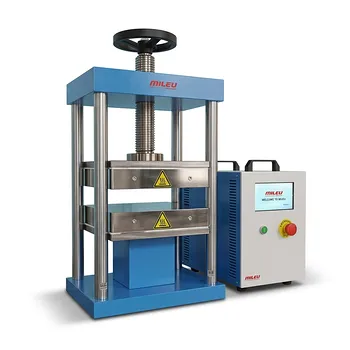
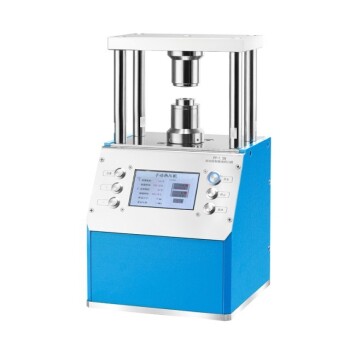
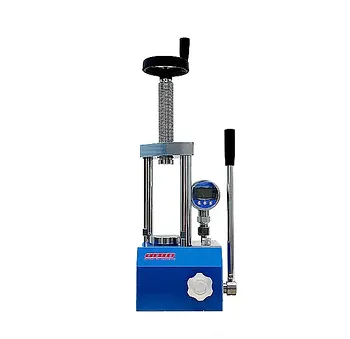
An isostatic press is indispensable for CCS adsorbent research because it applies equal pressure from all directions to ensure extreme internal density uniformity. This process creates high-performance particles that maintain their structural integrity and critical pore networks while operating in harsh, high-temperature, and high-pressure industrial environments. Without this uniform compaction, adsorbents often fail due to structural collapse or uneven gas-flow distribution.
Core Takeaway: Isostatic pressing eliminates internal stress and density gradients found in traditional pressing, enabling the creation of solid adsorbents with the structural resilience and precise porosity required for efficient, long-term carbon sequestration.
The Mechanics of Isotropic Compaction
Eliminating Pressure Gradients
Traditional uniaxial pressing relies on a single direction of force, which creates friction between the powder and the mold walls. This friction results in significant pressure gradients, leading to "green bodies" with varying densities from top to bottom.
An isostatic press uses a liquid medium to transmit pressure equally across the entire surface of the sample. This fluid-based delivery ensures that every part of the adsorbent material experiences the same force, eliminating the internal stress concentrations that lead to failure.
Achieving Isotropic Physical Properties
In Carbon Capture and Storage (CCS), materials must behave predictably under intense stress. Isostatic pressing produces isotropic green bodies, meaning the material's physical properties—such as strength and thermal expansion—are identical in all directions.
This uniformity is critical for validating machine learning predictions and functional material testing. When density is perfectly consistent, researchers can trust that their data reflects the material's true potential rather than a defect in the manufacturing process.
Performance in Carbon Capture Environments
Maintaining Porous Architecture
Solid adsorbents capture $CO_2$ through intricate pore structures that provide massive surface areas. If a material is compacted unevenly, these pores can collapse in high-density zones or become too large in low-density zones.
By applying uniform force, an isostatic press allows for high densification without crushing the delicate internal architecture. This balance is necessary for creating carriers that can transport $CO_2$ efficiently while remaining physically robust.
Preventing Structural Deformation
CCS systems often subject materials to rapid thermal and pressure cycling. Materials with uneven density are prone to micro-cracks and warping because different sections of the material expand and contract at different rates.
Isostatic pressing ensures a high degree of densification that resists these forces. By preventing the formation of micro-cracks during the initial forming stage, the press ensures the material remains stable over thousands of capture cycles.
Understanding the Trade-offs
Process Complexity vs. Uniformity
While isostatic pressing provides superior density, it is generally slower than uniaxial pressing. The need to seal samples in flexible molds and submerge them in fluid adds steps to the R&D workflow.
Mold Limitations and Cost
The flexible molds required for isostatic pressing can be more expensive and difficult to design for complex shapes compared to rigid steel dies. However, for research into pelletized adsorbents, this is often offset by the significant reduction in material waste caused by cracking during sintering.
Sintering Reliability
A primary pitfall in material development is uneven shrinkage during the sintering (heating) phase. Isostatic pressing creates such a uniform "green body" that shrinkage occurs evenly, preventing the deformation or cracking that typically plagues materials formed through dry pressing.
How to Apply This to Your Research
Implementing Isostatic Pressing for Your CCS Project
Selecting the right pressing method depends on your specific material goals and the stage of your research.
- If your primary focus is maximizing $CO_2$ adsorption capacity: Use isostatic pressing to ensure the pore structure remains open and consistent across the entire batch.
- If your primary focus is industrial durability and cycle life: Prioritize isostatic pressing to eliminate the micro-cracks and density gradients that cause structural failure during thermal cycling.
- If your primary focus is high-throughput screening of new chemistries: Consider uniaxial pressing for initial rapid tests, but transition to isostatic pressing once a candidate material is selected for stability validation.
By utilizing isostatic pressure, you ensure that your research is built on a foundation of structural integrity and data reliability, which is essential for scaling CCS technologies.
Summary Table:
| Feature | Isostatic Pressing | Uniaxial Pressing |
|---|---|---|
| Pressure Delivery | Equal from all directions (Fluid-based) | Single direction (Rigid die) |
| Density Uniformity | High (Eliminates internal gradients) | Low (Prone to friction/pressure drops) |
| Pore Integrity | Preserves delicate structures evenly | Risk of localized pore collapse |
| Material Properties | Isotropic (Uniform in all directions) | Anisotropic (Varies by direction) |
| Sintering Outcome | Even shrinkage, fewer cracks | Uneven shrinkage, high warping risk |
Elevate Your CCS Material Research with KINTEK
Precise material density is the backbone of efficient carbon sequestration and battery innovation. KINTEK specializes in comprehensive laboratory pressing solutions tailored for high-stakes R&D. Our extensive range includes:
- Isostatic Presses: Cold (CIP) and Warm (WIP) models for ultimate density uniformity.
- Laboratory Presses: Manual, automatic, heated, and multifunctional units.
- Specialized Environments: Glovebox-compatible models for sensitive material handling.
Whether you are validating machine learning predictions for solid adsorbents or advancing battery research, our equipment provides the structural integrity your data depends on.
Ready to optimize your lab's performance? Contact our experts today to find the perfect pressing solution for your application.
References
- Dominik Horváth, Norbert Miskolczi. Thermo-catalytic co-pyrolysis of waste plastic and hydrocarbon by-products using β-zeolite. DOI: 10.1007/s10098-023-02699-6
This article is also based on technical information from Kintek Solution Knowledge Base .
Related Products
- Electric Isostatic Pressing Machine 40 Tons Automatic Laboratory Powder Compacting Press
- Warm Isostatic Press for Solid State Battery Research Warm Isostatic Press
- Split Warm Isostatic Lab Press 200 Ton Powder Compaction Chamber for Battery Research and Material Science
- Electric Lab Cold Isostatic Press CIP Machine
- Split Hot Isostatic Pressing Machine 150 Ton Laboratory Heated Isostatic Press
People Also Ask
- What are the key characteristics of the isostatic pressing process? Unlock Uniform Density and Complex Geometries
- Why is vacuum-sealed packaging necessary before isostatic pressing of CuPc thin films? Protect Integrity & Uniformity
- How is pressure applied to the material during isostatic pressing? Master Uniform Density and Complex Geometries
- How does pressure distribute during isostatic pressing of aluminum? Achieve Uniform Density for Your Lab Materials
- What are the applications of isostatic pressing in the automotive industry? Precision Manufacturing for High-Performance Parts