The use of hot pressing equipment is the critical bridge between a loose composite mixture and a functional, durable flexible magnetic film. By applying simultaneous heat and pressure, this process densifies the internal structure and facilitates strong interfacial bonding between magnetic nanoparticles and the substrate. This transformation is essential to ensure the film maintains a consistent magnetic response and mechanical integrity even after repeated bending or stretching.
Core Takeaway: Hot pressing is indispensable because it eliminates internal voids and optimizes the molecular bond between magnetic components and fibers, resulting in a high-density material that can withstand physical deformation without losing its magnetic properties.
Enhancing Structural Integrity and Interfacial Bonding
Strengthening the Particle-Fiber Interface
Hot pressing provides the energy and force necessary to secure magnetic nanoparticles to the cellulose fibers or polymer matrix. Without this process, particles remain loosely distributed, making the film prone to "flaking" or internal separation when flexed.
Achieving Material Densification
The simultaneous application of heat and pressure forces the internal components to rearrange into a more compact state. This densification reduces the overall volume and creates a cohesive solid that is significantly stronger than a simply air-dried film.
Compensating for Material Shrinkage
In many composite reactions, volume shrinkage occurs as the material sets or reacts. High-pressure equipment compensates for this shrinkage by forcing particle rearrangement, which prevents the formation of structural cracks that would otherwise compromise the film's durability.
Ensuring Performance Stability Under Stress
Maintaining Magnetic Response During Deformation
A flexible film is useless if its magnetic properties change every time it is bent. Hot pressing ensures that the magnetic particles are locked into a stable architecture, providing a consistent magnetic response regardless of the film's physical orientation.
Eliminating Internal Voids and Bubbles
Air bubbles and microscopic voids act as "stress concentrators" where cracks can easily start. Hot pressing forces the polymer or binder to flow into these gaps, ensuring a superior density and a smooth, flat surface finish.
Optimizing Mechanical Flatness and Uniformity
Precise control over the press allows manufacturers to dictate the final thickness of the film with micrometer-level accuracy. This uniformity is vital for applications where the film must fit into tight electronic assemblies or maintain a specific weight.
Understanding the Trade-offs
Risks of Thermal Degradation
While heat is necessary to make the materials flow, excessive temperatures can damage the cellulose fibers or the magnetic properties of the nanoparticles. Finding the "sweet spot" (often around 80 °C to 150 °C depending on the material) is a delicate balance.
Potential for Over-Compression
Applying too much pressure can lead to "squeeze-out," where the binder material is pushed out of the film entirely. This leaves the film brittle and reduces its flexibility, defeating the purpose of a flexible magnetic composite.
Complexity of Equipment Calibration
Hot pressing requires precise synchronization of temperature, pressure, and time. Inconsistent calibration can lead to internal stresses within the film, causing it to warp or curl once it is removed from the press.
How to Apply This to Your Project
When integrating hot pressing into your post-treatment workflow, your specific goals will dictate your equipment settings.
- If your primary focus is Maximum Flexibility: Use a lower pressure setting combined with a longer dwell time to ensure bonding without making the composite too rigid.
- If your primary focus is High Magnetic Density: Prioritize higher pressure (up to the GPa range if using HIP) to eliminate all internal voids and pack the magnetic particles as tightly as possible.
- If your primary focus is Dimensional Precision: Utilize a press with precision spacers to lock in a specific micrometer thickness, ensuring the film spreads evenly between substrates.
The synergy of heat and pressure is the only way to ensure a flexible magnetic film is a reliable engineering material rather than a fragile laboratory curiosity.
Summary Table:
| Feature | Function in Hot Pressing | Impact on Magnetic Film |
|---|---|---|
| Interfacial Bonding | Applies heat & pressure to secure particles | Prevents flaking and internal separation |
| Densification | Forces internal components to compact | Increases structural strength and cohesion |
| Void Elimination | Removes air bubbles and microscopic gaps | Prevents crack formation and stress points |
| Precision Control | Regulates thickness and uniformity | Ensures fit in tight electronic assemblies |
| Stability | Locks particles into a stable architecture | Maintains consistent magnetic response during flex |
Elevate Your Material Research with KINTEK’s Precision Pressing Solutions
Achieving the perfect balance of flexibility and magnetic density requires equipment that offers absolute control. KINTEK specializes in comprehensive laboratory pressing solutions designed for the most demanding research environments. Whether you are developing next-generation flexible electronics or conducting advanced battery research, our range of manual, automatic, heated, and multifunctional presses provides the exact heat and pressure synchronization your materials need.
Our offerings include:
- Heated Presses: Ideal for optimizing interfacial bonding in magnetic composites.
- Glovebox-Compatible Models: Perfect for moisture-sensitive material processing.
- Cold & Warm Isostatic Presses (CIP/WIP): Ensuring maximum density and uniformity.
Don't let internal voids or poor bonding compromise your results. Contact KINTEK today to discover how our tailor-made pressing solutions can enhance your laboratory's efficiency and material performance!
References
- Francisco Elmano Marques de Sousa, Ana P. C. Almeida. When Cellulose Moves: Smart Sensors and Actuators. DOI: 10.1002/admt.202501426
This article is also based on technical information from Kintek Solution Knowledge Base .
Related Products
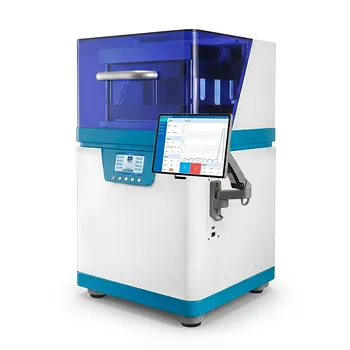
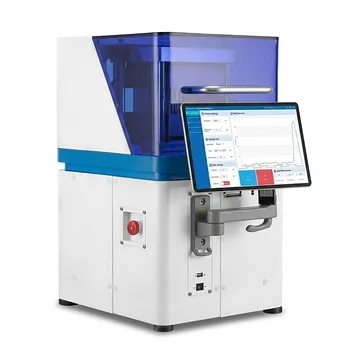
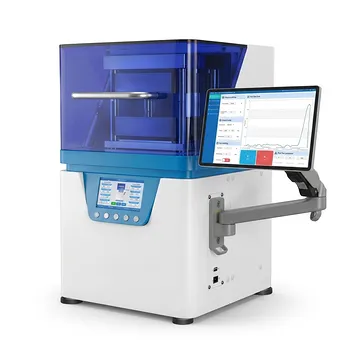
- Automatic Hydraulic Hot Press with Large Plate and Precision Temperature Control for Advanced Material Sample Preparation and Industrial Research
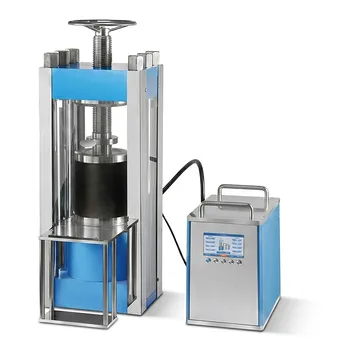
- Heated Hydraulic Press Machine with Heated Plates for Vacuum Box Laboratory Hot Press
- Heated Hydraulic Press Machine With Heated Plates For Vacuum Box Laboratory Hot Press
- Automatic High Temperature Heated Hydraulic Press Machine with Heated Plates for Lab
- Automatic Hydraulic Heat Press Machine with Multi Stage Programmable Control and Integrated Water Cooling Plate Size 180x180mm
People Also Ask
- What are the specific features and applications of hydraulic hot press machines? Precision Solutions for Modern Labs
- How does an automatic hydraulic press operate? Achieve Precision and Consistency in Lab Pelleting
- What are the advantages and common applications of an automatic hydraulic press? Elevate Your Lab's Precision
- What is the technical significance of setting a precise dwell time? Achieve Peak Material Density and Stability
- When is an automatic hydraulic press more suitable than a manual press? Scale Your Lab with Precision & Speed