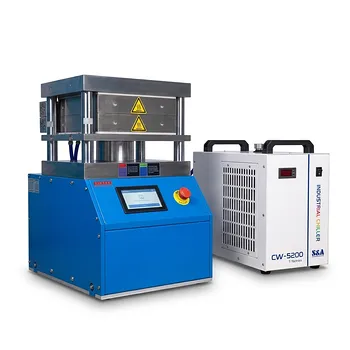
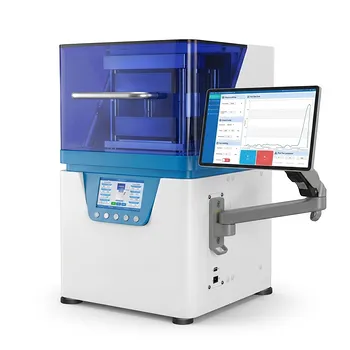
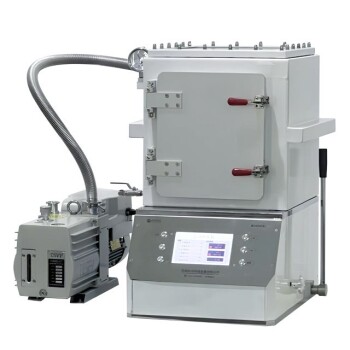
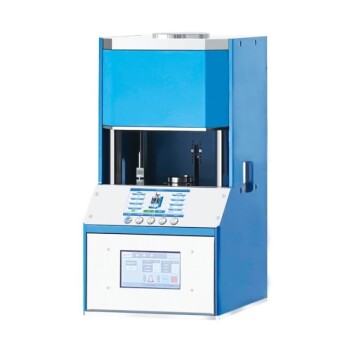
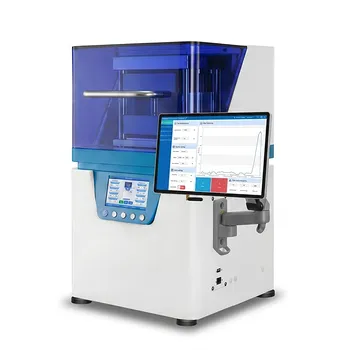
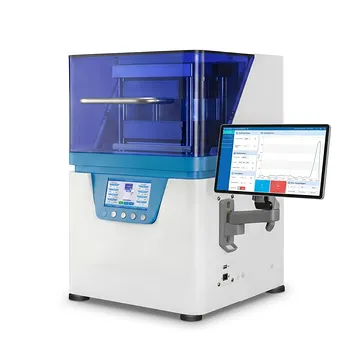
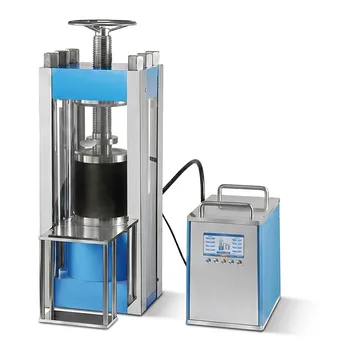
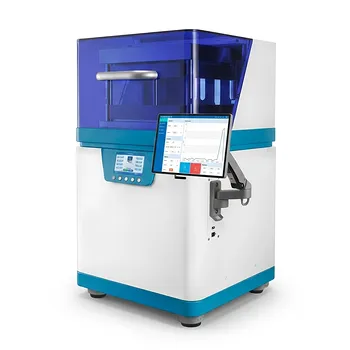
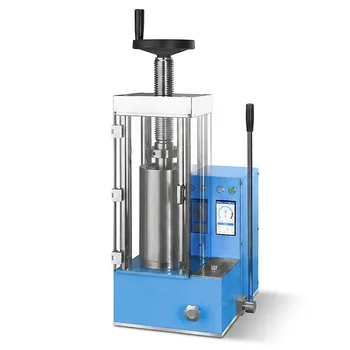
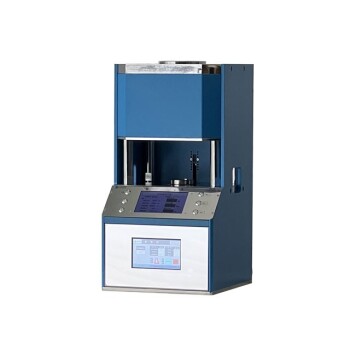
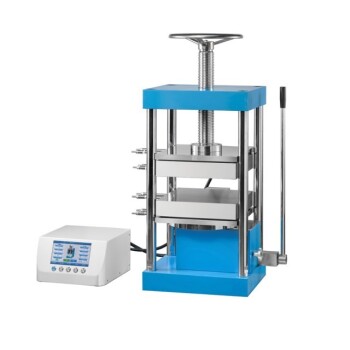
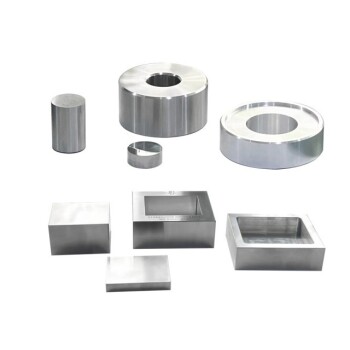
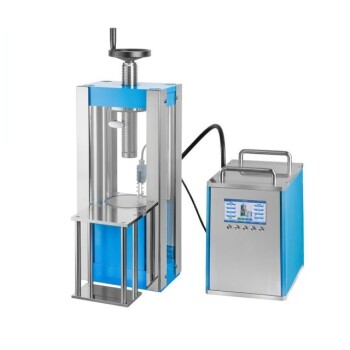
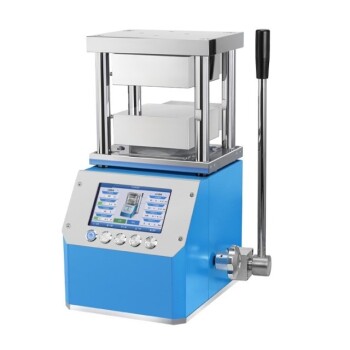
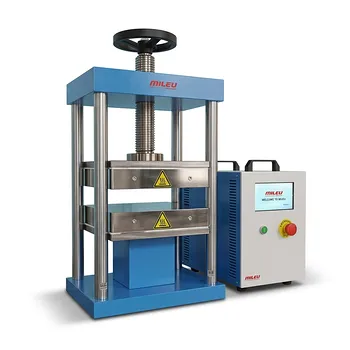
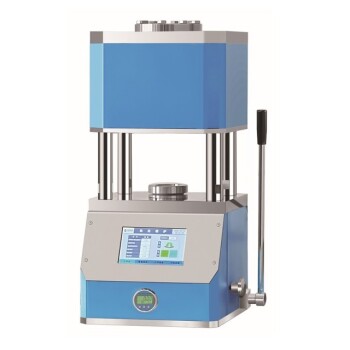
A laboratory electric heated press transforms raw, mixed rubber compounds into standardized test specimens by simultaneously applying precise thermal energy and mechanical pressure. This equipment facilitates the critical vulcanization process, typically at temperatures around 150°C and pressures such as 4.9 MPa, to ensure the reclaimed rubber achieves a uniform internal structure and consistent cross-link density required for accurate mechanical evaluation.
The laboratory press serves as the definitive tool for specimen preparation, bridging the gap between raw reclaimed rubber and a testable material. By strictly controlling the molding environment, it ensures that subsequent data regarding tensile strength, hardness, and density are reflections of the material's properties rather than flaws in the preparation process.
Facilitating the Vulcanization Reaction
Achieving Chemical Cross-linking
The primary role of the heated press is to provide the thermal energy necessary to trigger chemical cross-linking within the reclaimed rubber compound. Under a stable high-temperature environment, the rubber molecular chains rearrange and bond into a three-dimensional network structure.
Precise Temperature and Time Control
Consistency in specimen preparation depends on maintaining a specific temperature (e.g., 140°C to 162°C) for a precise duration, such as 15 minutes. This controlled environment ensures that the vulcanization reaction reaches the intended completion level, directly determining the final cross-link density of the sample.
Pressure Compensation for Structural Integrity
Continuous pressure application during the heating cycle is essential to facilitate the arrangement of molecular chains. Modern electric presses often include pressure compensation features to maintain a steady load, which improves the overall mechanical strength and material uniformity of the finished sheet.
Ensuring Specimen Standardization
Elimination of Internal Defects
High-pressure compression, often reaching up to 100 bar, effectively expels internal gases and entrapped air from the rubber compound. By eliminating bubbles and voids, the press ensures a dense microstructure, which is critical for preventing premature failure during tensile or elongation testing.
Achieving Geometric Precision
The press uses specialized dies to mold rubber into sheets of standard thickness and high flatness. This geometric regularity is a prerequisite for following international standards, such as ASTM D 3182, ensuring that test results are repeatable across different laboratories.
Preparation for Advanced Testing
Once the rubber is pressed into uniform sheets, it provides a reliable foundation for a wide battery of tests. These include evaluating Mooney viscosity, ash content, bromine/chlorine levels, and performance under electron beam irradiation or radiation cross-linking processes.
Understanding the Trade-offs and Pitfalls
Temperature Gradients Across Platens
One of the most common challenges in using an electric heated press is thermal non-uniformity across the heating plates. If one area of the platen is cooler than another, the specimens will have varying degrees of vulcanization, leading to inconsistent and unreliable test data.
Over-vulcanization and Scorching
Exceeding the required residence time or temperature can lead to over-vulcanization, which makes the reclaimed rubber brittle and alters its mechanical profile. Operators must carefully calibrate the "scorch time" to ensure the material does not begin to cure before the press has fully closed and reached the target pressure.
Pressure Calibration Errors
If the pressure is too low, the internal structure of the rubber may remain porous, leading to under-density. Conversely, excessive pressure can cause "flash" (excess material leaking from the mold), which can result in specimens that fall below the required thickness standards.
How to Apply This to Your Project
Making the Right Choice for Your Goal
- If your primary focus is meeting international regulatory standards: Ensure your pressing protocol strictly follows the ASTM D 3182 norm for temperature, pressure, and time.
- If your primary focus is maximizing mechanical strength: Prioritize a press with automatic pressure compensation to ensure the rubber maintains high density throughout the cooling phase.
- If your primary focus is material research and development: Use the press to create thin, high-flatness sheets to ensure uniform penetration during radiation cross-linking or electron beam experiments.
- If your primary focus is quality control in production: Implement a standardized sampling routine where batches are pressed at a consistent 150°C and 4.9 MPa to track longitudinal shifts in reclaimed rubber quality.
By mastering the precise balance of thermal energy and mechanical load, you ensure that every test specimen provides a true and accurate representation of your reclaimed rubber's performance potential.
Summary Table:
| Parameter | Typical Value / Range | Key Benefit in Sample Preparation |
|---|---|---|
| Temperature | 140°C to 162°C | Triggers chemical cross-linking for stable rubber structure |
| Pressure | 4.9 MPa (approx. 100 bar) | Expels air and bubbles to ensure high specimen density |
| Cycle Time | ~15 Minutes | Controls cross-link density for repeatable mechanical tests |
| Standard Compliance | ASTM D 3182 | Guarantees geometric precision and thickness for global audits |
Elevate Your Material Research with KINTEK
Precise sample preparation is the foundation of reliable data. KINTEK specializes in comprehensive laboratory pressing solutions tailored for demanding applications like reclaimed rubber testing and battery research. Our versatile equipment range includes:
- Manual & Automatic Heated Presses for precise thermal and pressure control.
- Multifunctional & Glovebox-Compatible Models for specialized research environments.
- Cold and Warm Isostatic Presses widely applied in advanced battery and ceramic research.
Don't let preparation flaws compromise your testing results. Partner with KINTEK to ensure your specimens meet the highest standards of flatness, density, and uniformity.
Contact KINTEK Today to Find Your Ideal Pressing Solution!
References
- Łukasz Zedler, Krzysztof Formela. Synergistic Effects of Bitumen Plasticization and Microwave Treatment on Short-Term Devulcanization of Ground Tire Rubber. DOI: 10.3390/polym10111265
This article is also based on technical information from Kintek Solution Knowledge Base .
Related Products
- Cylindrical Lab Electric Heating Press Mold for Laboratory Use
- 24T 30T 60T Heated Hydraulic Lab Press Machine with Hot Plates for Laboratory
- Heated Hydraulic Press Machine with Heated Plates for Vacuum Box Laboratory Hot Press
- Automatic Heated Hydraulic Lab Press Machine 200x200 Plate Size for Battery Research and Materials Science
- Automatic Heated Hydraulic Press Machine with Hot Plates for Laboratory
People Also Ask
- How does a laboratory electric heated press ensure sample quality? Optimize SiR-EPDM vulcanization and molding.
- What role does a laboratory electric heated press play in polymer composite fabrication? Key for Standardized Specimens
- What role does a laboratory electric heating press play in NBR molding? Master Vulcanization & Material Density
- Why is a laboratory electric heating press required for PP/EPDM molding? Achieve Superior Specimen Integrity
- What is the purpose of incorporating cartridge heaters into a lab press mold for MLCC block compression? Optimize Results