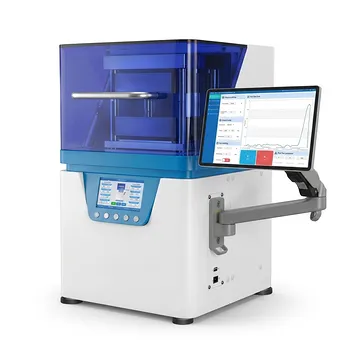
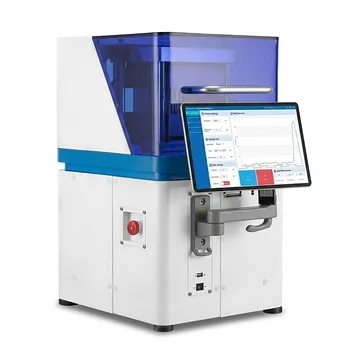
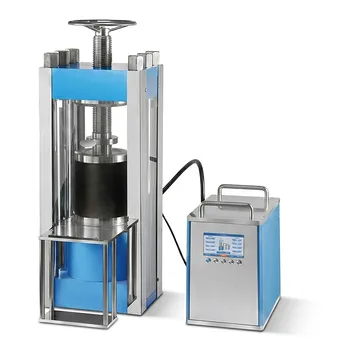
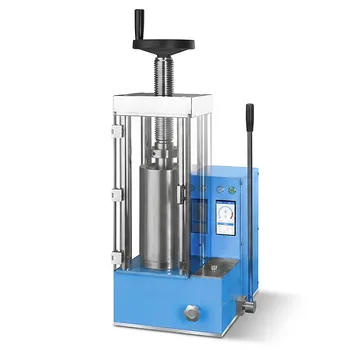
The precision of a laboratory electric heating press is fundamental to the structural integrity of PP and EPDM composites. By simultaneously applying stable high temperatures (typically 165°C to 220°C) and high mechanical pressure (up to 300 kN), the press ensures that composite pellets transition into a molten state, flow fully into mold cavities, and eliminate internal air. This controlled environment is the only way to remove internal voids and defects, ensuring the finished specimens meet the rigorous standards required for mechanical testing.
The core necessity of a laboratory heating press lies in its ability to synchronize thermal energy and mechanical force. This dual action facilitates molecular rearrangement and chemical cross-linking, transforming raw composite mixtures into standardized, high-density specimens free of internal stresses.
Achieving Material Homogeneity and Flow
Melting and Viscosity Control
For Polypropylene (PP) and EPDM to bond effectively, the PP matrix must reach a complete molten state. The heating press provides the precise thermal energy required to lower the material's viscosity, allowing it to act as a fluid medium that encapsulates the EPDM components.
Complete Mold Cavity Filling
High pressure, often reaching 150 kN to 300 kN, forces the softened composite into every corner of the mold. This ensures that the final specimen accurately reflects the intended dimensions and has a perfectly smooth surface finish, which is critical for standardized testing.
Interfacial Bonding and Microscopic Anchoring
The combination of heat and pressure facilitates "mechanical anchoring" and chemical bonding between different material phases. In composites, this ensures the matrix fully penetrates microscopic gaps, creating a cohesive structure rather than a loose mixture of components.
Eliminating Structural Defects
Removal of Internal Voids and Air Bubbles
Air trapped within composite pellets can lead to internal voids, which act as stress concentrators during physical testing. The pressurized degassing process within the heating press forces these air pockets out of the molten material, resulting in a high-density, "solid" specimen.
Prevention of Density Gradients
Without uniform pressure, a specimen may develop areas of varying density, leading to inconsistent mechanical performance. The laboratory press applies consistent force across the entire mold surface, ensuring the physical properties remain uniform from the center to the edges.
Management of Polymer Chain Rearrangement
The controlled pressure-holding process allows polymer chains within the PP and EPDM to rearrange within a confined space. This organized molecular structure is vital for achieving the predictable tensile strength and elasticity required by industrial standards.
The Role of Vulcanization and Cross-linking
Inducing Chemical Reactions in EPDM
When processing EPDM, the press provides the specific temperature (often 165°C) required to trigger the vulcanization cross-linking reaction. This transforms the material from a thermoplastic state into a durable thermoset elastomer.
Stabilizing Mechanical Properties
Synchronized temperature and pressure control ensure that the cross-linking occurs uniformly throughout the specimen. This stabilization prevents the material from deforming under future thermal or mechanical stress, ensuring reliable data during subsequent performance analysis.
Understanding the Trade-offs
Thermal Degradation Risks
Exceeding the required temperature or holding the material at high heat for too long can lead to polymer degradation. This breaks down molecular chains, significantly weakening the specimen and skewing test results toward lower-than-actual performance values.
Residual Stress from Rapid Cooling
While the heating phase is critical, the cooling cycle must also be controlled. If a specimen is cooled too rapidly or unevenly, internal residual stresses can develop, leading to warping or premature failure during mechanical testing.
Pressure-Related Flash and Deflections
Applying excessive pressure beyond the mold's capacity can cause "flash"—where molten material escapes the mold cavity. This not only wastes material but can result in inconsistent specimen thickness and non-standardized dimensions.
How to Apply This to Your Project
When preparing PP/EPDM specimens, your press settings must be tailored to the specific grade of polymer and the desired test outcome.
- If your primary focus is consistent mechanical data: Prioritize a precise pressure-holding cycle to ensure the elimination of all internal voids and density gradients.
- If your primary focus is EPDM vulcanization: Ensure the temperature is held strictly at the manufacturer's recommended cross-linking point (e.g., 165°C) for the full duration of the cycle.
- If your primary focus is surface finish and dimensions: Focus on the cooling phase and mold alignment to prevent warping and ensure uniform thickness across the plate.
Ultimately, the laboratory electric heating press is the bridge between raw composite materials and the scientifically valid data required for material innovation.
Summary Table:
| Process Objective | Press Action | Benefit to Specimen |
|---|---|---|
| Material Flow | Stable Heat (165°C-220°C) | Lowers viscosity for complete mold filling |
| Structural Density | High Pressure (Up to 300 kN) | Eliminates internal voids and air bubbles |
| Molecular Stability | Controlled Cooling Cycle | Prevents warping and reduces residual stress |
| Chemical Bonding | Precise Thermal Energy | Induces EPDM vulcanization and cross-linking |
| Testing Accuracy | Uniform Force Distribution | Ensures consistent density and reliable test data |
Elevate Your Material Research with KINTEK Precision
Ensure the highest standards of specimen integrity for your PP/EPDM and battery research projects. KINTEK specializes in comprehensive laboratory pressing solutions, offering a versatile range of equipment including manual, automatic, heated, multifunctional, and glovebox-compatible models, as well as cold and warm isostatic presses.
Our advanced systems provide the synchronized thermal and mechanical control necessary to eliminate defects and guarantee standardized results for your most demanding applications.
Ready to optimize your lab’s workflow?
Contact KINTEK today to find the perfect press for your research needs!
References
- Mihaela Niţuică, Ovidiu Oprea. Dynamically Cured Polymer Composite Based on PP and EPDM for the Footwear Industry. DOI: 10.24264/lfj.15.2.4
This article is also based on technical information from Kintek Solution Knowledge Base .
Related Products
- Cylindrical Lab Electric Heating Press Mold for Laboratory Use
- Automatic Large Format Laboratory Heated Hydraulic Press 400x400mm Plate Capacity
- 24T 30T 60T Heated Hydraulic Lab Press Machine with Hot Plates for Laboratory
- Automatic Heated Hydraulic Lab Press Machine 200x200 Plate Size for Battery Research and Materials Science
- Heated Hydraulic Press Machine with Heated Plates for Vacuum Box Laboratory Hot Press
People Also Ask
- What role does a laboratory electric heated press play in polymer composite fabrication? Key for Standardized Specimens
- How does a laboratory electric heated press ensure sample quality? Optimize SiR-EPDM vulcanization and molding.
- What role does a laboratory electric heating press play in NBR molding? Master Vulcanization & Material Density
- What is the purpose of incorporating cartridge heaters into a lab press mold for MLCC block compression? Optimize Results
- Which lab press parameters are critical for PLA sheet quality? Master Temperature, Pressure & Cooling