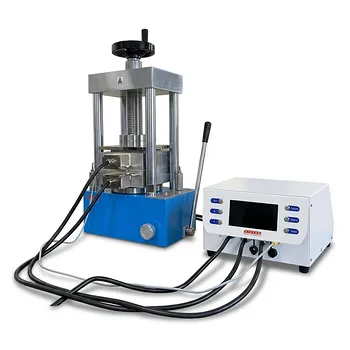
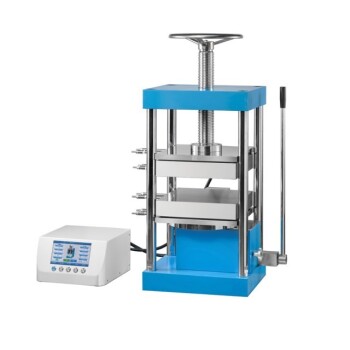
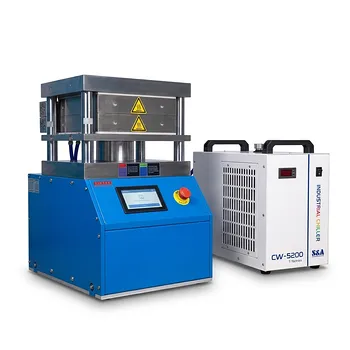
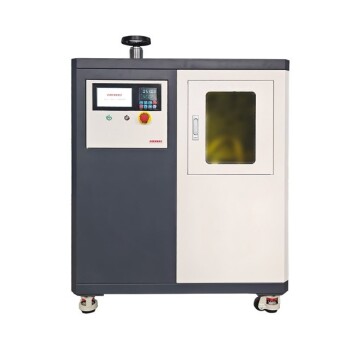
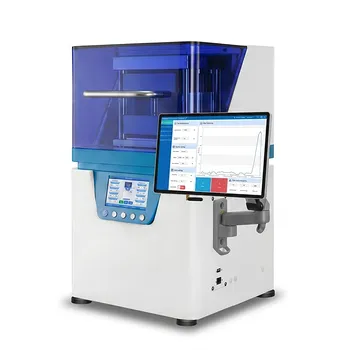
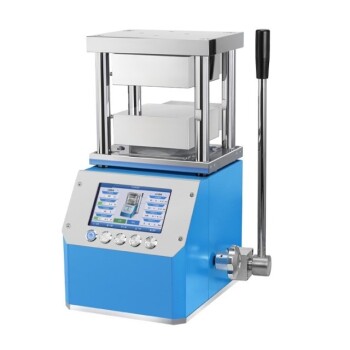
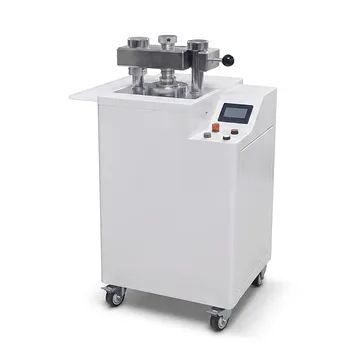
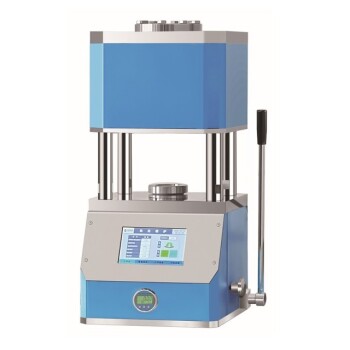
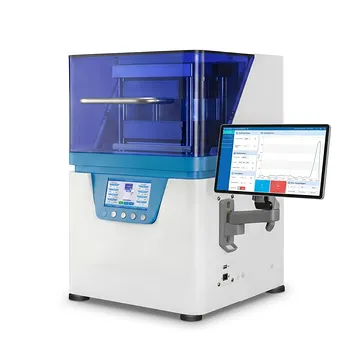
Preparing PLA film sheets with a laboratory heated press involves a precise combination of thermal energy and mechanical force to transform solid granules into a uniform, fluid state that is then molded into a thin geometry. By applying temperatures typically around 210 °C and constant pressure (often ranging from 4 to 5 tons), the press ensures the polymer spreads evenly within a mold, resulting in films with standardized thickness, density, and surface flatness.
A laboratory heated press is the essential tool for converting raw Polylactic Acid (PLA) into high-quality test specimens and substrates. It provides the necessary environment to eliminate internal voids and control the polymer’s morphology, ensuring that subsequent mechanical or chemical analyses are accurate and repeatable.
Transforming Raw Materials into Precision Sheets
Controlled Thermal Melting
The process begins by heating the press platens to the polymer's melting point, which is generally set near 210 °C for PLA. This precise temperature control ensures the granules reach a fluid state without causing thermal degradation, allowing the material to flow into the desired mold shape.
High-Pressure Compaction
Once the PLA is molten, the press applies significant static pressure to force the liquid polymer into every corner of the mold. This pressure is critical for ensuring a uniform thickness (common benchmarks include 0.2 mm or 0.15 mm) and a consistent density across the entire sheet.
Stabilization and Solidification
After the material has spread, the press maintains pressure during the cooling phase to prevent warping or shrinking. This stabilization produces a flat, dense surface that serves as a reliable base for composite lamination or further material processing, such as laser microstructuring.
Enhancing Material Properties for Research
Elimination of Internal Defects
One of the primary reasons for using a heated press is its ability to eliminate internal voids and pores. By compressing the polymer under high heat, air pockets are expelled, which is vital for creating standardized specimens that won't fail prematurely during mechanical testing.
Controlling Polymer Crystallinity
The heated press allows researchers to manipulate the crystalline structure of PLA. By combining specific heating durations with rapid quenching (cooling) after pressing, technicians can produce amorphous specimens, which are often required for specific types of thermal and structural analysis.
Encapsulation of Additives
When preparing PLA blends, such as those containing blowing agents or fillers, the press ensures these components are tightly encapsulated within the polymer matrix. This uniform distribution is necessary for applications like foaming, where a consistent cellular structure is required during expansion.
Understanding the Trade-offs
Static Pressure vs. Shear Stress
Unlike injection molding, a heated press utilizes static pressure, which exerts significantly lower shear stress on the material. This is a major advantage when working with delicate fillers, like starch granules, as it preserves their original morphology and allows for a more accurate assessment of the composite's natural properties.
Manual Labor and Throughput
While a heated press offers superior control over film quality, it is generally a slower, batch-oriented process compared to automated extrusion. Achieving perfect results often requires manual venting cycles to release trapped gases, making it less suitable for high-volume production but ideal for R&D and quality control.
Making the Right Choice for Your Goal
How to Apply This to Your Project
- If your primary focus is mechanical property testing: Use the heated press to ensure a void-free, uniform thickness (e.g., 0.2 mm) to guarantee that test results are repeatable and represent the material's true strength.
- If your primary focus is studying composite morphology: Utilize the press's low-shear environment to preserve the shape and structure of additives like starch or natural fibers.
- If your primary focus is specialized spectroscopy or microstructuring: Opt for precision molding at higher pressures (5 tons) to create the ultra-flat, high-density surfaces required for laser or IR analysis.
By mastering the balance of temperature and pressure, the heated press transforms raw PLA into a highly standardized medium for advanced scientific inquiry.
Summary Table:
| Parameter/Feature | Typical Value | Research Benefit |
|---|---|---|
| Operating Temperature | ~210 °C | Ensures fluid state without thermal degradation |
| Applied Pressure | 4 - 5 Tons | Guarantees uniform thickness and surface flatness |
| Stress Environment | Static Pressure | Low shear preserves morphology of delicate fillers |
| Key Outcome | Void Elimination | Produces high-density, standardized test specimens |
| Cooling Phase | Controlled Quenching | Allows for manipulation of polymer crystallinity |
Elevate Your Material Research with KINTEK Precision Pressing
Achieve flawless PLA film preparation and superior sample consistency with KINTEK’s industry-leading technology. KINTEK specializes in comprehensive laboratory pressing solutions, offering manual, automatic, heated, multifunctional, and glovebox-compatible models, as well as cold and warm isostatic presses widely applied in battery research and advanced polymer studies.
Whether you need to eliminate internal voids for mechanical testing or preserve delicate filler structures, our equipment delivers the exact thermal and mechanical control your R&D demands.
Contact KINTEK today to find the perfect pressing solution for your lab!
References
- Muhammad S. Hasan, Colin A. Scotchford. Cytocompatibility and Mechanical Properties of Short Phosphate Glass Fibre Reinforced Polylactic Acid (PLA) Composites: Effect of Coupling Agent Mediated Interface. DOI: 10.3390/jfb3040706
This article is also based on technical information from Kintek Solution Knowledge Base .
Related Products
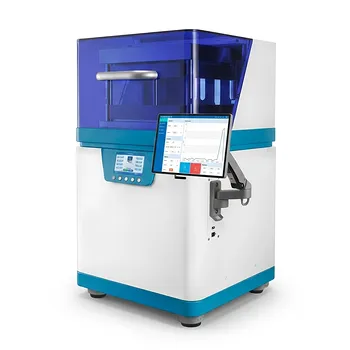
- Automatic Hydraulic Hot Press with Large Plate and Precision Temperature Control for Advanced Material Sample Preparation and Industrial Research
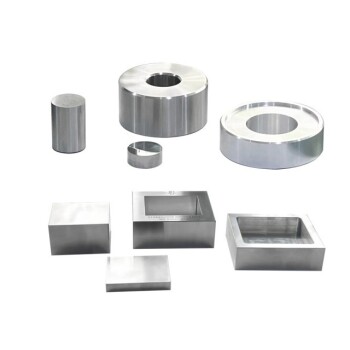
- Lab Heat Press Special Mold
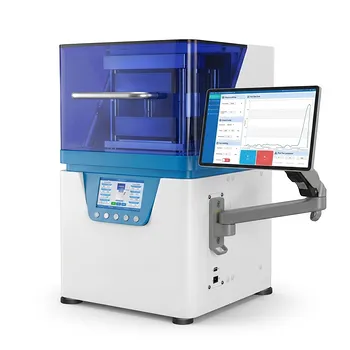
- Automatic Large Format Laboratory Heated Hydraulic Press 400x400mm Plate Capacity
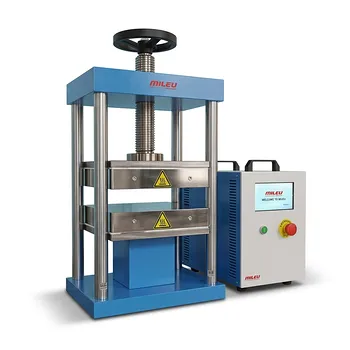
- Split Automatic Heated Hydraulic Press Machine with Heated Plates
- Automatic High Temperature Heated Hydraulic Press Machine with Heated Plates for Lab
People Also Ask
- What are the specific features and applications of hydraulic hot press machines? Precision Solutions for Modern Labs
- How does an automatic hydraulic press operate? Achieve Precision and Consistency in Lab Pelleting
- What are the advantages and common applications of an automatic hydraulic press? Elevate Your Lab's Precision
- What is the technical significance of setting a precise dwell time? Achieve Peak Material Density and Stability
- When is an automatic hydraulic press more suitable than a manual press? Scale Your Lab with Precision & Speed