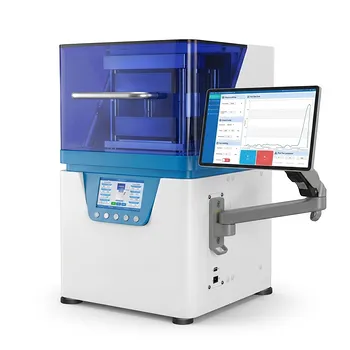
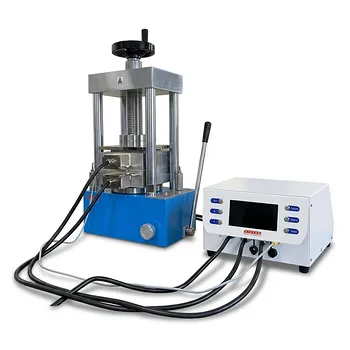
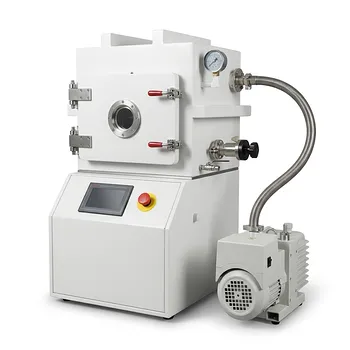
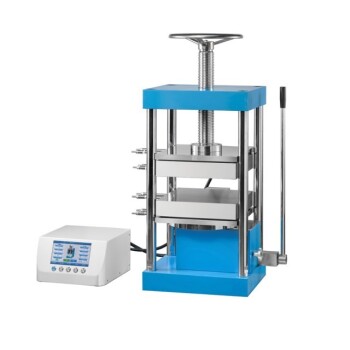
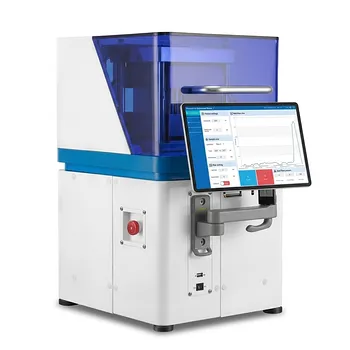
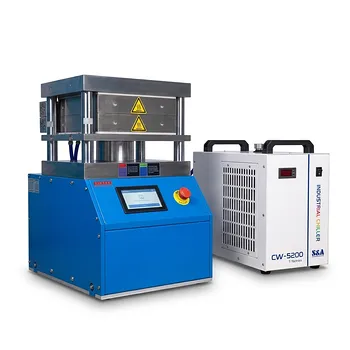
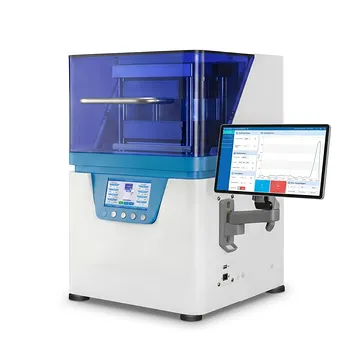
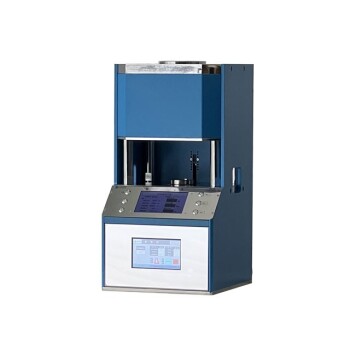
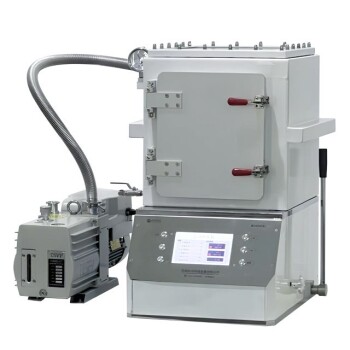
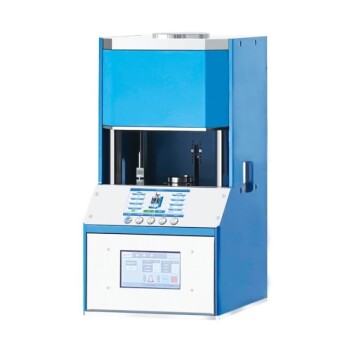
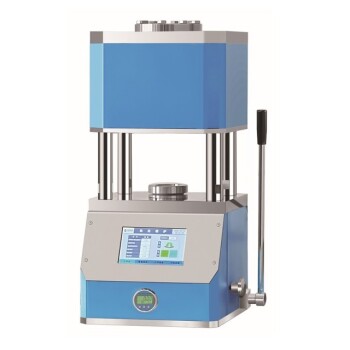
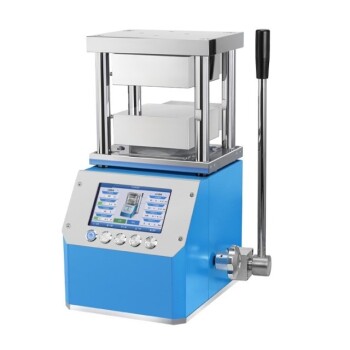
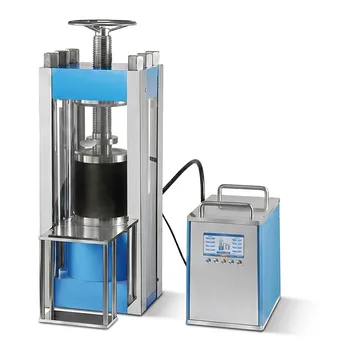
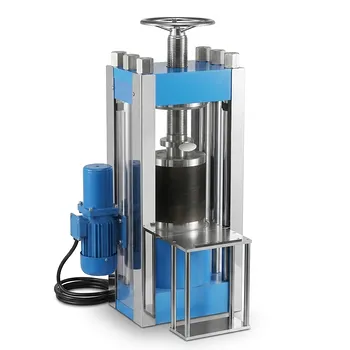
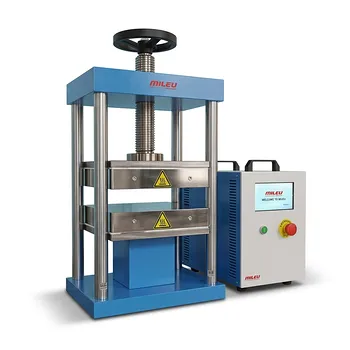
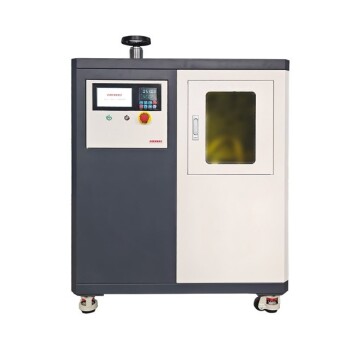
The laboratory heated press is the essential tool for the pressing and curing stage of soy protein adhesives. Its primary function is to apply simultaneous, precise pressure and heat to facilitate the moisture migration and chemical reactions required to form a solid bond. By creating a controlled environment, it enables the protein chains to rearrange and react with cross-linking agents, transforming a liquid or powder adhesive into a structural matrix suitable for shear strength testing.
The heated press serves as a miniaturized industrial environment that converts raw soy protein into a cured adhesive bond through regulated thermal and mechanical energy. Without this precise control, it is impossible to distinguish between the performance of the adhesive chemistry and the inconsistencies of the bonding process itself.
Driving Chemical and Physical Transformations
Facilitating Molecular Rearrangement
As the heated plates compress the sample, the thermal energy increases the mobility of the soy protein chains. This mobility allows the proteins to unfold and rearrange, exposing reactive groups that were previously hidden within the protein’s folded structure.
Stimulating Cross-linking Reactions
Modern soy adhesives often rely on cross-linking agents to improve water resistance and mechanical strength. The press provides the specific activation energy—often around 120 to 150 degrees Celsius—needed to trigger these chemical reactions between the protein side chains and additives like epoxy resins.
Managing Moisture Migration
Soy-based adhesives are typically water-borne, meaning moisture must be removed for a stable bond to form. The controlled heat of the press drives moisture migration out of the bond line, preventing steam pockets and ensuring the adhesive cures into a dense, continuous film.
Ensuring Data Integrity through Standardization
Eliminating Geometric Inconsistencies
A primary challenge in material testing is the presence of air pockets or uneven thickness, which can lead to "data scatter." The press applies high, uniform pressure (often measured in tons) to eliminate internal voids and ensure the test specimen has stable geometric dimensions and uniform density.
Simulating Industrial Production Environments
To be commercially viable, laboratory results must correlate with factory-scale board production. The heated press allows researchers to replicate industrial variables—such as specific pressure, temperature, and press time—ensuring that the shear strength data obtained is a reliable predictor of real-world performance.
Removing Flow Interference
Unlike other preparation methods like fiber spinning, hot pressing molding allows for the direct evaluation of intermolecular forces. By molding the resin into uniform test sheets, researchers can isolate the effects of chemical modifications, such as acetylation or grafting, without the interference of complex flow dynamics.
Understanding the Trade-offs
The Challenge of Scale-Down Realism
While a laboratory press offers high precision, it cannot perfectly replicate the heat transfer dynamics of a massive industrial multi-opening press. Parameters that work at the bench scale may require significant adjustment when transitioned to large-scale manufacturing due to differences in thermal mass and moisture escape routes.
Risk of Over-Curing or Degradation
Applying excessive heat or extending press time can lead to the thermal degradation of the soy protein, which weakens the bond. Identifying the "sweet spot" between insufficient curing (liquid bond) and over-curing (brittle, charred bond) requires rigorous optimization of the temperature and pressure profiles.
Optimizing Your Pressing Protocol
How to Apply This to Your Project
- If your primary focus is Chemical Modification: Use the press to mold uniform resin sheets to isolate and test changes in tensile strength and intermolecular bonding.
- If your primary focus is Industrial Application: Set the heating plate temperatures and pressures to match specific commercial board production standards (e.g., 120°C) to ensure your shear strength data is relevant.
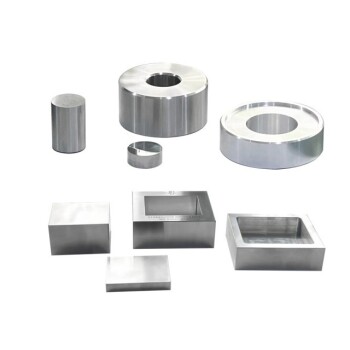
- If your primary focus is Specimen Consistency: Utilize a metal mold within the press to ensure all samples have identical thickness and smooth surfaces, which minimizes variables during standardized hardness or density testing.
Selecting the correct pressing parameters is not merely a preparation step; it is the definitive act that determines the final molecular structure and mechanical viability of the soy protein bond.
Summary Table:
| Key Role | Physical/Chemical Action | Impact on Testing |
|---|---|---|
| Curing Process | Simultaneous heat (120-150°C) & pressure | Transforms liquid adhesive into a solid structural bond. |
| Molecular Rearrangement | Increases protein chain mobility | Exposes reactive groups for stronger intermolecular bonds. |
| Cross-linking | Activates chemical agents | Improves water resistance and mechanical shear strength. |
| Standardization | Eliminates air pockets and voids | Ensures uniform specimen density for reliable, repeatable data. |
| Moisture Management | Controlled thermal evaporation | Prevents steam pockets and ensures a continuous adhesive film. |
Unlock Precision in Your Material Research with KINTEK
Achieving consistent, high-quality results in soy protein adhesive testing or battery research requires more than just heat—it requires total control. KINTEK specializes in comprehensive laboratory pressing solutions designed to meet the rigorous demands of modern R&D.
Our versatile range includes:
- Manual & Automatic Heated Presses for precise curing and molding.
- Multifunctional & Glovebox-Compatible Models for sensitive research environments.
- Cold & Warm Isostatic Presses widely utilized in advanced battery material synthesis.
Ready to eliminate data scatter and simulate industrial production accurately? Contact KINTEK today to find the ideal pressing solution for your lab and elevate your research outcomes.
References
- Heikko Kallakas, Christopher G. Hunt. Effect of Protein Surface Hydrophobicity and Surface Amines on Soy Adhesive Strength. DOI: 10.3390/polym16020202
This article is also based on technical information from Kintek Solution Knowledge Base .
Related Products
- Automatic Large Format Laboratory Heated Hydraulic Press 400x400mm Plate Capacity
- 24T 30T 60T Heated Hydraulic Lab Press Machine with Hot Plates for Laboratory
- Heated Hydraulic Press Machine with Heated Plates for Vacuum Box Laboratory Hot Press
- Automatic Heated Hydraulic Lab Press 120x120mm Plate Fully Automated Material Research Press
- Laboratory Split Manual Heated Hydraulic Press Machine with Hot Plates
People Also Ask
- Why is a laboratory heated hydraulic press required? Ensure Precise Vulcanization for NBR/EPDM Nanocomposites
- What role does a Laboratory Heated Hydraulic Press play in rubber vulcanization? Master Precision Specimen Molding
- How does a laboratory heated hydraulic press improve the performance of dried composite solid-state membranes? Guide
- What role does a laboratory heated hydraulic press play in PLA/MCC molding? Achieve superior composite density.
- Role of Laboratory Heated Hydraulic Presses in Solid Electrolyte Fabrication: Enhance Density & Ionic Conductivity