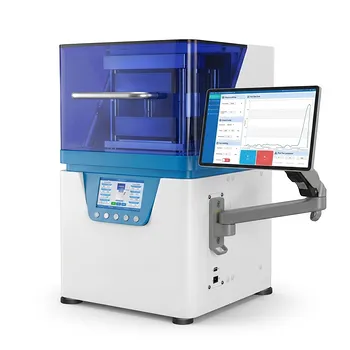
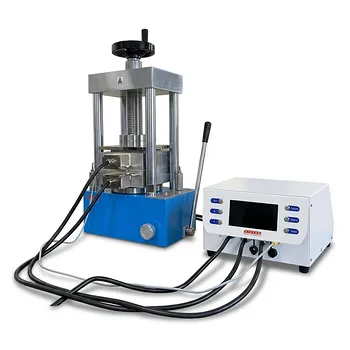
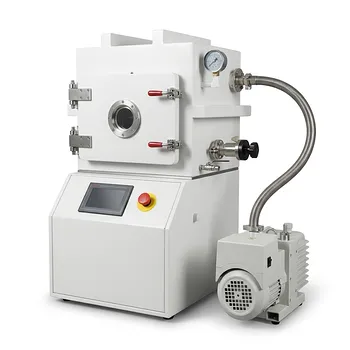
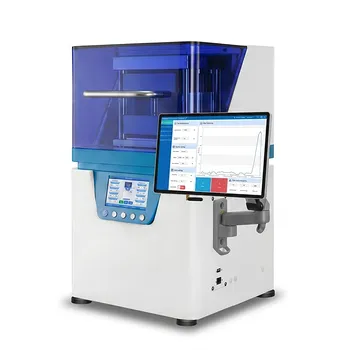
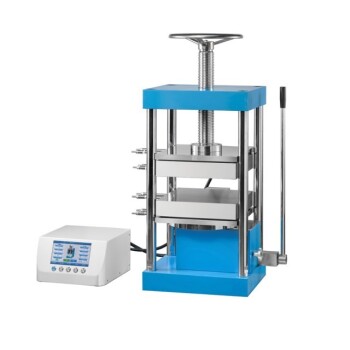
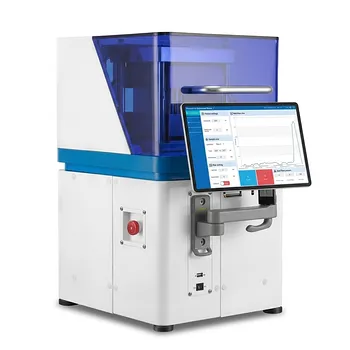
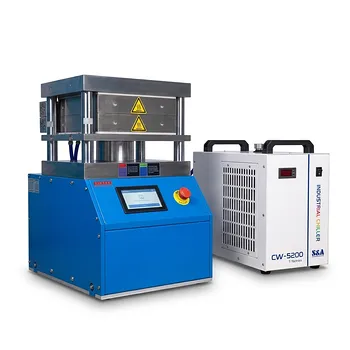
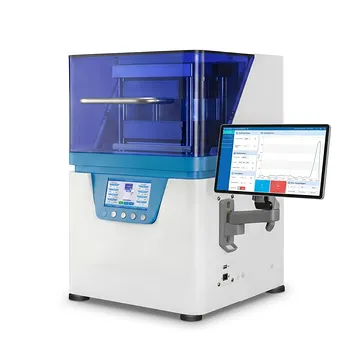
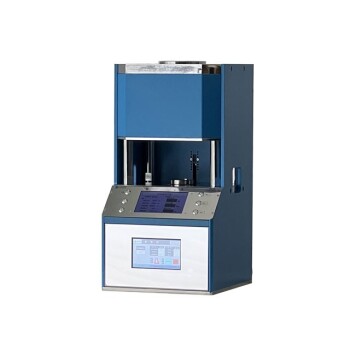
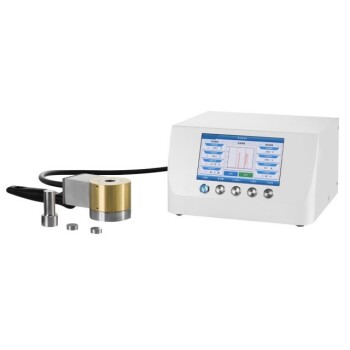
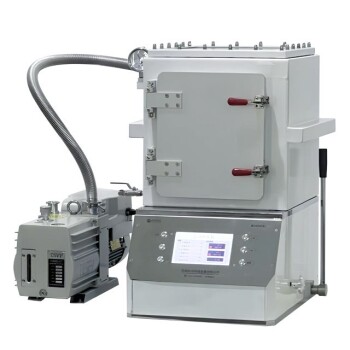
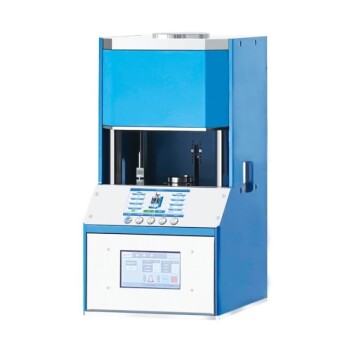
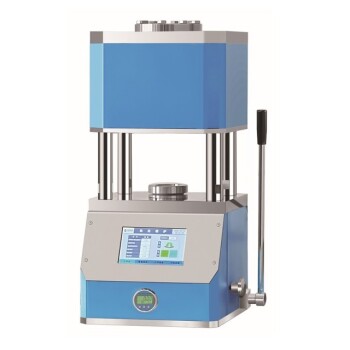
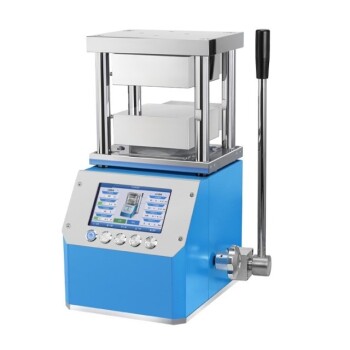
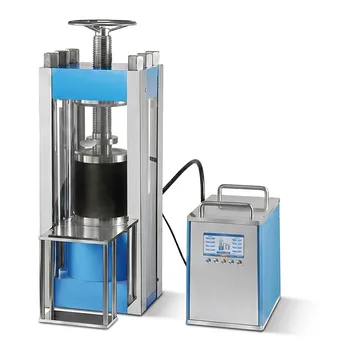
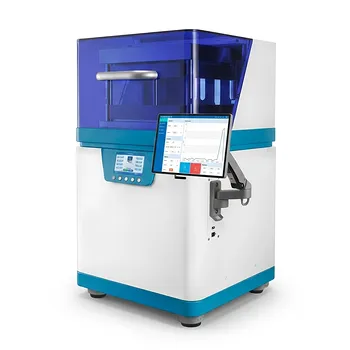
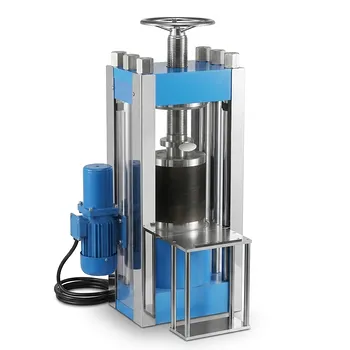
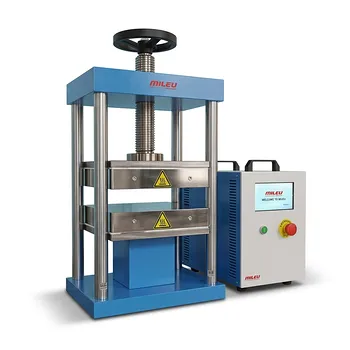
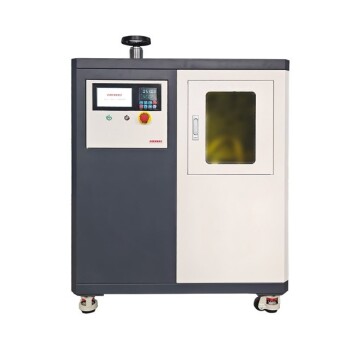
A laboratory heated press is essential because it provides the precise, simultaneous control of temperature and pressure required to induce thermoplastic deformation in the polytetrafluoroethylene (PTFE) binder. This process ensures the binder bonds tightly with the carbon carrier, creating a structurally stable electrode while regulating hydrophobicity to prevent electrolyte flooding during electrolysis.
Core Takeaway: The heated press is the critical tool for transforming loose components into a functional composite; it utilizes thermal energy to soften binders and mechanical force to eliminate voids, resulting in an electrode with optimized pore structure and superior electrical conductivity.
The Role of Thermal-Mechanical Activation
Inducing Thermoplastic Binder Flow
The primary function of the heated press is to raise the temperature of the binder, such as PTFE or pitch, to its softening point or glass transition temperature. This state of thermoplastic deformation allows the binder to flow effectively around carbon particles and silicon oxides.
Establishing Robust Interfacial Bonding
By applying pressure while the binder is in a molten or softened state, the press forces the material to fill microscopic gaps between nanoparticles. This creates a strong mechanical bond that prevents the electrode structure from loosening or collapsing during subsequent high-temperature carbonization or active operation.
Eliminating Internal Defects
High-pressure loads, often ranging from 30 to 120 kN, are necessary to drive the composite material into every part of the mold. This process effectively eliminates internal micro-voids and air bubbles, significantly enhancing the macroscopic density and structural uniformity of the final electrode.
Optimizing Electrode Functionality
Regulating Material Hydrophobicity
For gas diffusion electrodes, managing the balance between gas transport and liquid resistance is vital. The heated press allows researchers to precisely control the distribution of the PTFE binder, which regulates hydrophobicity and ensures the electrode does not become "flooded" by the electrolyte.
Precise Control of Pore Structure
A laboratory press allows for the adjustment of compression ratios, which directly modifies the internal pore structure and thickness of the electrode. Maintaining a consistent pore structure is essential for ensuring uniform current distribution and reducing interfacial resistance during long-term operation.
Enhancing Electronic Conductivity
Proper compression improves the mechanical contact between the catalyst layer, gas diffusion layer, and the current collector. This optimized contact reduces ohmic losses and enhances the electronic conductivity of the electrode, ultimately maximizing the power density of the battery or electrolysis system.
Understanding the Trade-offs
The Risk of Over-Compression
While high pressure increases density and conductivity, excessive compression can collapse the porous network. If the pores are too constricted, gas diffusion is hindered, leading to mass transport limitations that stifle the electrochemical reaction.
Precision vs. Throughput
Laboratory heated presses offer extreme precision in temperature (e.g., +/- 1°C) and pressure, but they are typically designed for batch processing. Achieving this level of consistency in high-volume production requires significantly more complex equipment to maintain the same "pressure-holding" duration and thermal stability.
Material Sensitivity to Heat
Excessive heat during the pressing phase can lead to the thermal degradation of certain polymer matrices or sensitive catalysts. Conversely, insufficient heat prevents the binder from flowing, resulting in a brittle electrode with poor mechanical integrity and high internal resistance.
How to Apply This to Your Project
Making the Right Choice for Your Goal
To achieve the best results with your gas diffusion electrode, align your pressing parameters with your specific performance targets.
- If your primary focus is Maximum Power Density: Prioritize the optimization of the compression ratio to balance electronic conductivity with an open pore structure for gas transport.
- If your primary focus is Long-Term Durability: Focus on the precise "pressure-holding" time at the binder's melting temperature to ensure a permanent, stable bond between the binder and the carbon carrier.
- If your primary focus is Minimizing Interfacial Resistance: Use the heated press to achieve a high degree of mechanical flatness and uniform contact between the catalyst layer and the current collector.
By mastering the synergy of heat and pressure, you can engineer gas diffusion electrodes that remain stable, conductive, and efficient under the most demanding electrochemical conditions.
Summary Table:
| Key Function | Impact on Gas Diffusion Electrodes (GDE) |
|---|---|
| Thermal Activation | Induces thermoplastic deformation in PTFE binders for optimal flow. |
| Pressure Loading | Eliminates internal micro-voids and establishes robust interfacial bonding. |
| Pore Regulation | Controls compression ratios to balance gas transport and electrolyte resistance. |
| Conductivity Boost | Optimizes mechanical contact to reduce ohmic losses and maximize power density. |
Optimize Your Battery Research with KINTEK Precision
Elevate your electrochemical engineering with KINTEK’s comprehensive laboratory pressing solutions. We specialize in high-precision equipment tailored for battery research, including manual, automatic, heated, multifunctional, and glovebox-compatible models, as well as cold and warm isostatic presses.
Whether you are refining pore structures or ensuring the mechanical stability of gas diffusion electrodes, KINTEK provides the thermal-mechanical control necessary for superior electrode performance.
Contact KINTEK today to find the perfect pressing solution for your lab!
References
- Mariana C. O. Monteiro, Marc T. M. Koper. Efficiency and selectivity of CO2 reduction to CO on gold gas diffusion electrodes in acidic media. DOI: 10.1038/s41467-021-24936-6
This article is also based on technical information from Kintek Solution Knowledge Base .
Related Products
- Automatic Large Format Laboratory Heated Hydraulic Press 400x400mm Plate Capacity
- 24T 30T 60T Heated Hydraulic Lab Press Machine with Hot Plates for Laboratory
- Heated Hydraulic Press Machine with Heated Plates for Vacuum Box Laboratory Hot Press
- Automatic Heated Hydraulic Lab Press 120x120mm Plate Fully Automated Material Research Press
- Laboratory Split Manual Heated Hydraulic Press Machine with Hot Plates
People Also Ask
- Why is a laboratory heated hydraulic press required? Ensure Precise Vulcanization for NBR/EPDM Nanocomposites
- What role does a Laboratory Heated Hydraulic Press play in rubber vulcanization? Master Precision Specimen Molding
- How does a laboratory heated hydraulic press improve the performance of dried composite solid-state membranes? Guide
- What role does a laboratory heated hydraulic press play in PLA/MCC molding? Achieve superior composite density.
- Role of Laboratory Heated Hydraulic Presses in Solid Electrolyte Fabrication: Enhance Density & Ionic Conductivity