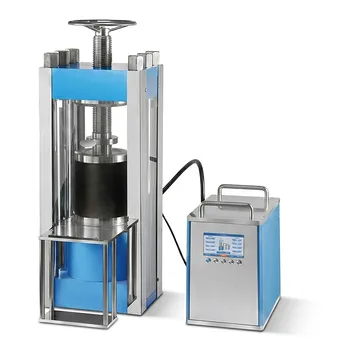
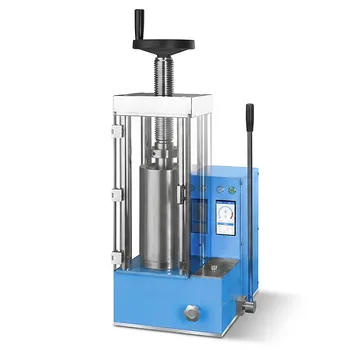
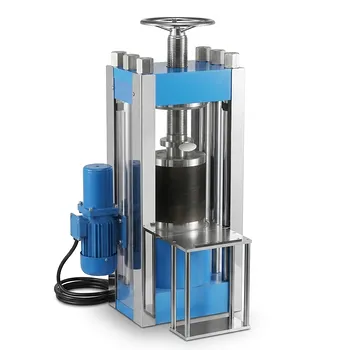
The precision of an electrically heated laboratory press is the foundation of reliable polymer research.
An electrically heated laboratory press is indispensable because it provides the simultaneous high temperature and extreme pressure—often reaching 150kN or more—required to transform raw PP/EPDM nanocomposites into a uniform state. By precisely managing the preheating, pressure-holding, and cooling cycles, this equipment eliminates internal air bubbles, density gradients, and residual stresses. This ensures that the resulting test specimens possess the high density and structural integrity necessary for accurate, reproducible mechanical and physical testing.
Core Takeaway: To obtain scientifically valid data, nanocomposite specimens must be free of structural defects and possess a standardized thermal history. An electrically heated lab press is the only tool capable of providing the controlled environment needed to achieve the density and homogeneity required for rigorous material analysis.
Eliminating Internal Structural Defects
Removal of Voids and Air Pockets
During the mixing of PP and EPDM, air can become trapped within the composite matrix or granules. An electric press applies high pressure while the material is in a molten state, forcing out internal air bubbles and voids that would otherwise act as failure points during mechanical testing.
Achieving Maximum Material Density
High-pressure application (such as 50 bar to 300 kN) ensures that the polymer chains and nanocomposite fillers are compacted into a dense, solid mass. This high density is vital for downstream tests like Cone Calorimetry and UL94 flame retardancy, where internal gaps could skew the rate of heat or flame spread.
Ensuring Geometric Uniformity
Standardized testing requires specimens with consistent thickness and surface flatness. The heated press uses precision molds to create plates with uniform dimensions, ensuring that the cross-sectional area remains constant during tensile or bending evaluations.
Optimizing the Polymer Microstructure
Controlling Thermal History and Crystallinity
The properties of Polypropylene are highly sensitive to how it is cooled from a molten state. By precisely controlling the cooling rate, a heated press provides the material with a consistent thermal history, which standardizes the crystallinity and ensures that differences in test results are due to the material composition rather than processing variations.
Enhancing Interfacial Bonding
In nanocomposites, the bond between the reinforcing phase and the polymer matrix is critical. The combination of heat and pressure facilitates interfacial fusion and flow, allowing the different components to cross-link physically and the polymer chains to rearrange within a confined space.
Elimination of Processing Stresses
Rapid or uneven cooling can trap "frozen-in" stresses within a plastic part, leading to warping or premature failure. The programmable cycles of an electric press allow for pressurized degassing and controlled cooling, which relax these internal stresses and produce a more stable specimen.
Understanding the Trade-offs
Risks of Thermal Degradation
While high temperatures are necessary for flow, exceeding the material's thermal stability limit can cause polymer degradation. If the press remains at peak temperature (e.g., 220°C) for too long, the PP or EPDM chains may break down, resulting in specimens that do not accurately represent the intended composite.
Balancing Pressure and Flow
Excessive pressure can occasionally lead to "flash" (material escaping the mold), while insufficient pressure fails to eliminate micro-pores. Achieving the perfect specimen requires a calibrated balance between the softening point of the resin and the mechanical force applied.
Equipment Calibration Requirements
The accuracy of the data is entirely dependent on the calibration of the heating elements and pressure sensors. If the press has "cold spots" or uneven pressure distribution across the platens, the resulting specimens will have inconsistent density, undermining the reliability of the entire study.
How to Apply This to Your Research
To ensure your PP/EPDM nanocomposite specimens meet international standards, align your pressing parameters with your specific testing goals.
- If your primary focus is mechanical strength: Prioritize a precise cooling cycle to standardize crystallinity and eliminate residual stresses that could cause premature brittle failure.
- If your primary focus is flame retardancy or thermal stability: Focus on maximum pressure application (e.g., 150KN+) during the molten phase to ensure the complete removal of internal oxygen pockets and voids.
- If your primary focus is nanocomposite dispersion: Utilize a longer preheating and "pressure-holding" phase to allow sufficient time for the polymer to flow and fully encapsulate the nano-fillers.
By mastering the thermal and mechanical variables of the laboratory press, you ensure that every data point collected reflects the true potential of your material formulation.
Summary Table:
| Feature | Impact on Specimen | Research Benefit |
|---|---|---|
| High Pressure (150kN+) | Eliminates internal air bubbles & voids | Ensures maximum density for flame & mechanical tests |
| Precise Thermal Control | Uniform melting & interfacial fusion | Enhances bonding between polymer and nanofillers |
| Programmable Cooling | Standardizes polymer crystallinity | Ensures reproducible data by removing processing stress |
| Precision Molds | Guarantees uniform thickness & flatness | Provides consistent cross-sectional area for tensile evaluations |
Elevate Your Material Research with KINTEK Precision
Achieving the perfect PP/EPDM nanocomposite specimen requires a delicate balance of extreme pressure and thermal accuracy. KINTEK specializes in comprehensive laboratory pressing solutions designed to eliminate structural defects and ensure scientific validity. Our range includes:
- Manual & Automatic Heated Presses: For precise control over thermal history.
- Multifunctional & Glovebox-Compatible Models: Perfect for sensitive material handling.
- Cold and Warm Isostatic Presses: Widely applied in advanced battery research and metallurgy.
Don't let internal voids or inconsistent crystallinity undermine your data. Let our experts help you select the ideal pressing system for your specific application.
Contact KINTEK Today for a Consultation
References
- Mihaela Niţuică, Maria Daniela Stelescu. PP/EPDM Polymeric Compounds Dynamically Cured Compatibilized and Reinforced with Nanoclay. DOI: 10.37358/mp.18.3.5024
This article is also based on technical information from Kintek Solution Knowledge Base .
Related Products
- Cylindrical Lab Electric Heating Press Mold for Laboratory Use
- Automatic Heated Hydraulic Lab Press Machine 200x200 Plate Size for Battery Research and Materials Science
- 24T 30T 60T Heated Hydraulic Lab Press Machine with Hot Plates for Laboratory
- Automatic Large Format Laboratory Heated Hydraulic Press 400x400mm Plate Capacity
- Heated Hydraulic Press Machine with Heated Plates for Vacuum Box Laboratory Hot Press
People Also Ask
- What role does a laboratory electric heated press play in polymer composite fabrication? Key for Standardized Specimens
- How does a laboratory electric heated press ensure sample quality? Optimize SiR-EPDM vulcanization and molding.
- What role does a laboratory electric heating press play in NBR molding? Master Vulcanization & Material Density
- Why is a laboratory electric heating press required for PP/EPDM molding? Achieve Superior Specimen Integrity
- What is the purpose of incorporating cartridge heaters into a lab press mold for MLCC block compression? Optimize Results