External stack pressure is the fundamental mechanical requirement for operational anode-free solid-state batteries. It creates and maintains the critical interface between the solid electrolyte and the lithium metal that is plated during the charging process. Without this constant pressure, the battery would suffer from high interfacial resistance, mechanical disconnection, and catastrophic failure due to lithium dendrite growth.
In anode-free solid-state batteries, external stack pressure acts as a dynamic restorative force that compensates for the massive volume changes inherent in lithium plating and stripping. By inducing mechanical creep and ensuring continuous physical contact at the interface, pressure minimizes resistance and suppresses dendrite growth, turning a collection of rigid, non-compliant layers into a functional electrochemical system.
Maintaining Interfacial Integrity
Converting Point Contacts to Surface Contacts
The rigid nature of components like garnet solid electrolytes and metal current collectors makes it difficult to achieve natural, intimate contact. Initial interfaces are often limited to "point contacts," which results in extremely high interfacial resistance and restricted ion flow.
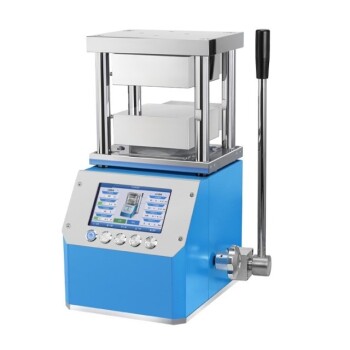
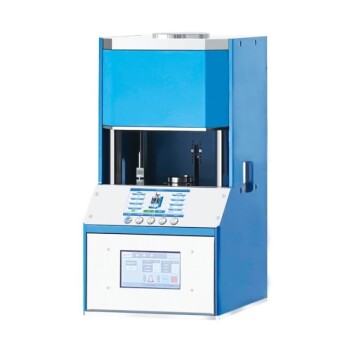
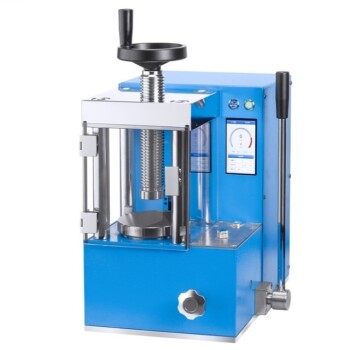
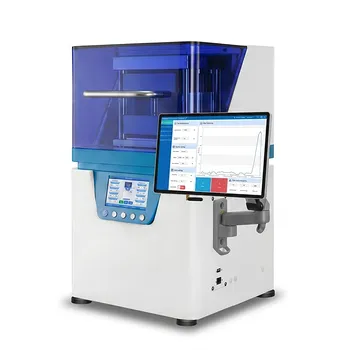
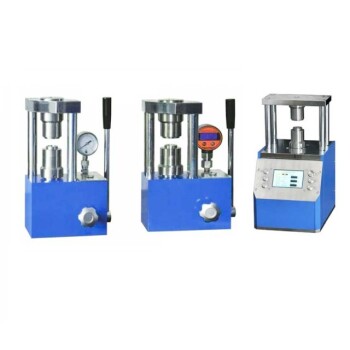
A hydraulic press applies controlled mechanical pressure to force these materials into deep mechanical interlocking. This process maximizes the effective contact area, ensuring uniform and low-resistance ion transport across the solid-solid interface.
Utilizing Metal Creep to Fill Voids
Metallic lithium and sodium are relatively soft and undergo plastic deformation or "creep" under pressure. Applying external force induces this creep, causing the metal to actively flow into and fill microscopic voids on the surface of the rigid solid electrolyte.
This filling process is essential for maintaining a low-impedance physical interface. By eliminating gaps, the pressure ensures that every part of the interface stays electrochemically active.
Managing the "Anode-Free" Dynamic
Accommodating Massive Volume Changes
In an anode-free architecture, the lithium metal layer is created from scratch during the first charge. This leads to significant volume changes within the battery cell as the lithium plates and strips.
External stack pressure acts as a clamping force that keeps the layers together despite these fluctuations. It prevents the active materials from physically drifting apart, which would otherwise lead to a permanent loss of capacity.
Eliminating Voids During Discharge
During the stripping (discharge) process, lithium is removed from the interface, which naturally tends to create interfacial voids. If these voids are left unmanaged, the contact area shrinks, forcing the remaining contact points to carry higher current densities.
The continuous pressure provided by a hydraulic press "collapses" these potential voids as they form. This ensures that the lithium-ion transport remains reliable and seamless throughout the entire discharge cycle.
Enhancing Electrochemical Performance and Safety
Inhibiting Dendrite Penetration
One of the primary failure modes of solid-state batteries is the growth of lithium dendrites that can pierce the electrolyte and cause a short circuit. High stack pressure helps to physically suppress the initiation and propagation of these dendrites.
By maintaining a dense, uniform lithium layer, the pressure prevents the "localized" growth patterns that lead to penetration. This mechanical suppression is a key factor in extending the cycle life of the battery.
Preventing Current Constriction
When contact is poor, current is forced through a few small points, a phenomenon known as current constriction. This leads to excessive local current density, which accelerates dendrite formation and heat generation.
Uniform stack pressure ensures a homogeneous current distribution across the entire interface. This increases the battery's critical current density (CCD), allowing it to operate safely at higher rates of charge and discharge.
Understanding the Trade-offs and Challenges
The Risk of Mechanical Fracture
While high pressure is beneficial for the interface, it can be detrimental to the solid electrolyte's structural integrity. Many solid electrolytes are ceramic and brittle; excessive pressure can cause micro-cracking or total fracture, leading to immediate cell failure.
System-Level Weight and Complexity
In a laboratory setting, a hydraulic press is an ideal tool for precise pressure control. However, translating this to a real-world electric vehicle or electronic device is difficult, as heavy clamping mechanisms add significant "dead weight" and reduce the overall energy density of the battery pack.
Applying Pressure Strategies to Your Project
Recommendations for Implementation
- If your primary focus is Lab-Scale Research: Use a hydraulic press with integrated pressure monitoring to precisely determine the minimum pressure required to achieve low impedance.
- If your primary focus is Interface Stability: Prioritize applying pressure during the initial assembly and first charge to ensure deep mechanical interlocking of the lithium-metal layer.
- If your primary focus is Low-Temperature Performance: Maintain constant stack pressure to overcome physical gaps caused by the differential thermal expansion or contraction of the solid layers.
- If your primary focus is Commercial Scalability: Investigate materials that can function in a pressure-free state after an initial high-pressure "set," or explore lightweight mechanical clamping alternatives to bulky presses.
Properly calibrated external pressure is not merely an enhancement, but a baseline requirement for transforming rigid solid-state materials into a high-performance, anode-free energy storage system.
Summary Table:
| Key Challenge | Pressure Function | Operational Benefit |
|---|---|---|
| High Resistance | Converts point to surface contact | Maximizes ion transport efficiency |
| Interfacial Voids | Induces metal creep and plasticity | Maintains a continuous, low-impedance interface |
| Volume Changes | Clamps layers during plating/stripping | Prevents physical disconnection and capacity loss |
| Dendrite Growth | Mechanically suppresses penetration | Enhances battery safety and cycle life |
Optimize Your Battery Research with Precision Pressure Solutions
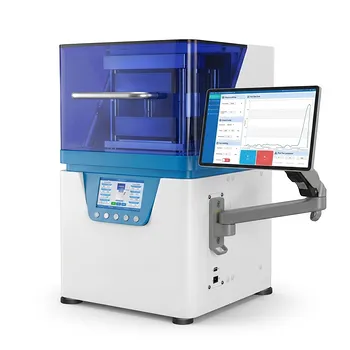
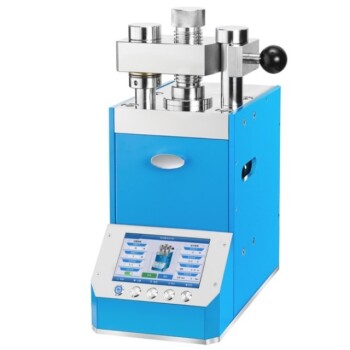
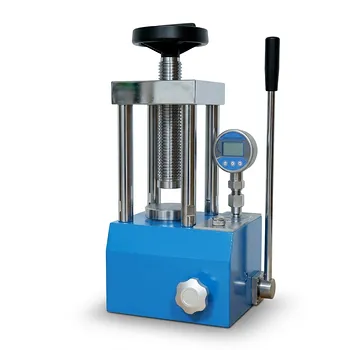
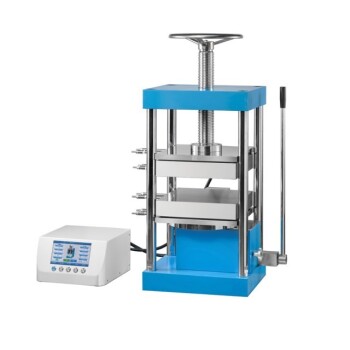
The success of your anode-free solid-state battery depends on precise, repeatable mechanical pressure. KINTEK specializes in comprehensive laboratory pressing solutions tailored for cutting-edge energy research.
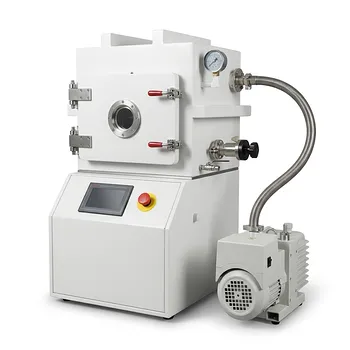
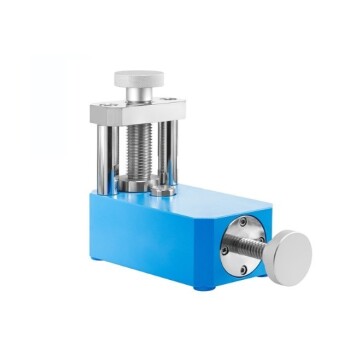
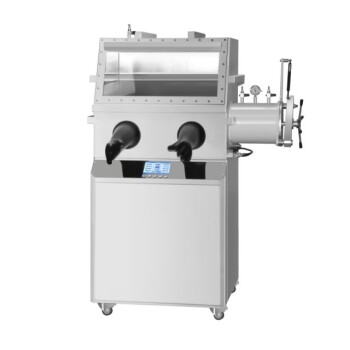
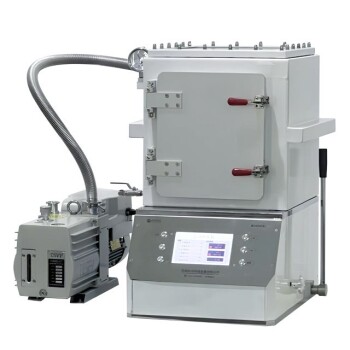
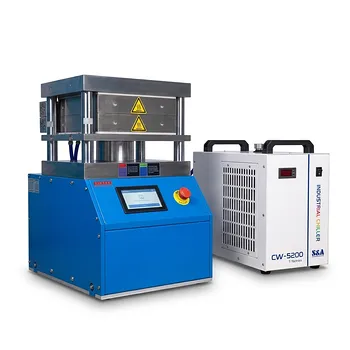
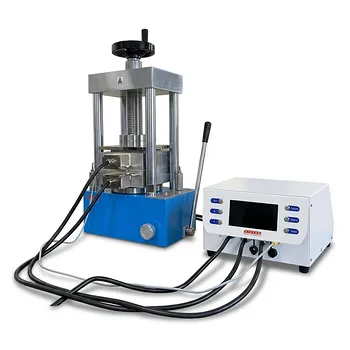
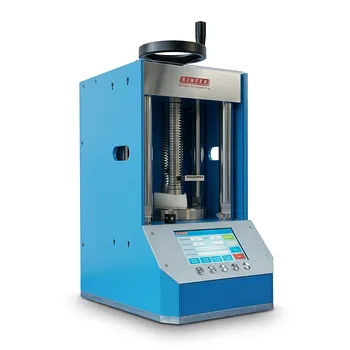
Our extensive range includes manual, automatic, heated, multifunctional, and glovebox-compatible models, as well as cold and warm isostatic presses widely applied in battery research. Whether you are managing volume changes or suppressing dendrite growth, KINTEK provides the specialized tools needed to ensure perfect interfacial integrity.
Contact KINTEK today to find the ideal pressing solution for your lab.
Related Products
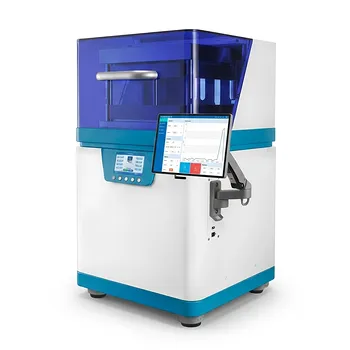
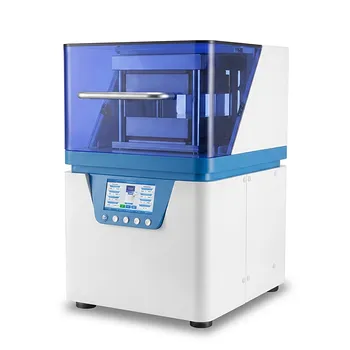
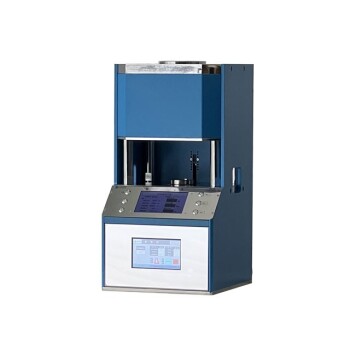
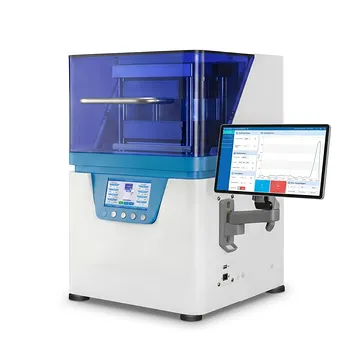
- Automatic Hydraulic Hot Press with Large Plate and Precision Temperature Control for Advanced Material Sample Preparation and Industrial Research
- Automatic Hydraulic Heat Press Machine with Multi Stage Programmable Control and Integrated Water Cooling Plate Size 180x180mm
- Automatic High Temperature Heated Hydraulic Press Machine with Heated Plates for Lab
- Automatic Heated Hydraulic Lab Press with Programmable Touch Screen Controls and Precision Temperature Regulation
- Manual Heated Hydraulic Lab Press with Integrated Hot Plates Hydraulic Press Machine
People Also Ask
- What are the specific features and applications of hydraulic hot press machines? Precision Solutions for Modern Labs
- How does an automatic hydraulic press operate? Achieve Precision and Consistency in Lab Pelleting
- What are the advantages and common applications of an automatic hydraulic press? Elevate Your Lab's Precision
- What is the technical significance of setting a precise dwell time? Achieve Peak Material Density and Stability
- When is an automatic hydraulic press more suitable than a manual press? Scale Your Lab with Precision & Speed