Specialized metal dies ensure biocoke product consistency by providing a rigid, calibrated environment that dictates exact geometric dimensions while facilitating uniform pressure and heat distribution. These precision molds, often designed as calibrated iron tubes, prevent structural defects by ensuring the biomass powder is compressed evenly throughout its entire volume. This results in a standardized fuel product that maintains its density and shape without failing after the molding pressure is released.
The consistency of biocoke relies on the metal die's ability to act as both a precision container and a conduit for energy. By mastering the transfer of mechanical pressure and thermal energy, these dies prevent internal stresses that lead to product failure.
Geometric Precision and Dimensional Control
Standardizing Physical Specifications
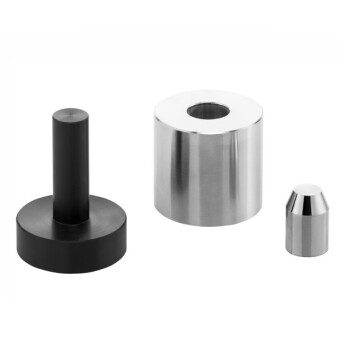
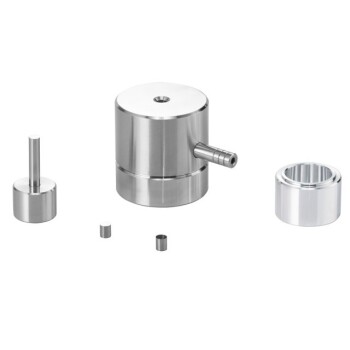
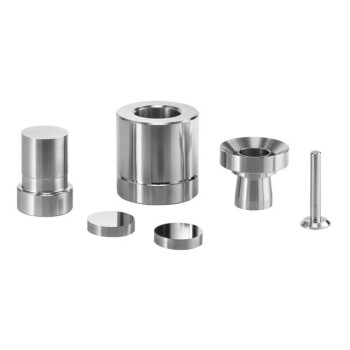
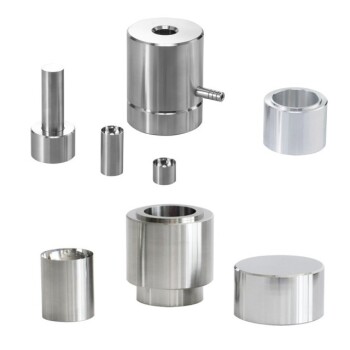
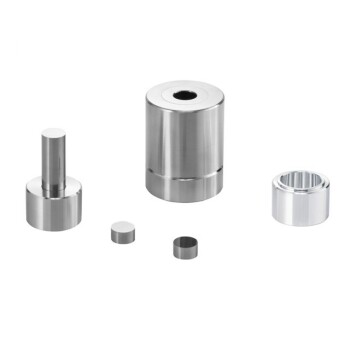
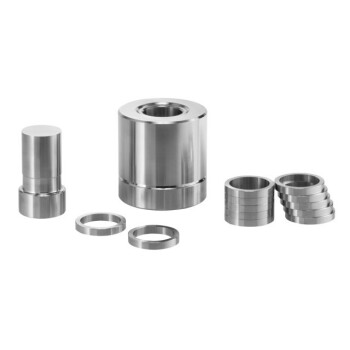
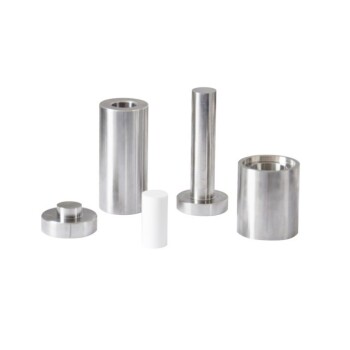
Specialized metal dies serve as the primary tool for defining the final geometric dimensions of the biocoke. For instance, using calibrated iron tube molds allows manufacturers to produce fuel with a consistent 12 mm diameter.
Maintaining Volumetric Uniformity
By acting as precision containers, these dies ensure that every unit of biomass powder is confined to the same volume during compression. This uniformity is essential for downstream applications, such as automated feeding systems in industrial furnaces that require predictable fuel sizes.
Structural Integrity Through Pressure and Heat
Multi-dimensional Pressure Transfer
During the hydraulic molding process, the die ensures multi-dimensional pressure transfer. This means the force is not just applied in one direction but is distributed throughout the biomass, creating a dense, cohesive structure.
Preventing Internal Defects
Proper pressure distribution is the primary defense against delamination or cracking. By containing the material securely during the release of hydraulic force, the die prevents the biomass from expanding unevenly and breaking its internal bonds.
Uniform Heat Distribution
Specialized dies are designed to facilitate uniform heat distribution during the compression cycle. Consistent temperature levels across the mold ensure that the natural binders in the biomass activate evenly, cementing the particles together into a solid mass.
Understanding the Trade-offs
The Risk of Mechanical Wear
While metal dies provide precision, they are subject to intense frictional forces and high pressures. Over time, the internal surface of a calibrated iron tube can wear down, leading to slight deviations in product diameter and potential surface roughness on the biocoke.
Thermal Lag and Cycle Times
Metal dies have specific thermal properties that require careful management. If the die does not reach or maintain the optimal temperature quickly enough, the heat distribution may become uneven, negating the benefits of the specialized mold and leading to "soft" spots in the fuel.
How to Apply This to Your Project
Ensuring Long-term Product Consistency
Effective biocoke production requires matching the die material and calibration to your specific biomass characteristics and output requirements.
- If your primary focus is dimensional accuracy: Utilize thick-walled, calibrated iron tube molds to minimize deformation under high hydraulic pressures.
- If your primary focus is structural durability: Prioritize dies with high thermal conductivity to ensure rapid and uniform heat transfer during the molding cycle.
- If your primary focus is equipment longevity: Implement a regular inspection and honing schedule for the dies to counteract the effects of internal abrasion and maintain surface smoothness.
By leveraging the precise containment and energy transfer properties of specialized metal dies, you can transform raw biomass into a reliable, high-performance industrial fuel.
Summary Table:
| Key Feature | Benefit to Biocoke | Mechanical Role |
|---|---|---|
| Calibrated Dimensions | Consistent diameter & shape | Geometric constraint |
| Pressure Distribution | High density; prevents cracking | Multi-directional transfer |
| Thermal Management | Uniform binder activation | Even heat distribution |
| Rigid Structure | Prevents expansion & warping | Secure containment |
Optimize Your Research with KINTEK Precision Pressing Solutions
Achieving consistent product density and structural integrity requires more than just pressure—it requires precision. KINTEK specializes in comprehensive laboratory pressing solutions designed to meet the rigorous demands of material science and battery research.
Whether you require manual, automatic, heated, or multifunctional presses, our equipment ensures uniform heat and pressure distribution for every sample. We also offer glovebox-compatible models and isostatic presses (cold and warm) to support specialized experimental environments.
Ready to elevate your lab's efficiency? Contact KINTEK today to find the perfect pressing solution for your specific application!
References
- Erdiwansyah Erdiwansyah, Yeggi Darnas. The Effect of Pressure and Heating on Biocoke Fuel from Empty Fruit Bunches. DOI: 10.37934/arfmts.114.1.159165
This article is also based on technical information from Kintek Solution Knowledge Base .
Related Products
- Lab Button Battery Tablet Press Sealing Mold
- Lab Button Battery Disassembly and Sealing Mold
- Lab Cylindrical Press Mold for Laboratory Use
- Lab XRF Boric Acid Powder Pellet Pressing Mold for Laboratory Use
- Button Battery Sealing Machine for Button Batteries
People Also Ask
- How does a sealed battery mold facilitate the assembly and testing of asymmetric supercapacitors using VO2?
- Why use standardized CR2032 components & high-precision presses? Ensure reliability in lithium metal battery research.
- Why is a laboratory battery sealing press essential for desolvation energy testing? Ensure Reliable Kinetic Data
- What is the function of specialized battery molds and sealing consumables? Optimize Your In-situ XRD Testing Today
- What role does a laboratory sealing press play in thermal analysis of solid dispersion films? Ensure Data Integrity