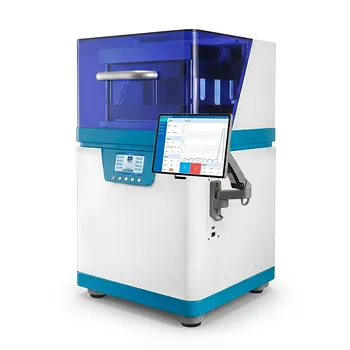
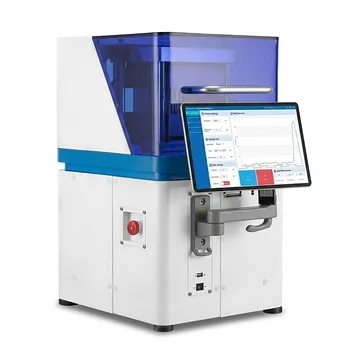
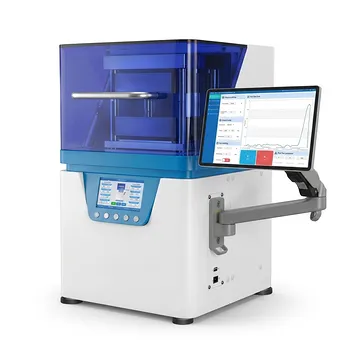
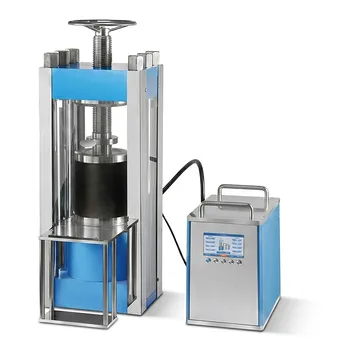
An electric heating laboratory press ensures the quality of molded natural rubber sheets by synchronizing precise thermal energy with mechanical pressure to drive the vulcanization reaction. By maintaining a stable, high-temperature environment (typically between 140°C and 160°C) and constant pressure, the press facilitates the cross-linking of rubber molecular chains into a stable 3D network. This process eliminates internal trapped gases and guarantees consistent sheet thickness, which is critical for the accuracy and repeatability of subsequent physical property tests.
The laboratory press acts as a controlled chemical reactor, using standardized temperature and pressure to transform raw, plastic rubber into a durable, elastic material with a uniform internal structure and precise geometric dimensions.
Facilitating the Vulcanization Chemical Reaction
Achieving Optimal Cross-Link Density
The press provides the necessary thermal energy to initiate and complete the vulcanization cross-linking reaction. By maintaining a specific temperature for a set duration, it ensures that the rubber components reach the intended cross-link density, which directly dictates the material's final strength and durability.
Transforming Plasticity to Elasticity
Under the heat and pressure of the press, raw rubber molecular chains undergo a chemical transformation into a stable three-dimensional network. This transition converts the material from a soft, plastic state into a finished product characterized by high elasticity and dimensional stability.
Standardization via Testing Norms
Quality is often verified by following international standards, such as the ASTM D 3182 norm. The press allows technicians to prepare specimens that meet these strict criteria, ensuring that data regarding tensile strength, hardness, and Mooney viscosity is reliable across different production batches.
Precision Control and Uniformity
PID Temperature Management
High-quality presses utilize PID digital temperature control displays to manage heat with extreme precision. This technology, combined with strategically arranged heat transfer pipes, ensures that thermal energy is distributed uniformly across the entire surface of the heating plate, preventing "cold spots" that lead to uneven curing.
Pressure Compensation and Structural Density
Continuous pressure load control is exerted to compress the rubber compounds into steel molds. This pressure ensures the density of the internal structure remains consistent, providing a reliable foundation for evaluating static mechanical properties.
Elimination of Internal Defects
The mechanical force of the press serves a secondary, vital function: it expels internal gases from the compound. By removing air, the press prevents the formation of surface bubbles or internal voids, which would otherwise compromise the integrity and appearance of the rubber sheet.
Understanding the Trade-offs
The Risk of Over-Curing vs. Under-Curing
If the temperature control is not precise, rubber may suffer from over-curing, leading to brittleness, or under-curing, resulting in a tacky material with poor mechanical properties. Finding the "sweet spot" requires a press with minimal thermal fluctuation.
Consistency vs. Throughput
While high-precision laboratory presses provide superior quality control, they are designed for small-scale batch testing rather than high-volume production. The time required for precise heating and cooling cycles means that quality comes at the expense of rapid output.
Maintenance and Calibration Requirements
The accuracy of a laboratory press is only as good as its calibration. Over time, heating elements can degrade and hydraulic seals can wear, necessitating a rigorous maintenance schedule to prevent measurement drift in temperature and pressure readings.
Making the Right Choice for Your Goal
To achieve the best results with an electric heating laboratory press, you must align the equipment's capabilities with your specific material requirements.
- If your primary focus is precise material characterization: Prioritize a press with high-precision PID control and documented compliance with ASTM standards to ensure your test results are globally recognized.
- If your primary focus is manufacturing consistency: Focus on a model with automatic pressure compensation and balanced heat density distribution to ensure every sheet in a batch has identical physical properties.
- If your primary focus is research and development: Opt for a press that allows for wide-ranging temperature and pressure adjustments, enabling you to experiment with various vulcanizing agents and cross-linking speeds.
By mastering the balance of heat, pressure, and time, the laboratory press becomes the definitive tool for ensuring natural rubber meets the most demanding engineering specifications.
Summary Table:
| Key Feature | Function | Quality Benefit |
|---|---|---|
| PID Temperature Control | Precise heat management (140°C - 160°C) | Prevents over/under-curing and brittleness |
| Constant Pressure Load | Continuous compression during molding | Eliminates internal gas bubbles and voids |
| Uniform Heat Distribution | Strategic heat transfer pipe arrangement | Ensures consistent cross-link density across sheets |
| Pressure Compensation | Maintains structural density | Guarantees precise geometric dimensions for testing |
Elevate Your Material Research with KINTEK
Optimize your vulcanization process and achieve unparalleled consistency in your rubber testing with KINTEK’s industry-leading technology. KINTEK specializes in comprehensive laboratory pressing solutions, offering manual, automatic, heated, multifunctional, and glovebox-compatible models, as well as cold and warm isostatic presses tailored for battery research and material science.
Why choose KINTEK?
- Precision PID Control: Minimize thermal fluctuations for perfect cross-linking.
- Versatile Applications: From rubber molding to advanced battery component research.
- Compliance Ready: Equipment designed to meet strict ASTM standards.
Ready to enhance your lab's efficiency and data reliability? Contact us today to find your perfect pressing solution!
References
- B. B. Konar, P. B. Konar. Studies on the effects of cyclohexyl benzthiazylsulfenamide accelerated sulfur vulcanization of natural rubber : Thermochemistry and oxidative aging. DOI: 10.5281/zenodo.5830482
This article is also based on technical information from Kintek Solution Knowledge Base .
Related Products
- Cylindrical Lab Electric Heating Press Mold for Laboratory Use
- Automatic Heated Hydraulic Press Machine with Heated Plates for Laboratory
- Automatic Heated Hydraulic Press Machine with Hot Plates for Laboratory
- Lab Heat Press Special Mold
- Automatic High Temperature Heated Hydraulic Press Machine with Heated Plates for Lab
People Also Ask
- How does a laboratory electric heated press ensure sample quality? Optimize SiR-EPDM vulcanization and molding.
- What role does a laboratory electric heated press play in polymer composite fabrication? Key for Standardized Specimens
- What role does a laboratory electric heating press play in NBR molding? Master Vulcanization & Material Density
- Why is a laboratory electric heating press required for PP/EPDM molding? Achieve Superior Specimen Integrity
- What is the purpose of incorporating cartridge heaters into a lab press mold for MLCC block compression? Optimize Results