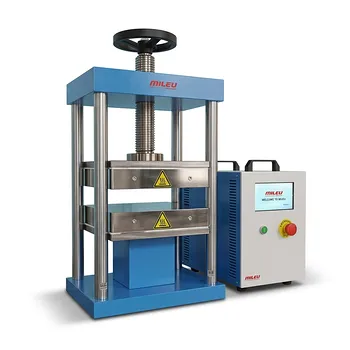
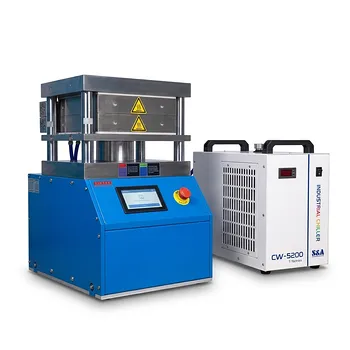
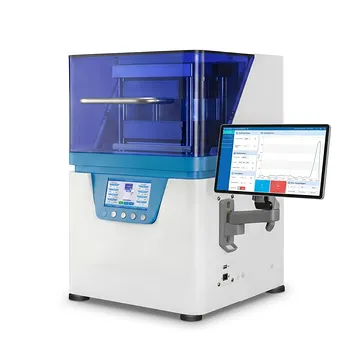
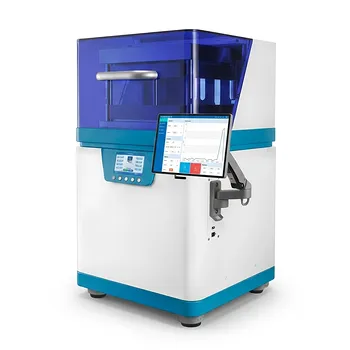
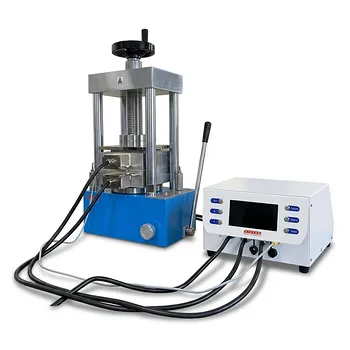
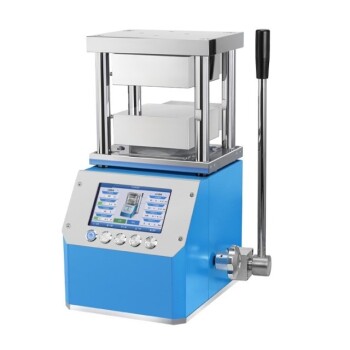
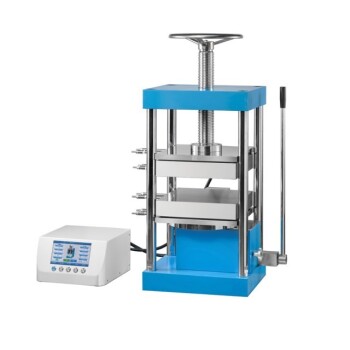
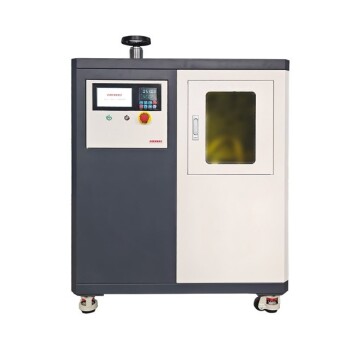
A double-layer electric heating press is the essential catalyst for transforming raw rubber into a durable, high-performance elastomer. This specialized equipment provides the simultaneous application of high thermal energy and constant mechanical pressure required to trigger a chemical cross-linking reaction. Without this controlled environment, rubber remains a plastic compound lacking the structural integrity and elasticity needed for technical applications.
The double-layer electric heating press ensures material uniformity and optimal cross-linking density by maintaining precise temperature and pressure. This process is critical for achieving the desired tensile strength, elasticity, and thermal stability in vulcanized rubber samples.
The Role of Thermal Energy in Molecular Transformation
Triggering the Chemical Cross-Linking Reaction
The press maintains a stable high-temperature environment, typically ranging from 140°C to 160°C. This thermal energy acts as the kinetic driver for vulcanizing agents and accelerators to form transverse chemical bonds between rubber chains.
Ensuring Uniform Cross-Link Density
Precise temperature control across the heating plates ensures the entire sample reacts at a consistent rate. This uniformity is vital for achieving the intended cross-link density, which dictates the final product's tensile strength and media resistance.
Achieving Optimal Vulcanization Time
By providing a steady heat source, the press allows technicians to reach the optimal vulcanization time (s90). This timing ensures the chemical reaction is complete without degrading the polymer structure.
The Impact of Constant Mechanical Pressure
Eliminating Defects and Air Pockets
A hydraulic press applies significant pressure, often reaching 1500 psi or 200 kg/cm². This force ensures the rubber compound fully fills the mold and excludes trapped air, preventing internal voids or surface defects in the sample.
Defining the Three-Dimensional Network
While heat triggers the chemistry, pressure holds the macromolecular chains in place as they combine into a three-dimensional spatial network. This transformation converts the material from a soft, plastic state into a dimensionally stable elastomer.
Improving Mechanical Properties
Continuous pressure compensation during the heating cycle ensures the rubber sheets reach a uniform thickness. This consistency is directly linked to the material's modulus, hardness, and overall mechanical strength.
Potential Pitfalls in the Vulcanization Process
The Risk of Over-Vulcanization
If a sample remains under high heat beyond its optimal cycle, it can suffer from over-curing. This often leads to material embrittlement, loss of elasticity, and a significant reduction in thermal stability.
Heat Distribution Inequities
Inadequate heating plates can create "cold spots" within the mold. This results in non-uniform cross-linking, where some areas of the rubber are under-cured and fail to meet performance specifications.
Fluctuation in Pressure
Inconsistent hydraulic pressure can lead to "flash" (excess material) or uneven density. These fluctuations compromise the dimensional stability and aesthetic quality of the vulcanized specimen.
Optimizing Your Vulcanization Results
Choosing the right parameters for your heating press depends entirely on the specific requirements of your rubber compound and the intended application.
- If your primary focus is maximum mechanical strength: Prioritize precise temperature calibration (e.g., 160°C) to ensure the highest possible cross-linking density is achieved.
- If your primary focus is material uniformity and defect prevention: Focus on high-pressure hydraulic settings (up to 200 kg/cm²) to ensure air is fully excluded and the mold is completely filled.
- If your primary focus is chemical resistance: Ensure the press can maintain a constant temperature over a long duration to allow for the full reaction of specialized accelerators like TMTD or ZDC.
Mastering the precise balance of heat and pressure within the press is the definitive step in engineering rubber with predictable, high-performance characteristics.
Summary Table:
| Key Parameter | Function in Vulcanization | Resulting Material Property |
|---|---|---|
| Thermal Energy | Triggers chemical cross-linking bonds | Tensile strength & thermal stability |
| Mechanical Pressure | Eliminates air pockets & fills molds | Dimensional stability & uniform density |
| Uniform Heating | Prevents "cold spots" and under-curing | Consistent cross-link density |
| Precise Timing | Reaches optimal s90 vulcanization | Prevents embrittlement from over-curing |
Elevate Your Material Research with KINTEK Precision Presses
Achieving the perfect vulcanization cycle requires equipment that delivers unwavering heat and pressure. KINTEK specializes in comprehensive laboratory pressing solutions tailored for high-performance results. Whether you are conducting rubber testing or advanced battery research, our range includes:
- Manual & Automatic Heated Presses: For precise thermal control during vulcanization.
- Multifunctional & Glovebox-Compatible Models: Designed for specialized environments.
- Cold & Warm Isostatic Presses: Ideal for high-density material processing.
Don't let inconsistent equipment compromise your data. Contact KINTEK today to find the perfect pressing solution for your lab and ensure superior material integrity!
References
- Nikolay F. Ushmarin, Н. И. Кольцов. The study of the possibility of using domestic burnt magnesia in oil and petrol resistant rubber. DOI: 10.37952/roi-jbc-01/19-59-7-63
This article is also based on technical information from Kintek Solution Knowledge Base .
Related Products
- Cylindrical Lab Electric Heating Press Mold for Laboratory Use
- Automatic Hydraulic Heat Press Machine with Multi Stage Programmable Control and Integrated Water Cooling Plate Size 180x180mm
- Split Automatic Heated Hydraulic Press Machine with Heated Plates
- Automatic Heated Hydraulic Press Machine with Heated Plates for Laboratory
- Heated Hydraulic Press Machine With Heated Plates For Vacuum Box Laboratory Hot Press
People Also Ask
- How does a laboratory electric heated press ensure sample quality? Optimize SiR-EPDM vulcanization and molding.
- What role does a laboratory electric heated press play in polymer composite fabrication? Key for Standardized Specimens
- What role does a laboratory electric heating press play in NBR molding? Master Vulcanization & Material Density
- Why is a laboratory electric heating press required for PP/EPDM molding? Achieve Superior Specimen Integrity
- What is the purpose of incorporating cartridge heaters into a lab press mold for MLCC block compression? Optimize Results