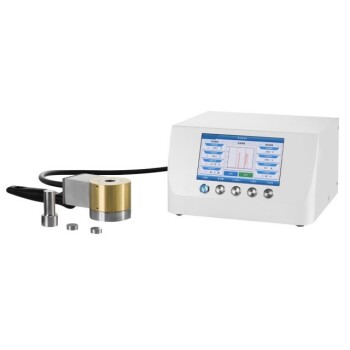
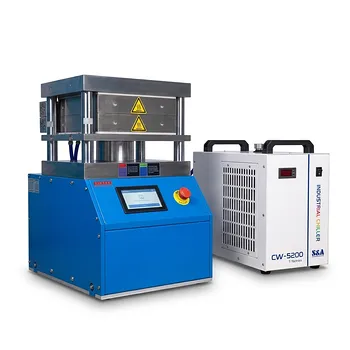
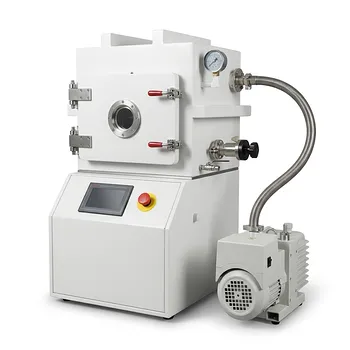
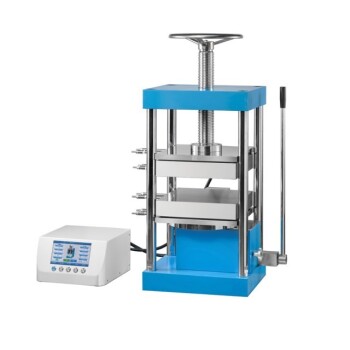
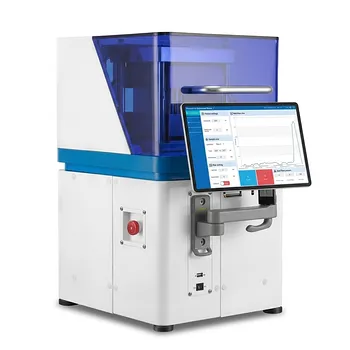
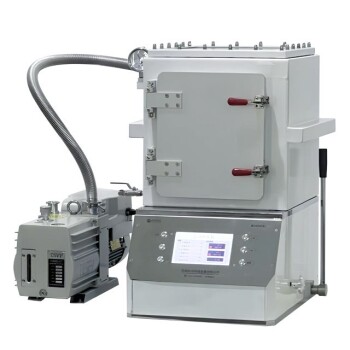
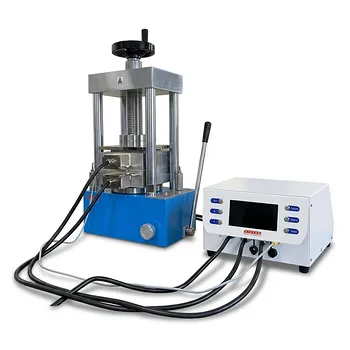
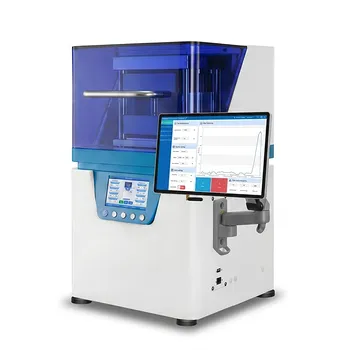
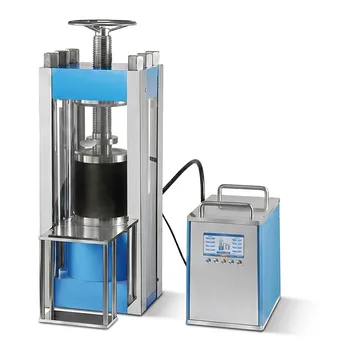
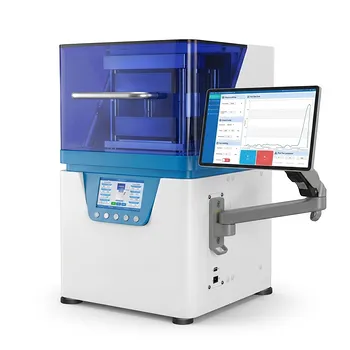
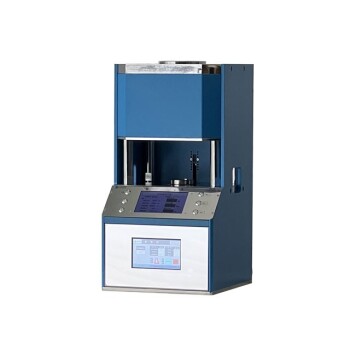
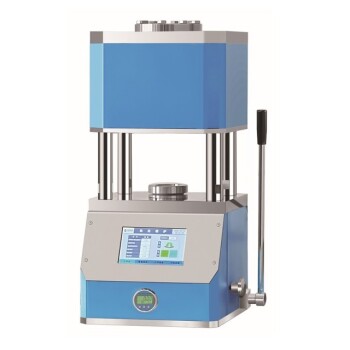
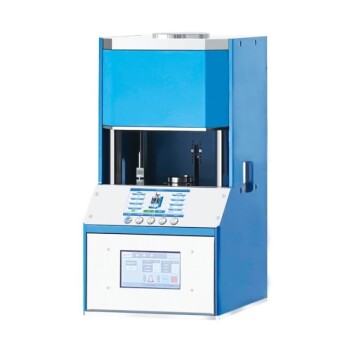
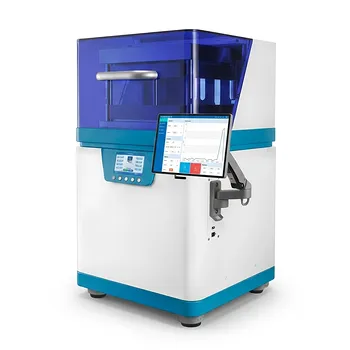
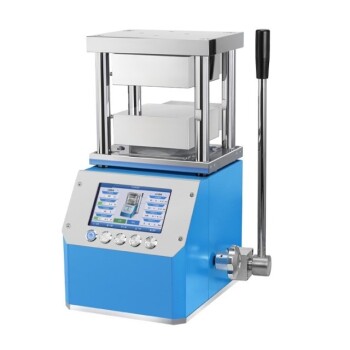
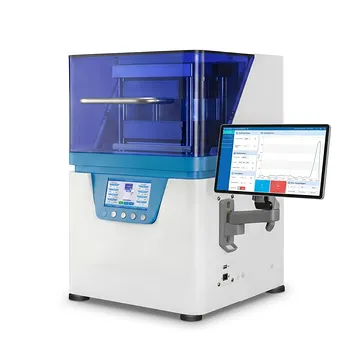
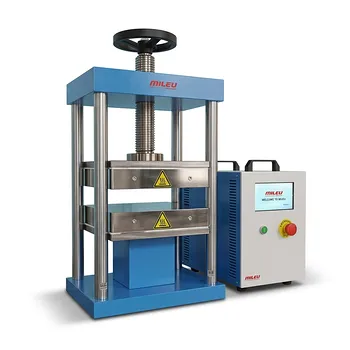
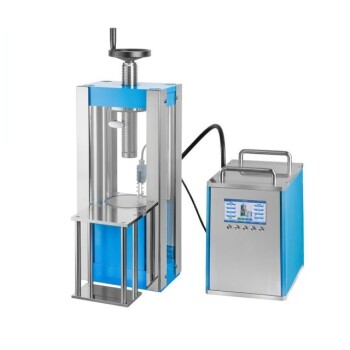
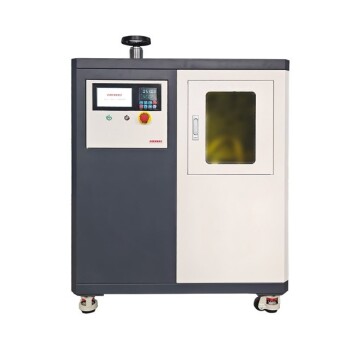
A laboratory electric heating hot press is the essential tool for transforming melt-mixed PA12/POE bulk material into standardized, high-density test specimens. By applying precise, simultaneous heat and pressure, the press reshapes raw material into sheets with uniform thickness and a defect-free internal structure.
The core purpose of using a hot press is to ensure structural integrity and dimensional consistency in the polymer blend. This process eliminates internal air bubbles and density gradients, which is fundamental for obtaining reliable, scientifically valid data during subsequent mechanical and thermal testing.
Ensuring Dimensional and Structural Uniformity
Precision Control of Specimen Thickness
A hot press allows for the creation of sheets with exact thickness (e.g., 1 mm) across the entire surface. This uniformity is critical because variations in thickness can lead to inconsistent stress distribution during tensile or impact testing, skewing the final results.
Achievement of High Material Density
The application of high pressure—often reaching several tons—forces the PA12/POE melt into a densified state. This densification ensures that the material properties measured reflect the polymer blend itself rather than the presence of unintended voids.
Elimination of Internal Air Bubbles
During the melt-mixing process, air can become trapped within the bulk material. The hot press uses constant high temperature and pressure to expel these air bubbles, preventing them from acting as stress concentrators that could cause premature specimen failure.
Managing Material History and Internal Stress
Removal of Thermal History
Polymers like PA12 have a "memory" of how they were previously heated and cooled. The hot press provides a controlled environment to reset the thermal history, ensuring that every specimen starts from a consistent state before isothermal crystallization or mechanical analysis.
Reduction of Residual Stresses
Rapid or uneven cooling of polymer blends can lock in internal stresses that distort test results. The precise cooling cycles available in modern laboratory presses allow for the gradual release of these stresses, leading to more stable and flat specimens.
Optimization of Phase Morphology
The simultaneous application of heat and pressure helps in maintaining the dispersion of POE within the PA12 matrix. Proper pressing conditions ensure that the elastomer phase is distributed uniformly, which is vital for the toughening effect intended in PA12/POE blends.
Understanding the Trade-offs
Risk of Thermal Degradation
Exposure to high temperatures for extended periods in the press can lead to polymer degradation or chain scission. It is vital to balance the need for a complete melt with the shortest possible residence time to maintain the material's molecular weight.
Impact of Pressure on Morphology
Excessive pressure can sometimes force a preferred orientation of polymer chains or filler particles. While this creates a dense sheet, it may introduce anisotropy, where the material properties differ depending on the direction of the test.
Surface Contamination Issues
The use of mold release agents or improper cleaning of the press plates can introduce surface impurities. These contaminants can interfere with subsequent testing, particularly in sensitive applications like gas adsorption or electrical impedance measurements.
How to Apply This to Your Project
When preparing PA12/POE blend sheets, your specific testing goals should dictate your hot press parameters.
- If your primary focus is mechanical strength (Tensile/Impact): Prioritize the elimination of air bubbles and thickness uniformity to ensure stress is distributed evenly across the specimen.
- If your primary focus is thermal analysis (DSC/DMA): Focus on precise temperature control and controlled cooling rates to ensure a consistent and repeatable thermal history.
- If your primary focus is gas saturation or foaming: Ensure maximum densification and the complete removal of micropores to allow for uniform gas diffusion throughout the matrix.
By mastering the transition from bulk melt to pressed sheet, you ensure that your experimental data reflects the true potential of your material chemistry.
Summary Table:
| Process Objective | Benefit for PA12/POE Blends | Impact on Research |
|---|---|---|
| Thermal Management | Resets thermal history & ensures complete melt | Reliable thermal analysis (DSC/DMA) |
| High-Pressure Compaction | Eliminates internal voids & increases density | Accurate mechanical & tensile results |
| Precision Molding | Ensures uniform thickness across specimen | Consistent stress distribution |
| Controlled Cooling | Reduces residual internal stresses | Flat, stable specimens without distortion |
Elevate Your Material Research with Precision Pressing Solutions
Achieving the perfect PA12/POE blend requires more than just chemistry—it requires absolute control over your specimen preparation. KINTEK specializes in comprehensive laboratory pressing solutions, offering manual, automatic, heated, multifunctional, and glovebox-compatible models, as well as cold and warm isostatic presses widely applied in battery research.
From eliminating air bubbles to ensuring uniform thickness, our equipment is designed to help you generate reliable, scientifically valid data every time.
Contact us today to find the ideal press for your laboratory!
References
- Donghun Lee, Keon‐Soo Jang. Morphology, Mechanical Properties and Shape Memory Effects of Polyamide12/Polyolefin Elastomer Blends Compatibilized by Glycidylisobutyl POSS. DOI: 10.3390/ma14010027
This article is also based on technical information from Kintek Solution Knowledge Base .
Related Products
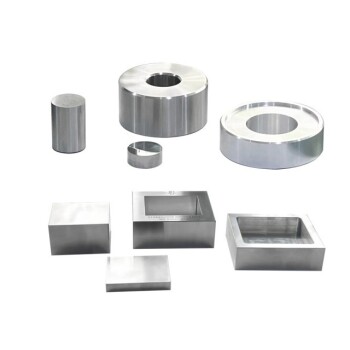
- Cylindrical Lab Electric Heating Press Mold for Laboratory Use
- Automatic Heated Hydraulic Press Machine with Hot Plates for Laboratory
- Heated Hydraulic Press Machine with Heated Plates for Vacuum Box Laboratory Hot Press
- Laboratory Split Manual Heated Hydraulic Press Machine with Hot Plates
- Automatic Heated Hydraulic Lab Press Machine 200x200 Plate Size for Battery Research and Materials Science
People Also Ask
- How does a laboratory electric heated press ensure sample quality? Optimize SiR-EPDM vulcanization and molding.
- What role does a laboratory electric heated press play in polymer composite fabrication? Key for Standardized Specimens
- What role does a laboratory electric heating press play in NBR molding? Master Vulcanization & Material Density
- Why is a laboratory electric heating press required for PP/EPDM molding? Achieve Superior Specimen Integrity
- What is the purpose of incorporating cartridge heaters into a lab press mold for MLCC block compression? Optimize Results