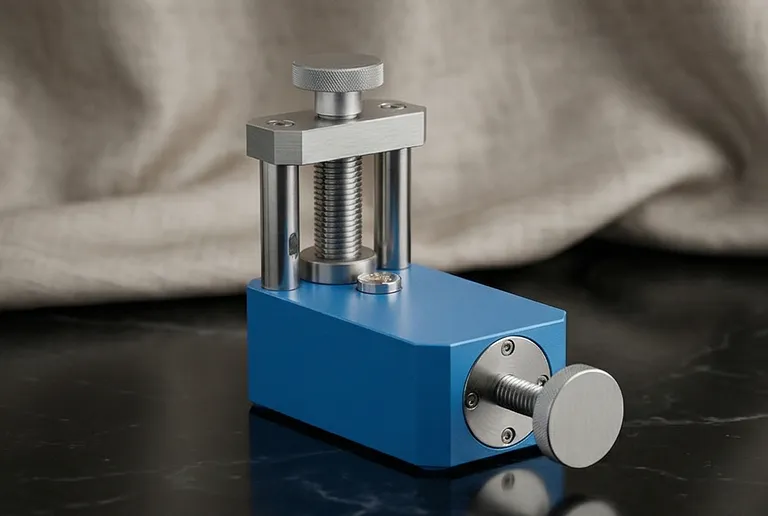
The Invisible Failure of the Micro-Scale
In the world of solid-state battery research, failure rarely begins with a loud explosion. It begins as a whisper—a microscopic void, a trapped air pocket, or an uneven grain boundary.
For materials like Lithium Aluminum Titanium Phosphate (LATP), the journey from a synthesized powder to a high-performance electrolyte is fraught with physical hurdles. If the mechanical consolidation is flawed, the chemistry, no matter how brilliant, will fail to perform.
A laboratory high-pressure hydraulic press is not merely a tool; it is the bridge between chemical potential and functional reality.
The Geometry of Silence: Eliminating Air
Loose powder is an insulator's playground. Trapped air and internal voids act as "noise," obstructing the path of ions. To achieve high ionic conductivity, we must silence this noise.
A hydraulic press applying 300 to 400 MPa of force facilitates the plastic deformation of particles. This process:
- Excludes trapped air that behaves as an electrochemical barrier.
- Rearranges particles into a high-density "green body."
- Enables accurate EIS data, ensuring that Electrochemical Impedance Spectroscopy reflects the material's properties rather than its physical defects.
Minimizing the Friction of Grain Boundaries
Solid electrolytes rely on the seamless movement of ions across particle junctions. When particles are loosely packed, grain boundary resistance skyrockets.
High-pressure cold pressing increases physical contact points at the atomic level. By reducing the space between oxide or halide particles, we lower the "friction" ions encounter. This is the fundamental prerequisite for transforming a ceramic pellet into a high-speed highway for lithium ions.
The Psychological Trap of "More is Better"
In engineering, there is a temptation to believe that if high pressure is good, extreme pressure is better. This is a fallacy.
Exceeding a material's elastic limit introduces micro-cracks—invisible fractures that act as navigation paths for lithium dendrites. When a battery is charged, these cracks become the very cause of the catastrophic failure the researcher was trying to avoid.
The goal is not maximum force, but optimized, reproducible pressure.
Structural Integrity as a Substrate
Advanced LATP research often requires functional coatings, such as hexagonal boron nitride (h-BN) protective films. These coatings require a surface that is:
- Atomically Flat: To ensure uniform adhesion.
- Mechanically Robust: To survive the rigors of lab handling.
- Dimensionally Consistent: To prevent interfacial contact resistance when sandwiched between electrodes.
Without a precise press, the "green body" is prone to warping or cracking during the subsequent sintering stage, rendering the entire experiment moot.
Engineering the Solution: KINTEK’s Pressing Ecosystem
At KINTEK, we understand that the reliability of your data is directly proportional to the precision of your sample preparation. Our laboratory pressing solutions are designed to eliminate the variables that compromise battery research.
| Technology Type | Research Application | Critical Advantage |
|---|---|---|
| Automatic Hydraulic Press | High-throughput LATP pelletizing | Eliminates human error in dwell time and force |
| Isostatic Presses (CIP/WIP) | Complex shapes & large volumes | Provides perfectly uniform pressure distribution |
| Glovebox-Compatible | Moisture-sensitive electrolyte handling | Maintains inert environments for reactive materials |
| Heated Models | Advanced thermal-mechanical synthesis | Explores the synergy of heat and pressure |
The Systematic Path to Discovery
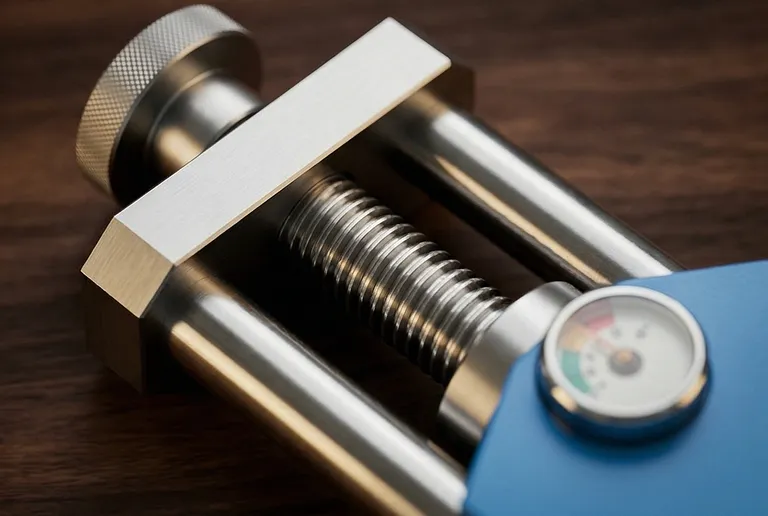
The difference between a failed pellet and a breakthrough in ionic conductivity often comes down to the consistency of the press. By controlling the physics of densification, researchers can finally focus on the chemistry of the future.
Whether you are optimizing grain boundaries or scaling up solid-state assembly, your equipment must be as rigorous as your methodology.
Related Products
- Automatic Laboratory Hydraulic Press Lab Pellet Press Machine
- Manual Laboratory Hydraulic Pellet Press Lab Hydraulic Press
- Heated Hydraulic Press Machine With Heated Plates For Vacuum Box Laboratory Hot Press
- Laboratory Hydraulic Split Electric Lab Pellet Press
- 24T 30T 60T Heated Hydraulic Lab Press Machine with Hot Plates for Laboratory
Related Articles
- The Architecture of Density: Why Pressure is the Silent Architect of Solid-State Batteries
- The Physics of Transparency: Why Pressure is the Silent Architect of Spectroscopic Clarity
- The Architecture of Density: Why Pressure is the Foundation of Precision
- The Geometry of Electrons: Why Surface Precision is the Silent Partner in SECM Research
- The Architecture of Heat: Why Sample Density Dictates the Truth in Metal Hydride Research



















