All Questions
What Is The Core Function Of A Laboratory Hydraulic Sealing Machine? Achieve Perfect Coin Cell Assembly Precision
Learn how laboratory hydraulic sealing machines ensure hermetic seals and minimize resistance for accurate battery research and data integrity.
What Is The Role Of Coin Cell Sealing Equipment In Cu|Zn Battery Assembly? Ensure Reliable Long-Term Cycling Tests
Learn how laboratory coin cell sealing equipment ensures mechanical consistency and airtight integrity for Cu|Zn asymmetric battery testing.
What Role Does Laboratory Sealing Pressure Equipment Play In The Assembly Of Feconimow Modified Pouch Batteries?
Discover how laboratory sealing pressure equipment optimizes interface contact and catalyst exposure for high-performance FeCoNiMoW pouch batteries.
What Role Do Double-Sided Specimen Tape And Pressing Devices Play? Enhance Z-Direction Tensile Strength Accuracy
Learn how double-sided tape and pressing devices ensure accurate Z-direction tensile testing by isolating internal fiber bonding and preventing adhesive failure.
Why Is A Laboratory Hydraulic Press Critical For Lithium Battery Assembly? Optimize Your Electrochemical Performance
Learn how precision hydraulic presses optimize lithium battery interfaces, inhibit dendrite growth, and ensure consistent electrochemical data.
Why Is High-Precision Laboratory Pressure Equipment Essential For The Assembly Of All-Solid-State Lithium Metal Batteries?
Learn how high-precision pressing eliminates contact voids, reduces impedance, and inhibits dendrite growth in solid-state battery assembly.
Why Are Macor Ceramic Or Peek Materials Preferred For Sleeves Or Molds In All-Solid-State Battery Assembly?
Discover why Macor and PEEK are essential for solid-state battery assembly, offering electrical insulation and chemical stability under pressure.
Why Is A Laboratory Press Or Coin Cell Sealer Essential? Optimize Gel Polymer Battery Assembly And Performance
Learn why precise mechanical compression is critical for sealing, reducing interfacial resistance, and ensuring long-term battery cycle stability.
Why Is A Laboratory Battery Sealing Press Essential For Desolvation Energy Testing? Ensure Reliable Kinetic Data
Learn why consistent packaging pressure is critical for symmetric cell assembly and accurate desolvation energy calculations in battery research.
What Is The Necessity Of A Laboratory Coin Cell Crimper? Essential Sealing For High-Performance Battery Research
Learn why a laboratory coin cell crimper is vital for battery assembly, ensuring hermetic sealing and low ohmic resistance for accurate data.
Why Is A High-Precision Battery Sealing Machine Necessary For Sodium-Ion Full Cells? Ensure Accurate Research Results
Learn why precise sealing is critical for sodium-ion cells using hard carbon anodes to prevent leakage and ensure uniform component contact.
What Is The Function Of A Coin Cell Crimper In Cr2025 Assembly? Optimize Your Solid-State Battery Interfaces
Learn how coin cell crimpers ensure hermetic sealing and minimize contact resistance in CR2025 all-solid-state battery assembly.
How Does A High-Precision Lab Press Or Coin Cell Crimper Affect The Performance Of Assembled Lithium-Metal Batteries?
Learn how precise pressure and sealing in lab presses and crimpers minimize resistance and suppress dendrites in lithium-metal batteries.
Why Is Polyimide (Kapton) Film Encapsulation Necessary For Xrd? Protect Your Solid-State Electrolytes
Learn how Kapton film preserves solid-state electrolyte integrity during XRD by preventing moisture degradation while ensuring X-ray transparency.
Why Are Peek Molds Used As Assembly Containers? Discover The Key To All-Solid-State Battery Compression
Learn why PEEK is the essential material for solid-state battery molding, balancing extreme mechanical strength with critical electrical insulation.
How Does A Warm Isostatic Press (Wip) Contribute To Sulfide Solid-State Pouch Cells? Achieve 600 Wh/Kg Densification
Learn how Warm Isostatic Pressing (WIP) eliminates voids and prevents edge fractures to enhance sulfide solid-state battery performance.
Why Is A High-Precision Laboratory Press Machine Necessary For Pouch Cell Assembly? Optimize Battery Performance
Learn why high-precision laboratory presses are essential for pouch cell assembly to reduce impedance and maximize battery energy density.
Why Are Laboratory Vacuum Hot Presses Or Sealing Machines Necessary For Pouch Cells? Optimize Solid-State Battery Prep
Learn how vacuum hot pressing and sealing improve interfacial contact and environmental protection in flexible solid-state battery fabrication.
What Is The Function Of A Coin Cell Packaging Machine? Ensure Superior Sealing For Solid-State Battery Assembly
Learn how coin cell packaging machines minimize interfacial resistance and provide hermetic sealing for high-performance solid-state batteries.
What Is The Primary Purpose Of Using Stainless Steel Cans And Tubes As Containers In The Powder Encapsulation Process?
Learn how sacrificial stainless steel containers enable vacuum sealing and uniform pressure transmission during Hot Isostatic Pressing (HIP).
What Critical Function Do High-Strength Battery Casings Or Mechanical Fixtures Perform? Ensuring Precise Measurements
Learn how high-strength fixtures convert battery expansion into quantifiable pressure data for accurate micrometer-level characterization.
What Is The Purpose Of Using Non-Reactive Low-Melting-Point Lubricants In Al/Sic Hot Pressing? Optimize Density Now
Learn how non-reactive low-melting-point lubricants reduce friction and ensure uniform density in Al/SiC composites during hot pressing processes.
What Is The Function Of A Coin Cell Crimping Press? Achieve Optimal Interfacial Contact In Battery Assembly
Learn how coin cell crimping presses minimize interfacial resistance and ensure structural integrity in solid-state Li|LATP|Li battery assembly.
Why Is A High Pressure Of Up To 392 Mpa Applied During The Assembly Of All-Solid-State Batteries? Achieve Superior Battery Performance
Learn why applying up to 392 MPa of pressure is critical for densifying solid electrolytes, reducing impedance, and stabilizing lithium anodes in all-solid-state batteries.
What Is The Purpose Of Using A Laboratory Hydraulic Press For Compaction When Assembling All-Solid-State Batteries With Sulfide Solid Electrolytes? Achieve Perfect Ionic Contact
Learn how a lab hydraulic press uses high pressure to cold-sinter sulfide electrolytes, creating dense, ion-conductive layers for superior solid-state battery performance.
What Is The Role Of A Laboratory Hydraulic Press In The Multi-Step Cold Pressing Process For Assembling All-Solid-State Batteries?
Learn how a lab hydraulic press enables multi-step cold pressing to assemble all-solid-state sodium batteries, eliminating voids and reducing interfacial resistance.
What Is The Function Of A Laboratory Press When Assembling All-Solid-State Batteries That Utilize Latp Composite Electrolytes?
Learn how a lab press is essential for overcoming solid-solid interface barriers in LATP all-solid-state batteries, enabling low impedance and stable cycling.
Why Does Adding A Transient Solvent Reduce Pressure In The Cold Sintering Process? Achieve Superior Densification With Less Force
Discover how a transient solvent like LiOH reduces hydraulic press pressure in the Cold Sintering Process by enabling solution-precipitation mass transport.
What Is The Role Of A Laboratory Hydraulic Press In Fabricating Solid-State Electrolyte Pellets? Achieving High-Density, Ion-Conductive Materials
Learn how a lab hydraulic press transforms LLZO, LIM, and LATP powders into dense, high-performance solid-state electrolyte pellets for advanced battery research.
Why Is It Necessary To Use A Laboratory Press Machine To Apply Precise Pressure When Assembling All-Solid-State Batteries With Latp/Polymer Composite Electrolytes?
Learn how a lab press machine applies precise pressure to overcome interfacial resistance and optimize LATP/polymer composite electrolytes for all-solid-state batteries.
What Is The Purpose Of Applying High-Pressure Co-Pressing To Electrodes And Electrolytes During The Assembly Of An All-Solid-State Sodium-Sulfur Battery? Build High-Performance Solid-State Batteries
Learn how high-pressure co-pressing eliminates voids and creates low-resistance ion pathways, enabling functional all-solid-state sodium-sulfur batteries.
What Is The Role Of A Lab Press In Providing A Hermetic Seal For A 2032-Type Coin Cell? Ensure Valid Battery Research Data
Learn how a lab press creates a hermetic seal for 2032 coin cells, preventing contamination and ensuring accurate electrochemical testing results.
What Is The Purpose Of Applying A High Pressure Of 400 Mpa Using A Lab Press Machine In The Dry Fabrication Of An All-Solid-State Battery Cathode Sheet? | Achieve Superior Electrode Density
Learn why 400 MPa pressure is critical for creating dense, void-free solid-state battery cathodes with minimized internal resistance and enhanced ion transport.
How Does The High Pressure Applied By A Lab Press Improve Ionic Conductivity In Solid-State Batteries? Optimize Battery Performance
Learn how high pressure from a lab press enhances ionic conductivity in solid-state batteries by eliminating voids and reducing resistance.
What Is The Primary Purpose Of Applying High Pressure, Such As 375 Mpa, With A Hydraulic Lab Press During The Formation Of Solid-State Battery Components?
Discover how high pressure from a hydraulic lab press eliminates voids and creates solid-solid contact, enabling efficient ion transport in solid-state batteries.
What Is The Primary Function Of A Laboratory Hydraulic Press? A Critical Step In Fabricating Solid-State Electrolyte Pellets
Discover how a lab hydraulic press applies high pressure to compact powders like Na₃SbS₄ into dense pellets for superior ionic conductivity and mechanical strength.
Why Is A Hydraulic Press Used For All-Solid-State Batteries? To Force Intimate Contact For High Performance
Discover why hydraulic presses are essential for compacting solid-state battery layers, eliminating voids, reducing impedance, and enabling high ionic conductivity.
Why Is A Laboratory Hydraulic Press Used For Uniaxial Pressing Before Sintering Solid-State Electrolyte Ceramic Pellets? Essential For Ionic Conductivity & Mechanical Strength
Discover how a lab hydraulic press creates dense, uniform ceramic pellets for solid-state batteries, enabling high ionic conductivity and preventing dendrite growth.
Why Are Sulfide Solid Electrolyte Powders Formed Into Pellets Using Cold Pressing? Achieve High-Density Battery Components
Learn how cold pressing sulfide electrolytes with a lab press creates dense pellets for efficient ion transport in solid-state batteries, enhancing performance and safety.
What Safety Features Are Incorporated Into Manual Hydraulic Pellet Presses? Ensure Operator Safety And Data Integrity
Discover the key safety features of manual hydraulic pellet presses, including automatic pressure relief and force monitoring, for secure and reliable lab operations.
What Is The Range Of Variable Pressure Force That A Manual Hydraulic Pellet Press Can Deliver? Achieve Precise Pellet Compaction Up To 250 Kn
Discover the force range of manual hydraulic pellet presses: variable pressure up to 250 kN with 10 kN increments for precise density control.
What Is The Primary Purpose Of Manual Lab Hydraulic Pellet Presses? Achieve High-Precision Sample Preparation For Spectroscopy
Learn how manual hydraulic pellet presses transform powders into uniform pellets for accurate XRF and FTIR analysis, ensuring reliable spectroscopic data.
What Are The Important Considerations Regarding The Cost And Maintenance Of A Lab Press? Maximize Roi & Minimize Downtime
Learn how to evaluate the Total Cost of Ownership (TCO) for a lab press, including initial investment, maintenance, and operational costs.
How Should The Rigidity Of The Frame Be Managed In A Laboratory Hot Press? Ensure Uniform Pressure For Precise Results
Learn how to manage lab hot press frame rigidity for perfect platen parallelism, preventing deformation and ensuring uniform sample pressure in materials testing.
What Considerations Are Needed For The Bearing Surface Dimensions Of A Laboratory Hot Press? Ensure Optimal Performance And Safety
Learn key factors for selecting lab hot press platen dimensions, including workpiece size, safety margins, and operational clearance for efficiency.
What Are The Structural Requirements For The Moving Beams And Hot Pressing Plate In A Laboratory Hot Press? Ensure Precision And Safety In Your Lab
Learn about strength, rigidity, and thermal stability for moving beams and hot plates in lab hot presses to achieve uniform pressure and reliable results.
What Are The Advantages Of Using Heated Hydraulic Presses? Achieve Superior Material Processing With Integrated Heat And Pressure
Discover the key benefits of heated hydraulic presses, including precise temperature control, uniform heating, and enhanced efficiency for advanced material processing.
What Makes Heated Hydraulic Presses Versatile Across Different Industries? Unlock Precision Heat And Pressure Control
Explore how heated hydraulic presses combine precise heat and pressure for versatile applications in manufacturing, labs, and material science.
How Are Heated Hydraulic Presses Applied In The Electronics And Energy Sectors? Unlock Precision Manufacturing For High-Tech Components
Explore how heated hydraulic presses enable precise bonding and material transformation in electronics and energy sectors, enhancing semiconductor and solar cell production.
What Role Do Heated Hydraulic Presses Play In Manufacturing Composite Materials? Enhance Strength And Precision In Production
Discover how heated hydraulic presses use controlled heat and pressure to create durable composites for aerospace, automotive, and more. Learn key benefits and applications.
How Are Heated Hydraulic Presses Utilized In Material Testing And Sample Preparation? Enhance Your Lab's Precision And Efficiency
Learn how heated hydraulic presses improve material testing and sample prep for accurate, repeatable results in spectroscopy and quality control.
What Are The Primary Uses Of Heated Hydraulic Presses? Essential For Material Transformation And Lab Prep
Discover key uses of heated hydraulic presses in manufacturing and labs, including molding, bonding, and sample preparation for enhanced material control.
What Are The Key Features Of Floor-Standing And Benchtop Presses? Choose The Right Press For Your Lab Needs
Explore key features of floor-standing and benchtop presses, including force, size, and power options, to optimize your lab's efficiency and precision.
What Is A Vacuum Press And What Are Its Advantages? Achieve Flawless Lamination And Superior Composite Quality
Discover how vacuum presses use atmospheric pressure for uniform force, enhancing quality, efficiency, and reducing waste in lamination and composites.
How Does The Hot Press Machine Address Environmental And Safety Concerns? Ensure Safe, Eco-Friendly Operations
Learn how hot press machines integrate safety features like emergency stops and energy-efficient systems to reduce risks and environmental impact for labs.
What Are Common Failures In Hot Press Machines And Their Solutions? Boost Uptime With Proactive Maintenance
Learn common hot press failures like hydraulic issues and mechanical wear, with solutions to improve reliability and prevent costly downtime.
What Technical Specifications Ensure The Performance Of A Hot Press Machine? Key Systems For Precision And Reliability
Learn the critical technical specs for hot press machines, including temperature control, pressure systems, and advanced controls for optimal performance.
What Is The Role Of The Heat Generator In The Pressing Cylinder? Ensure Precise Temperature Control For Uniform Results
Learn how the heat generator in pressing cylinders provides precise temperature control for warm isostatic pressing, ensuring uniform density and consistency in materials.
How Is The Hot Press Machine Classified Based On Its Type And Medium? Explore Precision Bonding Solutions
Learn how hot press machines are classified by heating method (constant vs. pulse heat) and bonding media (ACF, ACP, solder) for electronics and lab applications.
What Is The Working Principle Of A Hot Press Machine? Master Heat, Pressure, And Time For Perfect Results
Learn how hot press machines use controlled heat, hydraulic pressure, and vacuum systems to bond, laminate, and shape materials efficiently in lab settings.
What Industries Commonly Use Hot Press Machines And For What Purposes? Unlock Versatile Material Processing Solutions
Explore hot press machine uses in woodworking, composites, electronics, and more for bonding, curing, and molding materials with heat and pressure.
How Does The Hot Press Machine Ensure Efficient And Uniform Heating? Achieve Consistent Results With Advanced Technology
Discover how hot press machines use pulse heating and titanium alloy heads for uniform heating, improving bond strength and reducing defects in manufacturing.
What Are The Key Components And Features Of A Hot Press Machine? Optimize Your Lab's Material Processing Efficiency
Explore hot press machine components like pressing, heating, and control systems, plus features for precision and safety in lab applications.
What Role Do Laboratory Presses Play In X-Ray Fluorescence Spectroscopy? Ensure Accurate Elemental Analysis With Proper Sample Prep
Learn how lab presses create uniform pellets for XRF spectroscopy, enhancing accuracy, repeatability, and sensitivity in elemental analysis.
How Do Laboratory Presses Contribute To Infrared Spectroscopy? Unlock Precise Solid Sample Analysis
Learn how lab presses create transparent KBr pellets for FTIR spectroscopy, enabling accurate chemical analysis of solid materials.
Why Is A Heated Hydraulic Press Considered A Critical Tool In Research And Production Environments? Unlock Precision And Efficiency In Material Processing
Discover how heated hydraulic presses combine pressure and heat for precise material shaping, testing, and bonding in labs and industries.
What Are The Advantages Of Having A Heating Element In A Hydraulic Press? Unlock Precision In Material Processing
Discover how heated hydraulic presses enable curing, bonding, and hot forming for advanced materials, boosting efficiency and control in manufacturing.
How Do Laboratory Presses Support Precision Encapsulation In Electronics? Achieve Flawless Protection For Sensitive Components
Learn how lab presses enable precise heat and pressure control for void-free encapsulation of electronics, ideal for R&D prototyping and reliability testing.
What Safety Precautions Should Be Taken When Operating A Hydraulic Pellet Press? Ensure Safe And Efficient Lab Operations
Learn essential safety steps for hydraulic pellet presses, including PPE use, machine setup, and procedure tips to prevent accidents in the lab.
How Do You Operate A Manual Hydraulic Pellet Press? Master Precise Sample Preparation For Accurate Analysis
Learn step-by-step operation of a manual hydraulic pellet press for uniform, durable samples in XRF and FTIR spectroscopy. Ensure repeatable results.
What Are The Steps For Assembling A Manual Hydraulic Pellet Press? Master Sample Prep For Accurate Lab Results
Learn key steps for assembling a manual hydraulic pellet press, including die setup, pressure control, and avoiding common errors for perfect pellets.
What Safety Features Are Included In Manual Hydraulic Pellet Presses? Essential Mechanisms For Operator And Equipment Protection
Explore key safety features in manual hydraulic pellet presses, including pressure relief valves, gauges, and shields, to ensure safe lab operations and prevent accidents.
What Are The Key Features Of Manual Hydraulic Pellet Presses? Discover Versatile Lab Solutions For Sample Prep
Explore the core features of manual hydraulic pellet presses, including variable pressure, interchangeable dies, and safety mechanisms for reliable lab use.
What Is The Primary Purpose Of A Manual Lab Hydraulic Pellet Press? Ensure Accurate Sample Prep For Xrf And Ftir
Learn how a manual lab hydraulic pellet press creates uniform pellets for precise XRF and FTIR analysis, enhancing data integrity in laboratories.
Related Products

Battery Tester Internal Resistance Voltage Temperature Measurement

Battery Alligator Clips and Kelvin Test Clamps for Laboratory Cell Testing
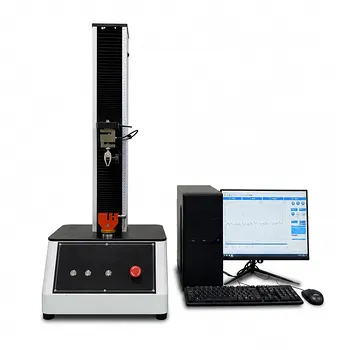
Battery Separator Tensile and Puncture Testing Machine

Battery Combustion Test Machine for Constant Temperature Battery Burning Tests
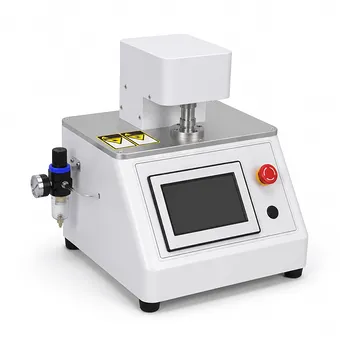
Battery Separator Air Permeability Tester Gurley Densitometer