All Questions
How Does Applied Pressure Affect Ionic Conductivity? Unlock The True Potential Of Your 75Li2S·25P2S5 Electrolyte
Learn how lab press pressure densifies 75Li2S·25P2S5 glass electrolyte powder, reduces grain boundary resistance, and boosts ionic conductivity for accurate measurements.
Why Is Argon Gas Required For Hot-Press Sintering Of Llzo Ceramics? Ensure Material And Equipment Integrity
Learn why argon gas is essential for LLZO ceramic sintering: it prevents oxidation, ensures phase purity, and protects graphite tooling from combustion.
How Does Hot-Pressing Improve Cathode-Llzto Contact? Achieve 75% Lower Interfacial Impedance
Learn how the hot-pressing process eliminates voids and fuses layers to reduce interfacial impedance from ~248 Ω·cm² to ~62 Ω·cm² in solid-state batteries.
Why Is A High-Pressure Press Required For Sulfide Electrolytes? Achieve Optimal Densification And Conductivity
Discover why applying 180-500 MPa of pressure is critical for densifying sulfide solid-state electrolytes and creating continuous ion pathways for high-performance batteries.
What Is The Importance Of Applying Precise And Constant Pressure To The Electrode/Electrolyte Interface In A Solid-State Battery During Testing? Unlock True Performance
Learn why precise pressure control is critical for ion transport, cycling stability, and data integrity in solid-state battery testing and research.
What Is The Primary Purpose Of Applying Uniaxial Pressure During Sps? Achieve Dense, Nanostructured Ceramics
Discover how uniaxial pressure in Spark Plasma Sintering accelerates densification, lowers sintering temperatures, and suppresses grain growth in doped ceria ceramics.
Why Is The Hot-Pressing Process Crucial For Preparing High-Performance Peo-Based Solid-State Electrolytes? Achieve Superior Ionic Conductivity & Density
Discover how the hot-pressing process creates dense, solvent-free PEO electrolytes by eliminating voids and optimizing ion transport pathways for superior battery performance.
What Are The Core Advantages Of Using A Hot Press Sintering Furnace To Prepare Lita2Po8 (Ltpo) Electrolyte Compared To Conventional Sintering? Unlock Superior Ionic Conductivity
Hot press sintering for LTPO electrolyte achieves 97.4% density vs. 86.2% with conventional methods, boosting lithium-ion conductivity and mechanical strength.
What Is The Purpose Of Using A Hot-Pressing Process In The Preparation Of Peo-Based Reference Electrolyte Membranes? Achieve Maximum Densification For Superior Battery Performance
Discover how hot-pressing PEO-based electrolytes eliminates porosity, enhances ionic conductivity, and prevents battery failure for superior solid-state battery performance.
What Is The Purpose Of Applying An Additional Hot-Pressing Step At 100°C And 240 Mpa? To Engineer A Seamless Interface For All-Solid-State Batteries
Learn how hot-pressing at 100°C and 240 MPa eliminates voids, reduces impedance, and boosts performance in solid-state battery fabrication.
What Are The Primary Advantages Of A Hot Press Sintering Furnace For Llzo Pellets? Achieve >99% Density For Superior Solid-State Batteries
Discover how hot press sintering furnaces enable >99% dense LLZO electrolyte pellets, boosting ionic conductivity and enhancing battery safety by eliminating pores.
Why Is It Necessary To Process A Nasicon Green Body With A Cold Isostatic Press At 207 Mpa After Initial Uniaxial Pressing? Ensure High-Density, Crack-Free Electrolytes
Learn why Cold Isostatic Pressing at 207 MPa is critical for eliminating density gradients in NaSICON, preventing sintering failure, and achieving >97% theoretical density.
What Is The Purpose Of Applying 50 Mpa Of Pressure During The Spark Plasma Sintering (Sps) Of Llzto Ceramics? Achieve Dense, Dendrite-Blocking Electrolytes
Discover why 50 MPa pressure is critical for sintering LLZTO ceramics. It eliminates porosity, enhances densification, and prevents battery failure by blocking lithium dendrites.
What Are The Significant Advantages Of Using A Heated Press Compared To Cold Pressing For Preparing Li7P2S8I0.5Cl0.5 Electrolyte Pellets? Unlock 2X Higher Ionic Conductivity
Discover why heated pressing at 180°C and 350 MPa doubles ionic conductivity (6.67 mS/cm) vs. cold pressing for Li7P2S8I0.5Cl0.5 solid electrolytes.
What Are The Key Advantages Of Using A Hot-Press Sintering Process For Preparing High-Density Llzto Solid Electrolyte Pellets? Achieve >99% Density For Superior Battery Performance
Discover how hot-press sintering eliminates porosity in LLZTO pellets to maximize ionic conductivity, suppress dendrites, and ensure battery safety and longevity.
What Is The Specific Function Of Using A Cold Isostatic Press (Cip) In Li-Lu-Zr-Cl Pouch Cells? Achieve Intimate, Void-Free Solid-State Interfaces
Discover how Cold Isostatic Pressing (CIP) creates seamless solid-solid interfaces in Li-Lu-Zr-Cl pouch cells, reducing impedance and enhancing performance.
What Are The Required Properties Of A Graphite Die For Hot Pressing Lslbo? Ensure Successful Densification Of Your Ceramic Electrolyte
Discover the critical mechanical & chemical properties a graphite die needs for hot pressing Li6SrLa2O12 (LSLBO) powder at 750°C and 10 MPa in a vacuum.
What Is The Core Function Of The Hot Pressing Process In The Densification Of Li6Srla2Bi2O12 (Lslbo) Ceramic Electrolytes? Achieve >94% Density For Superior Ionic Conductivity
Discover how hot pressing enables rapid, high-density densification of LSLBO ceramic electrolytes at lower temperatures, crucial for battery performance.
What Is The Key Role Of A Precision Heated Lab Press In The Preparation Of Solid-State Polymer Electrolyte Membranes (Spes)? Ensure Electrochemical Consistency
Discover how a precision heated lab press densifies polymer electrolyte membranes for safe, efficient solid-state batteries by eliminating pores and ensuring uniform thickness.
What Is The Function Of A 10 Mm Diameter Polycarbonate Tube During The Press-Forming Process Of All-Solid-State Batteries? Essential For High-Density Pellet Fabrication
Learn how a 10 mm polycarbonate tube acts as a confinement die for press-forming solid-state batteries, enabling uniform density and low interfacial impedance.
What Advantages Does A Heated Lab Press Offer? Achieve Superior Densification For Materials Science
Discover how a heated lab press enables simultaneous pressure and heat for superior densification of ceramics, polymers, and composites in materials science.
How Is An Isostatic Press Utilized In The Fabrication Of Dense Bulk Ceramic Substrates? Achieve Near-Perfect Density For Solid-State Batteries
Learn how Cold Isostatic Pressing (CIP) and Hot Isostatic Pressing (HIP) create dense LLZO solid electrolytes, preventing dendrite growth and maximizing ionic conductivity.
What Is The Essential Function Of A Laboratory Cold Press In The Assembly Of All-Solid-State Lithium-Sulfur Batteries? Achieve Perfect Densification For Superior Ion Transport
Discover how a lab cold press eliminates porosity and creates solid-solid interfaces in lithium-sulfur batteries, enabling high ionic conductivity and stable cycling.
What Are The Core Advantages Of Using Rapid Induction Hot Pressing For Llzo? Achieve Dense, Safe Solid-State Electrolytes
Discover how rapid induction hot pressing densifies LLZO electrolytes to >99% density, suppresses dendrites, and enhances ionic conductivity for superior battery safety.
What Is The Function Of An Isostatic Press When Preparing Solid-State Electrolyte Samples For Electrochemical Performance Testing? Ensure Accurate Ionic Conductivity Measurements
Learn how isostatic pressing creates high-density, uniform solid-state electrolyte pellets to eliminate porosity and ensure reliable electrochemical data.
What Is The Function Of A Laboratory Press Machine In Forming A Green Pellet From Li₆.₅La₃Zr₁.₅Ta₀.₅O₁₂ (Llzto) Electrolyte Powder? Achieve High-Density Solid Electrolytes For Superior Battery Performance
Learn how a lab press consolidates LLZTO powder into a dense green pellet, enabling high ionic conductivity and mechanical reliability for solid-state batteries.
What Is The Function Of A Laboratory Hydraulic Press In Latp Fabrication? Achieving High-Density Green Pellets For Solid-State Batteries
Learn how a lab hydraulic press applies uniform pressure to form LATP solid-state electrolyte green pellets, a critical step for high ionic conductivity.
What Are The Main Advantages Of Using A Hot Pressing Process? Achieve Superior Lagp Electrolyte Membranes
Discover how hot pressing creates denser, stronger LAGP electrolyte membranes with higher ionic conductivity than cold pressing and sintering.
What Is The Primary Role Of A Laboratory Hydraulic Press In The Solid-State Synthesis Method For Nasicon Electrolytes? Achieve High-Density Green Bodies For Superior Ionic Conductivity
Learn how a lab hydraulic press compacts NASICON powder into dense green bodies, enabling effective sintering for high-performance solid electrolytes.
What Are The Considerations For Applying Varying Pressures, Such As 400 Mpa Versus 50 Mpa, With A Lab Press Machine During The Layer-By-Layer Assembly Of An All-Solid-State Battery? Optimize Your Battery Assembly Process
Learn how to apply high & low pressure (400 MPa vs 50 MPa) with a lab press for all-solid-state battery assembly, ensuring optimal layer densification and anode integrity.
Why Is 400 Mpa Pressure Critical For Solid-State Battery Assembly? Achieve Optimal Ionic Conductivity
Discover why applying 400 MPa with a lab press is essential for eliminating voids and ensuring low interfacial resistance in all-solid-state batteries.
How Does Applying An External Pressure Of 200 Kpa Improve Solid-State Battery Performance? Unlock Lower Resistance & Longer Cycle Life
Discover how 200 kPa pressure minimizes interfacial impedance and enables lithium creep for stable, high-performance solid-state batteries.
What Is The Primary Purpose Of Applying External Pressure During The Assembly Of Solid-State Pouch Cells? To Ensure Intimate Contact And High Performance
Learn why external pressure is critical for solid-state battery assembly, enabling low interfacial resistance and stable cycling by ensuring intimate solid-solid contact.
Why Is A Battery Testing Mold With An In-Situ Pressure Monitoring Device Necessary? For Reliable Anode-Free Solid-State Battery Development
Discover why in-situ pressure monitoring is critical for managing volumetric expansion in anode-free solid-state batteries and optimizing cell performance.
Why Is An Isostatic Press Used For Forming Lagp Ceramic Electrolyte Sheets From Powder?
Learn how isostatic pressing ensures uniform density and superior ionic conductivity in LAGP ceramic electrolytes for solid-state batteries.
What Is The Potential Role Of A Warm Isostatic Press (Wip) In The Fabrication Of Ag-C Composite Porous Anodes? Enhance Structural Integrity & Uniformity
Learn how Warm Isostatic Pressing (WIP) improves Ag-C anode fabrication by ensuring uniform porosity, tight particle bonding, and superior mechanical strength.
What Is The Function Of A Die Set Composed Of A Ptfe Cylinder And Stainless Steel Plungers? Achieve Precision In Solid-State Battery Testing
Learn how a PTFE and stainless steel die set ensures precise pressure application and electrical isolation for accurate all-solid-state battery testing and data validity.
Why Is It Necessary To Apply And Maintain Pressure When Assembling An All-Solid-State Battery Cell? Ensure Intimate Contact For High Performance
Learn why pressure is critical for eliminating voids and lowering interfacial resistance in all-solid-state battery assembly to achieve high capacity and long cycle life.
What Are The Advantages Of A Heated Lab Press For Li₂Ohbr Pellets? Achieve Maximum Ionic Conductivity
Discover why a heated lab press is essential for preparing dense Li₂OHBr electrolyte pellets, eliminating voids and maximizing ionic conductivity for accurate research.
What Is The Purpose Of Using A Laboratory Hydraulic Press For Cold-Pressing Lpscl₀.₃F₀.₇ Electrolyte Powder? Engineer Dense, High-Performance Battery Membranes
Learn how a lab hydraulic press creates dense LPSCl₀.₃F₀.₇ electrolyte pellets for all-solid-state batteries, enhancing ionic conductivity and safety.
Why Is A Laboratory Hydraulic Press Essential For Preparing Halide Solid-State Electrolyte (Sse) Test Cells Via Cold Pressing? Achieve Dense, High-Performance Pellets
Learn how a lab hydraulic press transforms halide powder into dense pellets for accurate solid-state battery testing, minimizing porosity and maximizing ionic conductivity.
What Is The Function Of A Laboratory Cold Press When Applying 380 Mpa Of Pressure? Achieving High-Density Bilayer Pellets For Solid-State Batteries
Learn how a lab cold press at 380 MPa creates dense, void-free bilayer pellets for solid-state batteries, enabling efficient ion transport and low interfacial resistance.
How Does Spark Plasma Sintering (Sps) Benefit Nasicon Electrolytes? Achieve Superior Ionic Conductivity In Minutes
Discover how SPS rapidly densifies NASICON electrolytes, preventing chemical degradation and enabling superior ionic conductivity for advanced solid-state batteries.
How Does The Process Within A Hot Press Furnace Enhance The Ionic Conductivity Of Certain Electrolyte Materials?
Learn how hot press furnaces boost ionic conductivity to 7.2 mS/cm by applying heat and pressure to improve grain boundary contact.
What Is The Unique Advantage Of A Hot Press Furnace? Achieve Superior Density & Conductivity In Electrolyte Synthesis
Discover how hot press furnaces apply simultaneous heat and pressure to eliminate pores and boost ionic conductivity in mixed-halogen electrolytes.
What Is The Fundamental Principle Behind Using A Lab Press To Improve The Performance Of All-Solid-State Batteries? Maximize Ion Transport
Discover how lab press densification maximizes physical contact to solve the solid-solid interface problem, enabling ion transport and boosting battery performance.
Why Is A Laboratory Hydraulic Press Used In The Fabrication Of All-Solid-State Batteries? Achieve High-Density, Low-Resistance Cells
Learn how a lab hydraulic press applies controlled force to compact battery materials, reducing interfacial resistance and porosity for superior all-solid-state battery performance.
What Are The Specific Advantages Of Using Hot Pressing To Form Mixed-Halide Solid-State Electrolytes? Achieve Superior Ionic Conductivity
Discover how hot pressing creates dense, low-impedance mixed-halide electrolytes by exploiting their softened lattice for maximum ionic conductivity and structural integrity.
What Is The Purpose Of Using A Laboratory Hydraulic Press For Cold-Pressing Powdered Electrolytes Before Conductivity Measurement? Ensure Accurate Ionic Conductivity Data
Learn why cold-pressing electrolyte powder into dense pellets with a hydraulic press is critical for eliminating porosity and measuring true intrinsic ionic conductivity.
What Is The Role Of A Heated Press In The Fabrication Of Multi-Layer All-Solid-State Batteries? Achieve Seamless Layer Bonding For Superior Performance
Learn how a heated press is critical for bonding battery layers, eliminating voids, and reducing internal resistance in multi-layer all-solid-state batteries.
What Is The Advantage Of Using An Isostatic Press To Apply High Pressure During Battery Cell Assembly? Achieve Uniform, Void-Free Interfaces
Discover how isostatic pressing creates uniform, omnidirectional pressure for void-free battery layers, minimizing impedance and enabling high-performance cells.
What Is The Purpose Of Using A Uniaxial Press To Prepare Solid Electrolyte Separator Pellets? Achieve Dense, Standardized Samples For Reliable Battery Testing
Learn how uniaxial presses compact solid electrolyte powders into dense pellets, minimizing porosity to enable accurate measurement of intrinsic ionic conductivity.
Why Does Increasing Wip Temperature Improve Cathode Performance? Unlock Higher Battery Capacity & Power
Learn how Warm Isostatic Pressing temperature enhances plastic flow, reduces charge transfer resistance, and boosts electrochemical performance in composite cathodes.
What Are The Advantages Of Using An Isostatic Press For Solid-State Battery Research? Achieve Uniform, Defect-Free Densification
Discover why isostatic pressing delivers superior, uniform pressure for solid-state battery materials, preventing cracks and ensuring consistent density for reliable performance.
What Role Does A Lab Press Machine Play In All-Solid-State Battery Evaluation? Ensuring Critical Pressure For Performance
Learn how lab press machines apply and maintain pressure to reduce impedance and stabilize all-solid-state battery cells for accurate performance testing.
What Is The Role Of Lab Hydraulic Presses Or Hot Presses In The Assembly Of All-Solid-State Batteries? Achieve Superior Solid-State Battery Performance
Discover how lab hydraulic and hot presses enable intimate solid-solid contact, reduce interfacial resistance, and ensure structural integrity in all-solid-state battery assembly.
What Is The Primary Role Of A Hot Press Machine In The Densification Process Of Solid-State Electrolytes? Achieve High Ionic Conductivity
Learn how a hot press machine uses heat and pressure to densify solid-state electrolytes, achieving >95% density for superior ionic conductivity.
What Is The Purpose Of Using A Powder Press Machine When Measuring The Ionic Conductivity Of Solid-State Electrolytes? Ensure Accurate Eis Data
Learn how a powder press machine creates dense, stable pellets for solid-state electrolytes, eliminating porosity to ensure accurate ionic conductivity measurements.
What Is The Role Of A Hot Press Machine In The Stacking And Assembly Process Of Solid-State Battery Cells? Unlocking High-Performance Battery Assembly
Learn how hot press machines fuse solid-state battery layers, eliminate voids, and reduce impedance for superior energy storage performance.
Why Is High Pressure Crucial For Solid-State Battery Performance? Achieve Superior Ion Conductivity And Stability
Learn how high pressure from a lab press densifies materials, minimizes impedance, and ensures stable performance in solid-state battery research.
What Is A Future Trend Regarding The Integration Of Cip With Other Manufacturing Technologies? Achieve High-Density, Complex 3D Printed Parts
Discover how integrating Cold Isostatic Pressing (CIP) with Additive Manufacturing enhances part density and strength for high-performance applications.
How Is Future Cip Technology Expected To Address The Demand For Customized And Complex Shapes?
Discover how future Cold Isostatic Pressing (CIP) technology enables the production of highly intricate, customized components for aerospace and medical sectors.
What Are The Two Types Of Cold Isostatic Pressing (Cip)? Wet Bag Vs. Dry Bag Technology
Discover the differences between Wet Bag and Dry Bag CIP methods. Learn which is best for high-volume production or complex, custom parts.
Why Is A Tungsten Carbide (Wc) Die Required For Hot-Pressing All-Solid-State Battery Stacks? Ensure Viable Densification
Learn why Tungsten Carbide dies are essential for achieving the high density required in solid-state batteries under extreme heat and pressure (370 MPa, 200°C).
What Is The Core Function Of A Heated Hydraulic Press? Achieve High-Density Solid-State Batteries
Discover how a heated hydraulic press uses simultaneous heat and pressure to densify all-solid-state battery stacks, enhancing ionic conductivity and energy density.
What Are The Distinct Advantages Of Using A Hot Isostatic Press (Hip) For Processing Garnet Electrolyte Pellets? Achieve Near-Theoretical Density
Discover how HIP processing eliminates porosity in garnet electrolytes, doubling ionic conductivity and suppressing lithium dendrites for superior solid-state batteries.
What Are The Primary Applications Of Laboratory Presses In Spectroscopy? Enhance Sample Prep For Accurate Analysis
Discover how laboratory presses prepare solid samples for FTIR, XRF, and transmission spectroscopy, ensuring uniform pellets and films for reliable data.
Why Might A Hydraulic Press Be Preferable To A Hand Press In A Laboratory Setting? Boost Efficiency And Consistency In Your Lab
Discover why hydraulic presses excel in labs for high force, precision, and repeatability, improving sample consistency and throughput.
Why Is An Accurate Force Gauge Important For Pressing Pellets? Ensure Consistent Quality And Protect Your Equipment
Learn how an accurate force gauge ensures pellet consistency, repeatability, and die protection in lab pressing for reliable analytical results.
How Does The Adjustable Top Pressing Surface Benefit Users? Boost Efficiency And Precision In Your Lab
Discover how an adjustable top pressing surface reduces setup time, enhances workflow, and improves sample consistency for laboratory applications.
What Safety Features Are Included With Hydraulic Lab Presses? Ensure Operator Protection And Compliance
Learn about hydraulic lab press safety features like Perspex guards, pressure gauges, and CE/OSHA compliance for secure, reliable operation.
Why Is The Kbr Pellet Press Indispensable For Ftir Spectroscopy? Achieve Accurate Solid Sample Analysis
Learn how the KBr pellet press enables reliable FTIR analysis by creating transparent, uniform pellets for high-quality spectra in solid samples.
What Are Common Issues Encountered During Pellet Pressing? Avoid Jams And Inconsistencies For Better Results
Learn about pellet pressing problems like jamming and inconsistent quality, and how to fix them with proper material prep and pressure control.
What Factors Contribute To The Quality Of Pressed Pellets? Master Key Variables For Perfect Results
Learn how particle size, binder choice, pressure, and more ensure stable, uniform pellets for precise lab analysis like XRF.
What Are The Key Parameters In The Pressing Process For Pellet Preparation? Optimize For Density, Strength, And Accuracy
Learn key pellet pressing parameters like pressure, sample prep, and die choice for reliable lab results in XRF, spectroscopy, and more.
Related Products
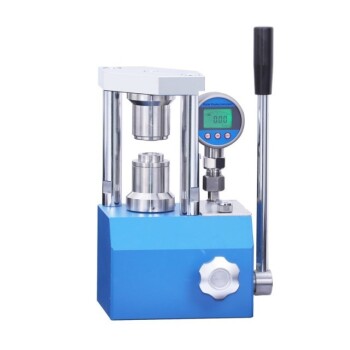
Button Battery Sealing Machine for Button Batteries
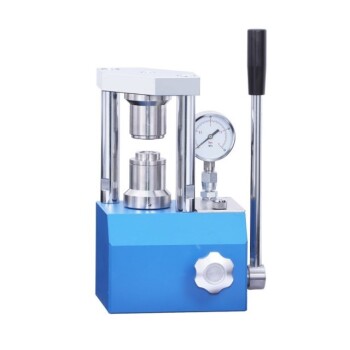
Manual Button Battery Sealing Machine for Battery Sealing

Button Battery Sealing Press Machine for Lab

Lab Button Battery Tablet Press Sealing Mold

Lab Button Battery Disassembly and Sealing Mold