All Questions
What Are The Technical Advantages Of Using A Heated Laboratory Press? Rapid Zif-8/Nf Composite Synthesis
Learn how heated laboratory presses enable solvent-free, 10-minute synthesis of ZIF-8/NF composites with superior mechanical stability.
Why Is A High-Pressure Laboratory Press Required For Ftir Analysis Of Bsg? Unlock Clear Spectral Data For Research
Learn why a high-pressure lab press is essential for creating transparent pellets for FTIR analysis of Brewers' Spent Grain residue.
Why Is A Laboratory Hydraulic Press Used To Apply 600 Mpa Of Pressure? Achieving High-Density Al-Al4C3 Materials
Learn why 600 MPa pressure is essential for Al-Al4C3 compacting, from minimizing porosity to ensuring successful chemical reaction heat treatment.
What Is The Necessity Of Processing Coated Electrodes With A Laboratory-Scale Rolling Press? Boost Battery Performance
Learn why rolling presses are vital for electrode fabrication, enhancing compaction density, conductivity, and mechanical stability in batteries.
What Is The Purpose Of Using A Laboratory Hydraulic Press For Pre-Compaction After The Layered Loading Of Powders For All-Solid-State Batteries? Build Stable, High-Performance Battery Cells
Learn how lab hydraulic press pre-compaction creates stable green bodies, prevents layer mixing, and optimizes interfaces for superior all-solid-state battery performance.
What Is The Purpose Of Using A Uniaxial Hydraulic Press To Compact Ta-Doped Llzto Powder At Approximately 300 Mpa Before Sintering? To Build A Dense Foundation For Superior Solid-State Electrolytes
Learn why high-pressure compaction is critical for creating dense, high-performance Ta-doped LLZTO solid electrolytes with enhanced ionic conductivity and mechanical integrity.
Why Is 25 Mpa Pressure Needed For Solid-State Battery Assembly? Achieve Low Impedance & Stable Cycling
Learn why 25 MPa pressure is critical for solid-state lithium battery assembly: reduces impedance from 500Ω to 32Ω, prevents dendrites, and ensures uniform current flow.
Why Is The Cold Pressing Process Essential For Preparing Li6Ps5Cl Sulfide Electrolyte Pellets? Achieve Dense, Functional Solid-State Battery Components
Learn how cold pressing densifies Li6PS5Cl powder into solid electrolyte pellets, enabling high ionic conductivity and mechanical integrity for all-solid-state batteries.
What Is The Purpose Of Applying 200 Mpa Of Pressure? A Critical Step In Sdc-Carbonate Electrolyte Pellet Fabrication
Learn why 200 MPa pressure is essential for creating handleable SDC-carbonate green pellets and establishing the foundation for sintering and densification.
What Is The Function Of Pressing Nmc811 Onto An Lyc Pellet? Achieve Low-Resistance Interfaces For Solid-State Batteries
Learn why pressing NMC811 cathode onto Li3YCl6 electrolyte is critical for minimizing interfacial resistance and enabling lithium-ion transport in all-solid-state batteries.
What Is The Primary Function Of Using A Uniaxial Press Machine For Compacting Dried Lini0.5Mn1.5O4 (Lnmo) Electrodes? Achieve High-Performance Battery Density
Learn how uniaxial pressing increases LNMO electrode compaction density, reduces resistance, and boosts battery volumetric energy density and rate capability.
What Is The Purpose Of Using A Laboratory Hydraulic Press To Compact Latp Powder Into A Pellet? Achieve High-Density Solid Electrolytes
Learn how a lab hydraulic press compacts LATP powder into a green pellet, forming the foundation for high-density, high-conductivity solid electrolytes.
What Is The Primary Purpose Of A Hydraulic Press In The Traditional Sintering Process Of Latp Electrolytes? Achieve Optimal Density For High-Performance Ceramics
Discover how a hydraulic press enables cold pressing for LATP electrolytes, establishing the initial density and mechanical strength required for successful sintering.
What Is The Primary Purpose Of Using A Laboratory Press Machine To Compact Li4Ti5O12 Electrodes? Achieve High-Performance Battery Electrodes
Learn how a lab press densifies Li4Ti5O12 electrodes to boost conductivity, rate capability, and cycling stability for superior battery performance.
What Is The Function Of A Laboratory Hydraulic Press In Assb Assembly? Enabling Solid-State Contact For High-Performance Batteries
Discover how a lab hydraulic press compacts ASSB components, eliminates voids, and reduces impedance to create high-density, high-performance solid-state batteries.
Why Is Powder Compaction Using A Lab Press Necessary For Solid-State Battery Cathodes? Unlock Optimal Electrochemical Performance
Learn how lab press compaction creates dense, low-impedance cathodes for solid-state batteries by eliminating voids and establishing efficient ion transport networks.
Why Is A Laboratory Press Required To Apply Precise Pressure To The Electrode/Electrolyte Stack During The Assembly Of All-Solid-State Batteries? Achieve Superior Battery Performance
Learn why precise pressure (60-240 MPa) from a lab press is critical for densifying solid-state battery materials and reducing interfacial resistance.
What Makes A Laboratory Hydraulic Press Critical For Lpsc Membranes? Achieve Superior Density For Solid-State Batteries
Discover how a lab hydraulic press applies 300-440 MPa pressure to fabricate dense, high-conductivity Li₆PS₅Cl membranes, enhancing battery safety and performance.
Why Is A Uniaxial Hydraulic Press Important For Preparing Li6Ps5Br Argyrodite Electrolyte Powder For Ionic Conductivity Measurements?
Discover why a uniaxial hydraulic press is essential for creating dense, low-porosity Li6PS5Br pellets to ensure accurate ionic conductivity measurements.
What Is The Purpose Of Using A Hydraulic Press To Form Pellets From Li3N And Ni Powder Mixtures? Optimize Solid-State Synthesis
Learn how hydraulic pressing maximizes particle contact, shortens diffusion paths, and ensures high-purity Li2.07Ni0.62N formation for superior material performance.
Why Is Uniaxial Pre-Pressing Necessary For Lifepo4 Ceramics? The Essential First Step For Strong Green Bodies
Learn why uniaxial pre-pressing with a lab hydraulic press is critical for creating strong, handleable LiFePO4 green bodies before CIP and sintering.
Why Is A Multi-Step Uniaxial Pressing Process Required For Fabricating All-Solid-State Batteries With A Li8/7Ti2/7V4/7O2 Cathode? Achieve Superior Ion Transport And Battery Performance
Learn how multi-step uniaxial pressing up to 700 MPa eliminates voids and creates efficient ion pathways in Li8/7Ti2/7V4/7O2 solid-state batteries.
Why Is A Lab Press Used To Cold-Press Sulfide Electrolyte Powder? For Dense, Conductive Pellets
Learn why a lab press is essential for cold-pressing sulfide electrolyte powder into dense, conductive pellets for reliable solid-state battery research.
Why Use A Two-Step Pressing Process For Dry-Milled Electrolyte Powders? Achieve Superior Densification & Conductivity
Learn why cold pressing followed by hot pressing is essential for eliminating porosity and maximizing ionic conductivity in composite electrolytes.
Why Is A High Uniaxial Pressure Of 330 Mpa Applied During The Fabrication Of All-Solid-State Batteries? Achieve Superior Battery Performance
Discover how 330 MPa pressure in a lab press eliminates voids, reduces resistance, and creates efficient ion pathways for high-performance solid-state batteries.
Why Is It Necessary To Use A Lab Press To Apply 98 Mpa For Llz-Casb Pellets? Ensure Optimal Ionic Conductivity
Discover why a precise 98 MPa pressure is critical for fabricating LLZ-CaSb solid-state electrolyte pellets, ensuring mechanical integrity and high ionic conductivity.
What Is The Purpose Of Using A Lab Press Machine To Cold-Press Ga-Llzo Powder Before Sintering? Ensure A Dense, Crack-Free Ceramic Electrolyte
Learn how cold-pressing Ga-LLZO powder creates a strong 'green body' for sintering, enabling uniform shrinkage and high-density solid electrolytes.
What Is The Purpose Of Applying A High Pressure Of 390 Mpa With A Laboratory Press When Preparing Li6Ps5Cl Solid Electrolyte Separators? Achieve Optimal Ionic Conductivity And Battery Safety
Learn how 390 MPa of pressure densifies Li6PS5Cl powder into a robust solid electrolyte separator, enhancing ionic conductivity and preventing dendrite growth.
What Is The Function Of A Laboratory Press Machine In Preparing Li3V2(Po4)3 Electrode Pellets? Ensure Accurate Electrochemical Testing
Learn how a lab press consolidates Li3V2(PO4)3 powder into dense pellets for reliable electrochemical data by ensuring mechanical integrity and particle contact.
What Is The Specific Function Of A Laboratory Manual Press In The Low-Temperature Cold Sintering Process (Csp) For Nasicon-Type Electrolytes? Drive Densification At 125°C
Learn how a lab press acts as an active reactor in CSP, applying 600+ MPa pressure to densify NaSICON electrolytes at ultra-low temperatures via dissolution-precipitation.
What Is The Impact Of Using A Laboratory Hydraulic Press To Form Ball-Milled R1/3Zr2(Po4)3 Powder? Maximize Solid-State Electrolyte Performance
Learn how a lab hydraulic press creates high-density green bodies from R1/3Zr2(PO4)3 powder, enabling superior sintering and ion conduction for batteries.
Why Is Precise Pressure Control (1.5 Mpa To 7.0 Mpa) Important For Solid-State Battery Research? Engineer Superior Electrochemical Interfaces
Learn how precise hydraulic press pressure control optimizes solid-state battery performance by reducing interfacial resistance and enhancing critical current density.
What Is The Primary Function Of A Laboratory Hydraulic Press During The Experimental Assembly And Testing Of Solid-State Batteries? Achieve Superior Ionic Conductivity
Learn how a lab hydraulic press applies precise pressure to create dense, void-free interfaces in solid-state batteries, enabling efficient ion transport and reliable testing.
What Is The Critical Function Of A Laboratory Hydraulic Press In The Fabrication Of Li1+Xalxge2−X(Po4)3 (Lagp) Electrolyte Pellets For All-Solid-State Batteries? Transform Powder Into High-Performance Electrolytes
Learn how a lab hydraulic press applies precise pressure to create dense LAGP green pellets, enabling high ionic conductivity and structural integrity for solid-state batteries.
What Is The Primary Function Of A Laboratory Hydraulic Press In Fabricating Pellet-Type All-Solid-State Batteries For Research Purposes?
Learn how a lab hydraulic press applies precise pressure to create dense pellets, enabling high-performance all-solid-state battery research.
Why Is It Necessary To Use A Hydraulic Press To Apply Pressure To Coated Recycled Graphite Electrode Sheets? Transform Coatings Into High-Performance Electrodes
Learn how a hydraulic press densifies recycled graphite electrodes to maximize energy density, reduce resistance, and ensure structural integrity for efficient batteries.
What Is The Critical Role Of A Laboratory Hydraulic Press In Preparing Solid-State Electrolyte Pellets? Build Dense, High-Conductivity Electrolytes
Learn how a lab hydraulic press applies precise pressure (up to 370 MPa) to densify electrolyte powders, creating ion pathways for superior solid-state battery performance.
Why Is A Uniaxial Hydraulic Press Used For Powder Compaction For Latp Pellets? The Key To Dense, High-Performance Ceramics
Discover how a uniaxial hydraulic press ensures dense, crack-free LATP ceramic pellets for superior ionic conductivity and battery safety.
What Is The Purpose Of The Second Pressing Stage At 72 Mpa During The Assembly Of A Solid-State Battery Cell? Ensure Intimate Layer Contact For Optimal Performance
Discover why the 72 MPa press is critical for solid-state battery assembly, enabling low interfacial resistance and high-rate performance by bonding electrode layers.
How Does Pressure Control Precision Affect Lifepo₄ Cathode Density? Unlock Higher Battery Performance
Learn how precise hydraulic press pressure control during cold sintering boosts LiFePO₄ cathode density to 2.7 g cm⁻³ for superior energy storage.
How Does Pressure Enhance Ionic Conductivity? Optimize Solid-State Electrolyte Performance With High-Pressure Pressing
Learn how high-pressure compaction (350–500 MPa) from a lab hydraulic press eliminates voids and boosts ionic conductivity in solid-state electrolyte pellets.
Why Is Pressing Powder Into A Pellet Critical Before Sintering? Ensure Dense, Conductive Solid-State Electrolytes
Learn why pellet pressing is essential for solid-state electrolyte synthesis, enabling atomic diffusion, lower sintering temperatures, and high ionic conductivity.
What Is The Purpose Of Subjecting Punched Nmc811 Composite Cathodes To High-Pressure Compaction? Maximize Battery Performance
Learn how high-pressure compaction at 500 MPa optimizes NMC811 cathode density and conductivity for superior battery rate capability and cycle life.
Why Is A Lab Press Used To Form Pellets From Li1.5La1.5Mo6 Perovskite Powder Before Its Microwave Synthesis? Maximize Ion Diffusion For High-Purity Ceramics
Learn how using a lab press to form dense pellets accelerates solid-state reactions in microwave synthesis of Li1.5La1.5MO6 by maximizing particle contact and ion diffusion.
Why Is A Laboratory Press Required For Thioantimonate Electrolyte Pellets? Ensure Accurate Property Characterization
Learn why a lab press is essential for compacting thioantimonate powder into high-density pellets to eliminate porosity and measure true ionic conductivity.
Why Is 640 Mpa Pressure Needed For Li-Lu-Zr-Cl Electrolyte Testing? Ensure Accurate Ionic Conductivity Measurements
Learn why 640 MPa cold-pressing is essential to eliminate porosity and measure the true intrinsic ionic conductivity of solid-state electrolytes.
Why Press Powders Into Pellets For Li-Lu-Zr-Cl Electrolytes? Accelerate Synthesis & Boost Performance
Learn why pressing precursor powders is critical for efficient solid-state synthesis of Li-Lu-Zr-Cl electrolytes, ensuring high ionic conductivity and phase purity.
What Function Does A Uniaxial Press Serve During The Co-Sintering Step? Enabling Cold Sintering For Solid-State Batteries
Learn how a uniaxial press applies 400 MPa pressure at 125°C to create seamless LLTO/LFP interfaces, solving the solid-solid contact problem in battery fabrication.
What Is The Primary Function Of A Uniaxial Press In The Cold Sintering Process For Llto Composite Electrolytes?
Learn how a uniaxial press drives low-temperature densification of LLTO electrolytes via dissolution-precipitation, enabling high-density ceramics without extreme heat.
What Is The Key Role Of Applying High Pressure, Such As Up To 520 Mpa, With A Lab Press During The Preparation Of Sulfide Solid-State Electrolyte Pellets?
Learn how high-pressure lab pressing creates dense, conductive sulfide electrolyte pellets by eliminating voids and enhancing particle contact for superior battery performance.
What Is The Purpose Of Applying A Second Pressure Of 120 Mpa? Achieve Cohesive, High-Performance Solid-State Batteries
Learn how 120 MPa pressure eliminates voids and minimizes resistance, ensuring mechanical integrity and efficient ion transport in all-solid-state batteries.
What Is The Primary Function Of An Automatic Laboratory Press In Solid-State Battery R&D? Achieve Dense, Stable Electrolytes
Learn how an automatic lab press applies precise pressure to fabricate dense electrolyte pellets and ensure robust layer contact for solid-state battery research.
What Is The Role Of A Laboratory Press In The Preparation Of Ceramic Sputtering Targets? Ensure Dense, Uniform Targets For Stable Sputtering
Learn how a lab press compacts ceramic powders like LLZO into dense green bodies, directly impacting sputtering performance and thin-film quality.
What Is The Key Function Of A Laboratory Hydraulic Press In All-Solid-State Battery Fabrication? Achieve Perfect Layer Lamination For Superior Performance
Discover how a lab hydraulic press enables solid-state battery fabrication by creating intimate layer contact and densifying the Li2.5Y0.5Zr0.5Cl6 electrolyte.
What Is The Purpose Of Applying High Pressure, Such As 360 Mpa, With A Laboratory Press When Preparing Li7P3S11 Solid Electrolyte Pellets? Achieve Dense, High-Performance Solid-State Batteries
Discover why 360 MPa pressure is critical for preparing Li7P3S11 solid electrolyte pellets: eliminating porosity, enhancing ionic conductivity, and preventing dendrites.
Why Is Consistent Forming Pressure Essential For Li2S/Li6Ps5Br Battery Tests? Ensure Reliable Electrochemical Data
Learn how maintaining uniform hydraulic press pressure eliminates interfacial voids and ensures repeatable impedance spectra in solid-state battery research.
What Is The Critical Function Of A Laboratory Hydraulic Press In The Assembly Of All-Solid-State Batteries From Li6Ps5Br And Li2S Powders?
Discover how a lab hydraulic press creates dense, ion-conductive pellets from Li6PS5Br and Li2S powders, enabling functional solid-state battery assembly.
What Is The Purpose Of Applying Pressure To Battery Electrode Sheets? Optimize Energy Density And Performance
Discover why calendering battery electrodes is crucial for maximizing energy density, reducing resistance, and improving adhesion for superior cell performance.
Why Is A High Pressure Of 240 Mpa Applied By A Laboratory Hydraulic Press When Forming The Double-Layer Pellet For A Tis₂/Libh₄ All-Solid-State Battery?
Learn why 240 MPa pressure is critical for eliminating voids and creating efficient ion pathways in TiS₂/LiBH₄ all-solid-state batteries.
What Is The Purpose Of Using A Single-Axis Press At 60 Mpa To Compact Pure Libh₄ Powder? Build A Stable Foundation For Your Solid-State Battery
Learn why a 60 MPa pre-forming step is critical for creating a dense, independent LiBH₄ electrolyte separator in TiS₂/LiBH₄ all-solid-state battery fabrication.
What Is The Critical Role Of A Laboratory Press Machine In The Forming Process Of Composite Solid-State Electrolytes? Ensure High-Performance Battery Fabrication
Discover how a lab press machine creates dense, non-porous composite solid-state electrolytes by applying precise pressure and heat, enabling superior ion conduction.
Why Is A Laboratory Hydraulic Press Used To Compact A Dried Mixed Solid Electrolyte Membrane At A Pressure Of 2.8 Mpa? Optimize Battery Performance
Discover how a lab hydraulic press at 2.8 MPa compacts solid electrolyte membranes to enhance density, ionic conductivity, and mechanical strength for superior battery cells.
What Is The Role Of Powder Pressing In The Preparation Of Target Materials, Such As Those For Garnet Solid-State Electrolytes? Maximize Ionic Conductivity And Density
Discover how powder pressing creates dense, uniform precursors for solid-state electrolytes, directly impacting ionic conductivity and sintering success.
What Is The Role Of A Lab Press Machine In The Assembly Of Coin Cells For Evaluating Coating Performance? Ensure Accurate Battery Material Testing
Learn how a lab press machine ensures precise, uniform pressure for reliable coin cell assembly, critical for accurate coating performance evaluation.
Why Is The Cold Pressing Process Commonly Used To Prepare Sulfide Solid-State Electrolyte Pellets? Leverage Material Ductility For Superior Ionic Conductivity
Discover why cold pressing is ideal for sulfide solid electrolytes: capitalizing on ductility for room-temperature densification, high ionic conductivity, and simplified manufacturing.
What Is The Purpose Of Applying High Pressure With A Laboratory Hydraulic Press When Assembling An All-Solid-State Battery? Achieve Optimal Ion Transport And Battery Performance
Learn how high pressure from a lab press eliminates voids in solid-state batteries, enabling efficient ion transport and long cycle life.
What Are The Primary Challenges Of Using A Uniaxial Press For Fabricating Solid-State Electrolyte Sheets? Overcoming Density Gradients For Better Batteries
Learn how friction in uniaxial presses creates uneven density, impacting ionic conductivity & scalability for solid-state battery electrolytes.
Why Is It Necessary To Apply A Specific Stacking Pressure With A Press During The Final Assembly Of A Solid-State Battery Cell? Achieve Low-Resistance, High-Performance Cells
Learn why precise stacking pressure (up to 80 MPa) is critical for eliminating voids and ensuring stable ion transport in solid-state battery assembly.
What Is The Function Of High-Pressure Pressing Equipment In The Preparation Of Composite Electrolyte Membranes? Engineer Dense, High-Performance Membranes
Discover how high-pressure lab presses densify composite electrolytes to boost ionic conductivity, enhance safety, and suppress lithium dendrites for superior batteries.
Why Is It Necessary To Use A Laboratory Hydraulic Press For Solid-State Electrolytes? Ensure Accurate Ionic Conductivity Measurements
Learn why a lab hydraulic press is essential for creating dense pellets to measure true bulk ionic conductivity in metal halide electrolytes.
Why Is Achieving High Density Via A Lab Press Machine Crucial For The Function Of An All-Solid-State Battery? Unlock Ionic Conductivity
Learn how lab press machines create high-density solid-state battery pellets, eliminating voids to maximize ionic conductivity and reduce interfacial resistance.
How Does Using A Lab Press Machine Contribute To Reducing Interfacial Resistance In All-Solid-State Batteries? Enhance Battery Performance
Discover how lab press machines reduce interfacial resistance in solid-state batteries by eliminating voids and maximizing contact for efficient ion flow.
What Are The Primary Advantages Of Using A Laboratory Press To Form Sulfide Electrolytes? Enable Low-Temperature, High-Density Manufacturing
Discover how a lab press forms dense sulfide electrolytes via cold pressing, eliminating high-temperature sintering for greater efficiency and performance.
Why Is A Cold Pressing Process Suitable For Sulfide Solid-State Electrolytes? Exploit Their Unique Softness
Learn how the intrinsic plasticity of sulfide electrolytes enables high-density, high-conductivity membranes via cold pressing in a lab press, eliminating thermal sintering.
What Is The Role Of A Laboratory Hydraulic Press In Powder Layering? Architecting Stable Bilayer Cathodes For Solid-State Batteries
Learn how a lab hydraulic press applies precise pre-compaction pressure to create stable, high-density bilayer cathodes, preventing delamination and enhancing ion transport.
What Is The Function Of The Cold Pressing Process In The Fabrication Of Solid-State Battery Composite Cathodes? A Guide To Mechanical Densification
Learn how cold pressing creates dense, conductive composite cathodes for solid-state batteries by eliminating voids and establishing critical ion/electron pathways.
In Which Industries Is The Kbr Pellet Press Commonly Utilized? Essential For Pharmaceutical & Materials Analysis
Discover how the KBr Pellet Press is used in pharmaceutical, materials science, and environmental industries for precise FTIR and XRF sample preparation.
What Is The Primary Function Of A Kbr Pellet Press In Laboratory Settings? | Create Transparent Pellets For Ftir
Learn how a KBr Pellet Press compresses samples with KBr into transparent discs for accurate FTIR spectroscopy analysis in pharmaceutical and chemical labs.
What Are The Various Uses And Applications Of Hydraulic Presses? From Manufacturing To Material Testing
Explore hydraulic press applications in automotive, aerospace, material compaction, recycling, and laboratory testing for high-force tasks.
How Have Hydraulic Presses Changed The Process Of Ceramics Production? Enable Faster, Room-Temperature Forming
Discover how hydraulic presses revolutionize ceramics manufacturing by enabling rapid, room-temperature shaping and densification of powders for high-performance products.
How Should Geological Samples Be Prepared For Pellet Pressing And What Load Is Typically Used? Achieve Perfect Pellets For Accurate Analysis
Learn the essential steps for preparing geological samples for pellet pressing, including grinding to <40 µm, using binders, and applying the correct load (10-35 tonnes).
How Do Hydraulic Presses Contribute To Car Recycling? Boost Efficiency And Profitability In Scrap Processing
Learn how hydraulic presses transform car recycling by compressing vehicles into dense bales, cutting transport costs, and optimizing shredding for better material recovery.
What Are The Primary Uses Of A Laboratory Hydraulic Press? Essential For Sample Prep And Material Testing
Discover the key uses of lab hydraulic presses in sample preparation for analysis and material strength testing, ensuring precision and reliability in research.
Why Is Consistent Sample Preparation Important For Xrf Analysis? Ensure Accurate And Reliable Results
Learn how consistent sample prep prevents errors in XRF analysis by addressing surface roughness, particle size, and density variations for precise elemental data.
How Does An Automatic Hydraulic Press Enhance Sample Preparation Processes? Boost Efficiency And Consistency In Your Lab
Discover how automatic hydraulic presses improve sample prep with precise control, repeatability, and automation for better lab results and productivity.
What Are The Advantages Of Using A Motorized Hydraulic Press Compared To A Manual One? Boost Lab Efficiency With Automated Precision
Discover key benefits of motorized hydraulic presses: consistent force, improved efficiency, and precise control for laboratory and production needs.
What Are The Main Components Of A Typical Hydraulic Press? Unlock The Secrets Of Force Multiplication
Explore the key components of a hydraulic press, including pump, cylinders, valves, and mainframe, and how they enable precise force control for lab applications.
What Is The Purpose Of Using A Hydraulic Press In Sample Preparation? Ensure Accurate Spectroscopy Results
Learn how hydraulic presses create uniform pellets for XRF and FTIR spectroscopy, eliminating matrix effects and improving measurement accuracy in labs.
What Are The Characteristics Of Manual Hydraulic Presses? Essential Features, Trade-Offs, And Lab Uses
Explore manual hydraulic press characteristics: operation, load capacity, applications in FTIR and XRF, and cost vs. precision trade-offs for labs.
What Are The Key Features Of Automatic Hydraulic Press Systems? Power-Assisted, Programmable, And Microprocessor-Controlled
Discover the key features of automatic hydraulic press systems: power-assisted force, programmable control, and microprocessor precision for industrial applications.
What Are The Main Advantages Of Using Hydraulic Presses For Sample Preparation? Achieve Precise, Uniform Samples For Reliable Analysis
Discover how hydraulic presses ensure sample homogeneity with high force and precise control, enhancing accuracy in spectroscopy and materials testing.
How Does The Piston System Work In A Hydraulic Press? Unlock Force Multiplication With Pascal's Law
Learn how hydraulic press pistons use incompressible fluid and Pascal's Law to multiply force for efficient lab operations.
What Fundamental Principle Does A Hydraulic Press Operate On? Harness Pascal's Law For Massive Force
Learn how hydraulic presses use Pascal's Law for force multiplication, enabling precise, high-force applications in labs and industry.
What Standard Equipment Is Typically Included With Laboratory Presses? Essential Components For Precision Lab Work
Learn about standard lab press components like heated platens, digital controllers, and hydraulic systems for accurate material processing.
What Makes Hydraulic Presses Versatile And Precise? Unlock Superior Force Control For Your Lab
Discover how hydraulic presses offer adjustable force, speed, and stroke for precise, repeatable results in materials testing and manufacturing.
What Role Do Hydraulic Presses Play In Material Testing And Research? Uncover Material Properties And Prep Samples
Learn how hydraulic presses test material limits and prepare uniform samples for spectroscopy in labs. Essential for accurate research and analysis.
What Are Some Common Uses Of Hydraulic Presses In Laboratory Settings? Enhance Sample Prep And Material Testing
Discover how hydraulic presses compact powders for FTIR and XRF analysis, test material strength, and enable high-pressure research in labs.
What Factors Should Be Considered When Selecting A Hydraulic Press For Laboratory Applications? Optimize Your Lab's Performance
Learn key factors like force capacity, control, and operation mode for selecting the right hydraulic press to ensure reliable, repeatable lab results.
How Do Control Valves Contribute To The Functionality Of A Hydraulic Press? Master Precision And Safety In Your Operations
Learn how control valves regulate flow, pressure, and direction in hydraulic presses for precise, safe, and efficient industrial applications.
What Are The Key Features That Make Hydraulic Presses Powerful? Unlock Massive Force And Precision Control
Discover how hydraulic presses use Pascal's Law for force multiplication, offering precision control, versatility, and consistent force delivery for industrial applications.
Related Products
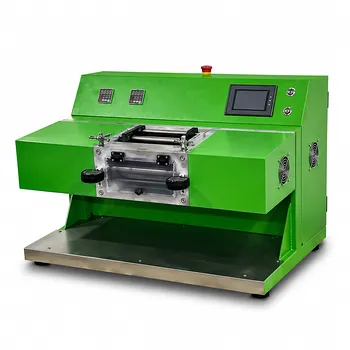
Integrated Dual Servo Heated Horizontal Two Roll Mill for Battery Electrode Calendering
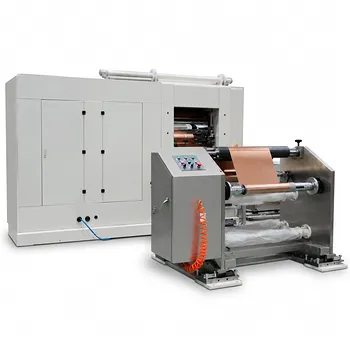
High Precision Lithium Battery Electrode Sheet Calendering Machine
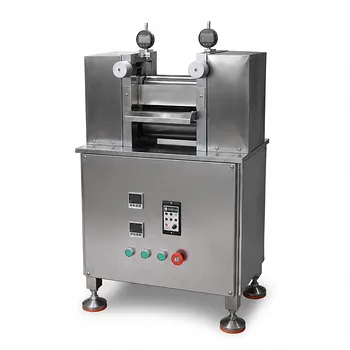
100 x 200 mm Laboratory Heated Roller Press Battery Electrode Sheet Calendering Machine
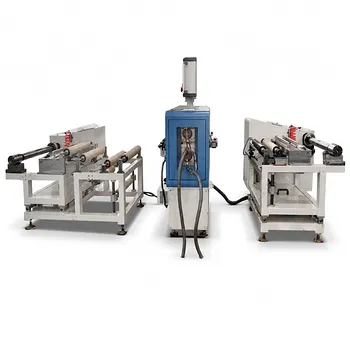
210 330mm Hydraulic Battery Electrode Calendaring Machine Heated Roller Press

Positive Electrode Yellow Tab Tape 0.1mm Thickness Customizable Width for Lithium Battery Tab Sealing